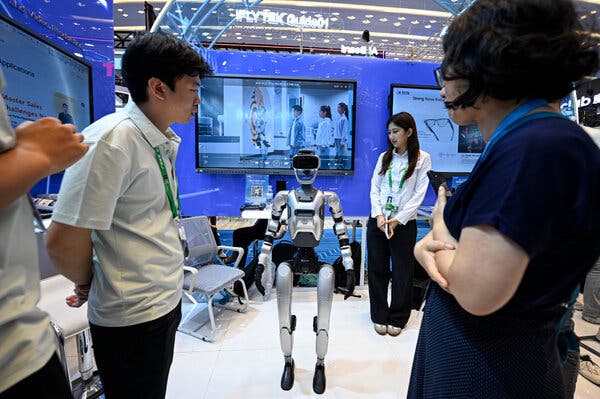
China is taking steps to restrict the flow of money, technology, and businesses out of the country. The Chinese State Council, which acts as the cabinet, recently announced new regulations. These rules require Chinese companies to undergo national security screening before investing abroad. Prior measures, introduced in April, allowed authorities to intervene when foreign firms attempted to relocate their supply chains outside China.
Combined, these regulations signal a strategy to fortify China’s technological and supply chain sectors amidst increasing tensions with Europe and the United States. This move reflects a departure from the economic principles of open markets and free trade. These principles have driven China’s significant economic growth over the decades. However, the era is shifting towards more fragmented trade practices.
Countries from Washington to Brussels are now leaning towards protective trade measures. Rising concerns about China’s monopoly over raw materials, manufactured goods, and technology, as well as the influx of Chinese products globally, spur this shift. Trade barriers are becoming more common than economic integration.
According to Ben Kostrzewa, a partner and trade expert at Hogan Lovells in Hong Kong, the global economy has shifted from one that facilitated capital, people, and technology flow. The “Chimerica” economy, a blend of China and America envisioned two decades ago, now seems more like a chimera.
 Lukashenko and Putin’s Unique Relationship and Belarus’ Strategic Role
  Alan Ritchson Faces Backlash Over Political Remarks
  Himalayan Pilgrimage: A Couple’s Narrow Escape and Lingering Questions
  Former CEO Sentenced for Bank Fraud and Sanctions Evasion
  Russia’s Potential Incursion Into Estonia: NATO’s Resilience Under Scrutiny
  Senators Urge Action to Free Imprisoned Journalist in Iran