The Rise of Soccer Popularity in the U.S.
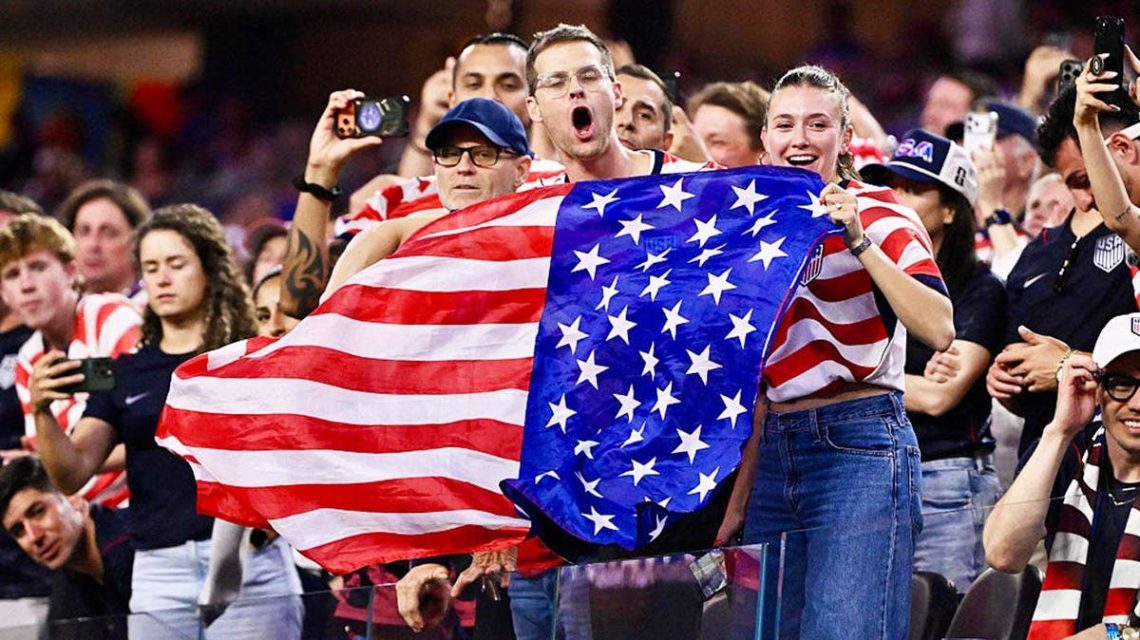
When the U.S. Men’s National Team plays Bosnia and Herzegovina in the World Cup’s Round of 32, the moment is expected to unify sports enthusiasts. The flags are out, bars are filled, and casual fans are engaged, marking a much-desired milestone for American soccer.
The United States shattered World Cup viewership records in Los Angeles during its first match against Paraguay, signaling widespread interest. Fans are embracing soccer, yet this surge in popularity has triggered mixed reactions from the American soccer community.
United States fans cheer after a goal against Turkiye during the FIFA World Cup 2026 match at Los Angeles Stadium. (Keith Birmingham/Pasadena Star-News)
Gatekeeping in American Soccer
While the appreciation of soccer has expanded widely, reactions from certain soccer media members reveal an underlying gatekeeping behavior. Their resistance echoes sentiments found within the WNBA’s response to Caitlin Clark’s impact.
Clark revolutionized interest in the WNBA, drawing diverse attention. Despite the growth, discomfort arose among league members and commentators, reflecting judgments based on fans’ backgrounds and politics.
Caitlin Clark of the Indiana Fever signs autographs for fans before a game against the New York Liberty at Barclays Center in New York City. (Michelle Farsi/Getty Images)
Emmanuel Acho, for instance, controversially suggested that the WNBA might benefit without Clark. This notion mirrors discussions in soccer media, suggesting some fans are unwelcome based on political affiliations.
Challenges of Widening Audience Appeal
The WNBA asked for recognition and drew it spectacularly through Caitlin Clark. Yet, when the mainstream engaged, the discourse around the league became uncontrollable and loud. Some viewed new fans negatively, branding them as ill-informed and toxic.
Similarly, the USMNT’s World Cup phase is inviting viewers beyond traditional soccer audiences, sparking debate. Some fans might lack soccer knowledge, but their enthusiasm derives from patriotism and hopes for U.S. victory.
American soccer’s World Cup moment is exposing the same gatekeeping instinct that the WNBA revealed during the Caitlin Clark boom, where new fans were treated as unwelcome. (Fran Santiago/Getty Images)
The Mainstream Challenge
Mainstream engagement forces a pivot in fan dynamics. Publications like The Guardian and USA Today have critiqued the nature of expanded soccer coverage, suggesting the sports atmosphere caters too strongly to patriotic sentiments.
While mainstream popularity aims to include everyone, resistance persists toward this broader embrace. American soccer must reconcile with losing exclusive traditional control and welcome diverse fan engagement.
If American soccer wants to be mainstream, it doesn’t get to choose either. Neither does the WNBA. (Omar Vega/USSF/Getty Images)
Embracing New Fans and Growth
The Caitlin Clark phenomenon showcased that women’s basketball can gain nationwide traction with the right star. This should be celebrated, not policed. American soccer has the opportunity to appreciate casual fans’ involvement during the World Cup.
Whether fans chant excessively or call it soccer over football, this represents growth. Soccer has reached beyond its cocoon, fulfilling long-standing desires for broader appeal. The choices in fan identities reflect the sport’s successful penetration into mainstream America.
If casual fans are showing up for group stage games, good. If people are chanting “USA!” too much, good. That means the sport reached people outside the bubble. Isn’t that what everyone said they wanted?
 Far-Left Groups Allegedly Organize Protests in Austin
  Alan Ritchson Faces Backlash Over Political Remarks
  Austin Police Release Footage of Arrest After ICE-Involved Shooting
  Himalayan Pilgrimage: A Couple’s Narrow Escape and Lingering Questions
  Religious Trends: Decline in Affiliation with LDS Church
  Former CEO Sentenced for Bank Fraud and Sanctions Evasion