
On Saturday, the Trump administration announced the introduction of “Trump Accounts,” coinciding with the 250th anniversary of the Declaration of Independence. This initiative aims to enhance financial independence for American children.
Parents can open investment accounts for children born during Trump’s second term, receiving $1,000 from the government. Accounts are also available for older children who remain under 18 by year-end, though they won’t receive the $1,000. Deposits into these accounts can begin on July 4, aligning with the Treasury Department’s plan to provide the $1,000 bonus on the same day.
The program involves investments in the stock market through private firms. Access is restricted until the child turns 18, only for specific uses like tuition or home purchase. Billionaires like Michael Dell and Susan Dell pledged $6.25 billion for children who don’t qualify for the government’s initial $1,000. Additionally, Sanjay Mehrotra, CEO of Micron Technology, pledged $250 million.
Trump Accounts launch on Independence Day to provide $1,000 for newborns.
Treasury Secretary Scott Bessent expressed that the American dream should be accessible to every child. In Trump’s view, this massive investment celebrates America’s 250th Anniversary and offers financial security to millions of families in America. Trump declared the program a success on Truth Social.
To date, 5.5 million accounts have been opened, with 1.4 million eligible for the $1,000 contribution. Families earning less than $200,000 annually account for 86% of those enrollments. This launch comes amid inflation concerns and changes to social safety programs such as Medicaid and SNAP.
Trump Accounts Overview
The accounts serve as savings tools investing in the stock market on behalf of children. Children can access funds only after turning 18, to be used for specific purposes like tuition, business start-up, or home payments.
Parents must sign up at trumpaccounts.gov. Upon account creation, a $1,000 government contribution is provided for newborns. Managed by private banks and brokerages, investments target U.S. equity index funds and charge no more than 0.10% yearly fees.
Parents can contribute $2,500 annually in pretax income, similarly to retirement accounts. Additional contributions can come from employers, relatives, and philanthropic entities. Contributions are capped at $5,000 yearly, excluding governments and charities.
Trump suggested that the initiative goes beyond providing a simple handout, aiming at ownership of America’s future.
Eligibility for the $1,000 Payment
The $1,000 is reserved for U.S. citizens born from January 1, 2025, to December 31, 2028. Accounts for older children are encouraged, but without the $1,000 bonus. Critical requirements include the child being a citizen and possessing a Social Security number, regardless of the parent’s status.
Some older children might benefit from bonuses as well, thanks to contributions from wealthy investors, such as the Dells. Their donation allows children aged 10 or under living in ZIP codes with family incomes below $150,000 to receive $250. Similar pledges include $75 million from Ray Dalio for children in Connecticut and contributions from Brad Gerstner in Indiana.
Several companies such as Uber, Intel, IBM, Nvidia, and Steak ‘n Shake plan contributions as employee benefits, encouraged through the “50 State Challenge.”
Purpose Behind the Accounts
Supporters argue these accounts introduce children, including those born into poverty, to the stock market. They bolster capitalism amid growing Democratic socialist popularity. Approximately 58% of households held stocks or bonds in 2022, though the wealthiest possessed nearly half of the stock value.
Programs similar to Trump Accounts exist in California, Connecticut, and D.C., targeting youths in poverty or foster care and children with a parent lost to COVID-19. However, wealthier children don’t qualify for these programs, managed by state rather than private firms.
Criticism
Critics argue the accounts don’t aid young children who are vulnerable and most in need. They also don’t counterbalance Trump administration cuts to programs benefiting youths like food assistance and Medicaid.
The tax and spending cuts bill reduced spending on beneficial programs. Critics suggest affluent families may gain the most as they can make maximum pretax contributions.
Even with government contributions, the wealth gap may widen. Assuming a 7% annual return, $1,000 seed money could grow to around $3,570 over 18 years.
 DHS Warns Migrant Caravan Heading to U.S.-Mexico Border
 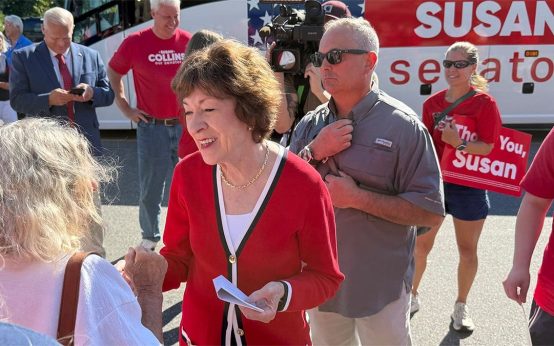 Vandalism at Senator Susan Collins’ Office Amid Election Contest
 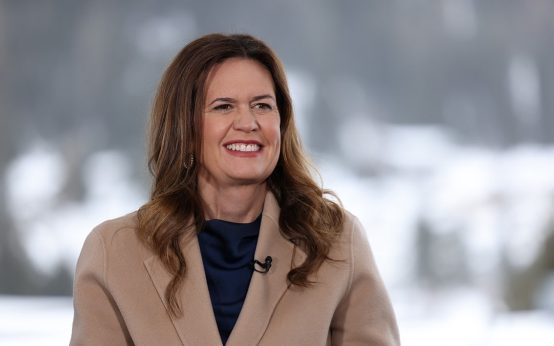 Backlash Over Sarah Huckabee Sanders’ Welfare Ad
  Mamdani’s Child Care Initiatives Set a New Standard
  Senate Passes Protect College Sports Act of 2026
  The Challenge of Addressing Global Crises