Economic Growth Decline
China’s economy experienced a significant slowdown, with growth reducing to a 4.3% annualized pace in the April-June quarter of 2026, marking the weakest pace in over three years. This official data was released by the government and reveals a drop from a robust 5% growth rate in January-March, despite increased exports driven by the rise in artificial intelligence and strong global demand for China’s electric vehicles.
Exports and Economic Challenges
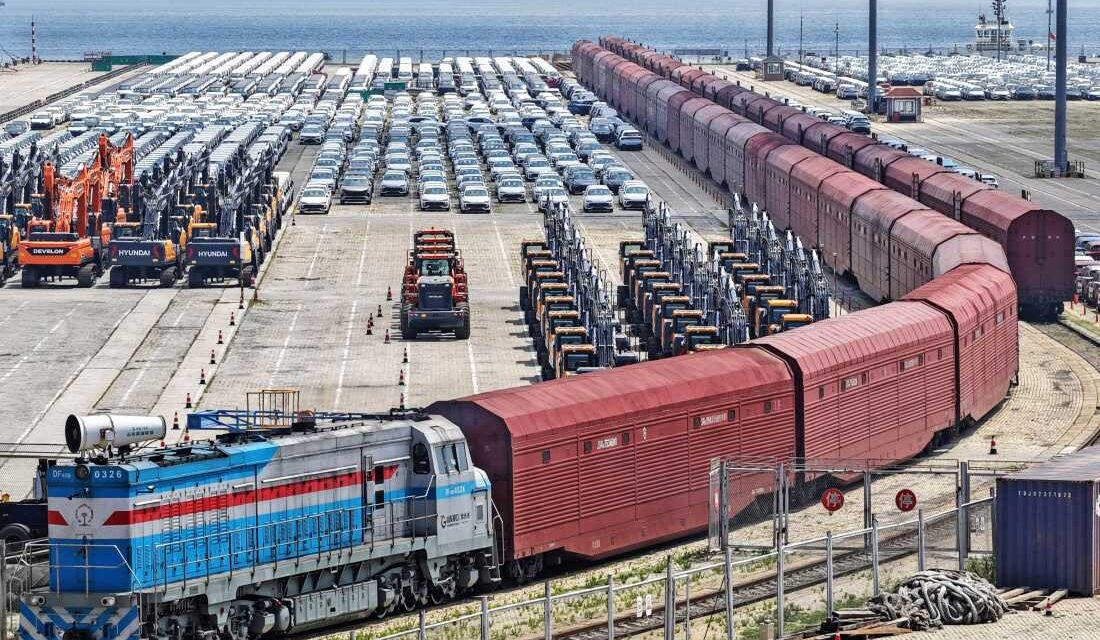
China largely withstood the broader economic impacts stemming from the Iran conflict, even as rising energy prices contributed to global inflation. Customs data indicate that exports increased by 17.6% in the first half of the year from the previous year, and by 27% in June. However, domestic spending and investment have lagged, limiting the economic lift from export manufacturing, since the country has struggled to regain momentum following lockdowns during the COVID-19 pandemic. According to Lynn Song, chief economist for Greater China at ING Bank, the April-June quarter growth was the slowest since the fourth quarter of 2022, which was affected by lockdowns.
Focus on High-Tech Manufacturing
The Chinese government’s concentration on high-tech industries like artificial intelligence, computer chips, and robotics, supported by substantial government backing, has heightened concerns about economic imbalance. High-tech exports, including electric vehicles and computer chips, have surged, bolstered by government priorities on advancing technology. China’s record $1.2 trillion global trade surplus last year has led to complaints from other countries’ policymakers regarding trade imbalances, attributing them to heavy state subsidies that lead to an oversupply of goods exported overseas.
Industrial Output and Domestic Market
Industrial output by value increased by 5.4% in the first half of the year compared to the previous year. However, there are concerns domestically about whether AI and robotics expansion will produce sufficient jobs to support long-term growth. Chinese households have reduced large expenditures, impacted by ongoing property market declines and uncertainties about job availability and wages. Despite reliance on exports to maintain growth, economist Eswar Prasad noted an imbalance in China’s growth model. He emphasized difficulties in significantly boosting domestic demand amid weak confidence.
Government Strategies and Economic Transition
Mao Shengyong from the National Bureau of Statistics acknowledged the severe imbalance between strong supply and weak demand within China, linked to the unstable global economic climate. He emphasized China’s focus on high-tech manufacturing and pursuit of higher-quality economic growth while building a stable domestic market to support employment. Investment in fixed assets declined 5.7% year-on-year in the first half, and retail sales of consumer goods increased only by 1.3%, with housing prices continuing to drop. Wei Li from BNP Paribas Securities noted that China’s economy is undergoing a significant transition.
For the entirety of 2026, Chinese leaders have set a growth target between 4.5% and 5%, lower than the previous year’s 5%. The economic growth for the first half was reported at 4.7%. Recently, the International Monetary Fund adjusted its forecast for China’s annual growth to 4.6%, up by 0.2 percentage points, while projecting a 4.1% expansion for 2027.