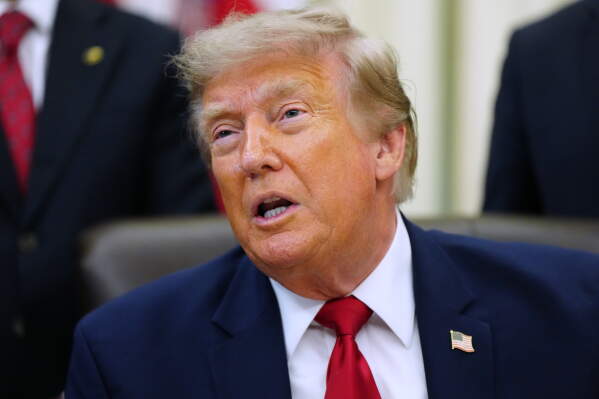
President Donald Trump will deliver a national address on Thursday at 9 p.m. Eastern Time. He plans to discuss topics related to elections and voting machines, hinting at the possibility of revisiting disproven conspiracy theories about his 2020 presidential election defeat to Joe Biden. This comes as Trump urges Republicans to implement stricter federal voting regulations before the upcoming midterm elections in November.
In his previous primetime address in April, Trump remarked that U.S. objectives in the Iran conflict would be met ‘very shortly.’ However, tensions have since escalated, with ongoing exchanges between the U.S. and Iran in the Middle East and the Strait of Hormuz disrupting a temporary ceasefire agreement. Early Thursday, U.S. strikes intensified, targeting a vessel accused of violating a blockade on Iranian ports. In retaliation, Iran attacked U.S. allies in the region.
Meanwhile, Trump expressed his desire for Immigration and Customs Enforcement (ICE) officers to continue conducting traffic stops. On Wednesday, Trump opposed recent plans to limit such stops after a series of fatal encounters led to three deaths, including motorists in Texas and Maine. It remains uncertain if ICE will quickly resume these stops, which have been integral to Trump’s immigration enforcement efforts.
Over the past six years, Trump has maintained a focus on his 2020 election defeat. After losing to Biden, officials in key departments like the Department of Justice and cybersecurity agencies affirmed the election’s fairness, legitimacy, and security. During his second term, Trump has tried to challenge this set narrative, a strategy he is expected to revisit during Thursday’s address. He has appointed allies who support his claims that the election was fraudulent and emphasizes loyalty to these views within his administration. Nominees have frequently avoided stating the clear outcome of the 2020 election, simply acknowledging Biden’s presidency.
Read more
Additionally, Trump has delayed disaster aid approval and rejected requests more often in Democratic-leaning states. Since taking office, he has approved approximately 65 major disaster relief requests while denying over two dozen from states, tribes, or territories. Trump’s average response time for disaster requests exceeds that of past presidents, creating disparities in approvals based on political support. An analysis by the Associated Press highlights this trend of partisan discrepancy in disaster declarations.
In summary, Trump’s address is expected to revisit previous election-related claims and continue to push for tighter voting laws. This reflects his continued fixation on the past election and indicates the unusual measures he’s taken to steer narrative and policy during his presidency.
 Challenges Facing the Supreme Court’s Public Perception
  California Democratic Aide Arrested for Visa Overstay by Federal Authorities
  Experts Doubt Export Ban Will Lower Fuel Prices
  Trump Delivers Warning to Iran, Cuba at UN General Assembly
  Trump Delivers Stern UN Speech on Iran, AI, and Global Security
  Lukashenko and Putin’s Unique Relationship and Belarus’ Strategic Role