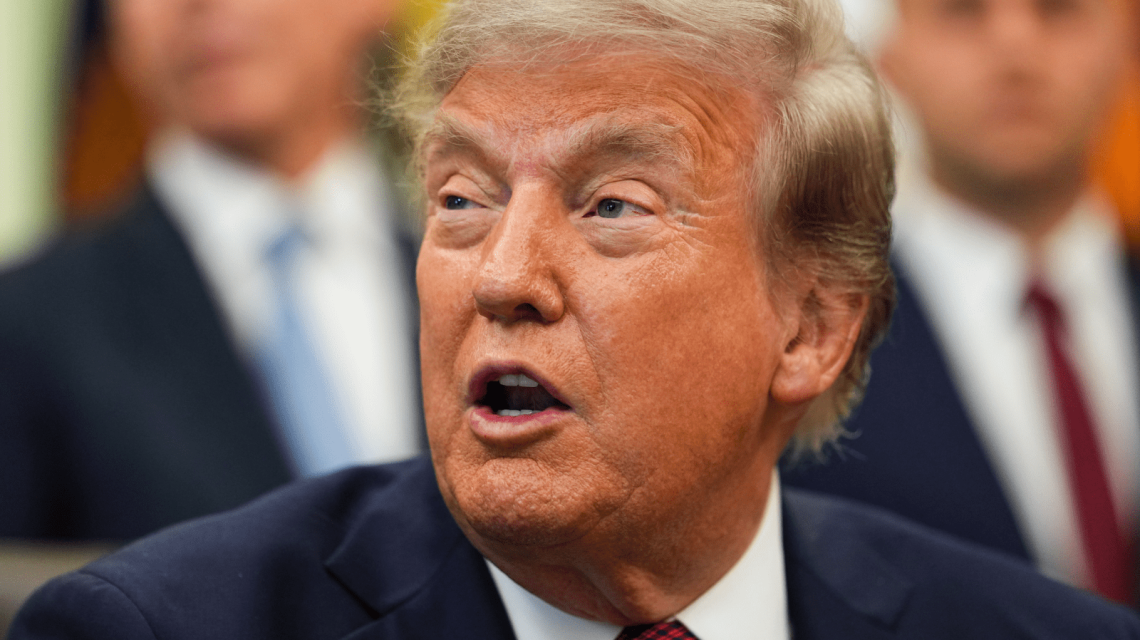
Independent voters are expressing growing dissatisfaction with President Donald Trump, based on various major polling series. This trend presents potential challenges for Republicans as the 2026 midterm elections approach.
Data from YouGov/Economist, Fox News, and Echelon Insights indicate declining support among independents for Trump on key issues like job approval, the economy, and immigration. At the same time, Democratic candidates are gaining a significant lead among these voters on the generic congressional ballot. This shift raises concerns about whether dissatisfaction with Trump could translate into broader electoral risks for Republicans.
Why It Matters
Independent voters often play a crucial role in deciding close elections. Their movement away from the Republican Party less than 100 days before Election Day could influence control of Congress. Republican candidates in competitive House and Senate races may face a more challenging political environment if this trend among independents continues through November.
What To Know
Independent voters frequently determine outcomes in battleground districts. Unlike strong partisans, they are more open to switching between parties. Since the start of Trump’s second term, independents have become more negative toward him across four key measures: overall job approval, economic approval, immigration approval, and perceptions of the country’s direction. Multiple polling organizations, using various methodologies, reflect this trend, indicating it is not an anomaly.
The latest Fox News poll, conducted July 17-20 among 1,003 registered voters, reported a margin of error of ±3 percentage points. The Economist/YouGov survey, conducted July 17-20 among 1,602 U.S. adult citizens, has a margin of error of ±3.3 percentage points. Echelon Insights’ July survey, conducted July 9-13 among 1,004 likely voters, carried a margin of error of ±3.6 percentage points.
Rising Pessimism About Country’s Direction
Among independents, optimism about the United States’ direction has dropped significantly, while pessimism has reached its highest level. In January 2025, 27% of independents told YouGov that the country was moving in the right direction, whereas 56% believed it was on the wrong track. By July 2026, only 13% felt the country was heading correctly, compared to 72% who disagreed. Echelon Insights observed a similar pattern, with right-direction sentiment falling from 30% to 17% over the same period.
Deepening Independent Approval Gap
Trump’s overall approval among independents has sharply declined across all three polling series. In the YouGov/Economist data, Trump’s net approval among independents fell from negative 4 points in January 2025 to negative 50 points by July 2026. Fox News polling shows a similar pattern, with net approval dropping from negative 23 points in March 2025 to negative 42 points in July 2026. Echelon Insights recorded a decline from negative 5 points in January 2025 to negative 51 points in July 2026.
The wider electorate’s figures align with these findings. RealClearPolling’s average of national presidential approval surveys showed Trump at 41.1% approval and 57.2% disapproval in late July, resulting in a net approval rating of negative 16.1 points.
Losing Ground on the Economy
The economy has been a strong political issue for Trump historically. Recent polling suggests that advantage has deteriorated significantly among independents. The YouGov/Economist series shows Trump’s net economic approval dropping from positive 8 points in January 2025 to negative 50 points by July 2026, a 58-point swing.
Echelon Insights found an even split on economic performance at the start of Trump’s second term. By July 2026, net approval had declined to negative 51 points. Fox News polling depicts a similar picture, with independent economic approval worsening from negative 36 points in March 2025 to negative 52 points in July 2026. These trends reflect a broader national decline, with RealClearPolling’s average on Trump’s handling of the economy standing at 37.4% approval and 59.8% disapproval.
Eroding Support on Immigration
Immigration, previously one of Trump’s strongest issues, remains relatively stronger but has weakened among independents. YouGov/Economist data shows net immigration approval dropping from positive 10 points in January 2025 to negative 31 points in July 2026. Echelon Insights reported a fall from positive 5 points to negative 32 points over the same period.
Fox News polling also indicates reduced support, with independent net approval moving from negative 10 points in July 2025 to negative 25 points in July 2026. Nationally, Trump remains underwater on immigration as well, with RealClearPolling averaging this metric at 45.1% approval and 52% disapproval.
Democrats Expand Lead
The most politically significant finding involves voting intentions for Congress. The YouGov congressional ballot tracker shows Democrats expanding their lead among independents. In February 2025, independents favored Democrats by 33% to 25%. By July 2026, support for Democrats had increased to 44% compared to 22% for Republicans, creating a 22-point lead.
Recent surveys indicate Democratic advantages exceeding 20 points among independents. This is key because congressional elections are decided district by district. A decisive break for one party by independents across competitive districts can significantly impact control of the House.
Nationally, the broader electorate remains closer. RealClearPolling’s average generic congressional ballot reports Democrats leading with 48.9% compared to 43.5% for Republicans. Democrats’ advantage extends beyond independent voters. An Emerson College poll conducted July 19-20, 2026, found Democrats leadering the generic ballot by 53% to 42%, marking the highest Democratic share since July 2025.
The Midterm Math
While none of these indicators guarantee Republican losses in November, they do suggest significant challenges. Voters can separate their views on a president from their congressional choices, and campaigns have time to present their case. Nonetheless, the data consistently shows independents becoming more critical of Trump over the past 18 months, with no significant signs of returning to the GOP in the early months of 2026.
Republicans will rely heavily on their base, but success in competitive races often requires persuading voters in the middle. White House spokesman Davis Ingle responded by emphasizing Trump’s efforts, claiming historic progress and urging patience as his agenda unfolds.
Whether voters align with this view may become a defining issue in the 2026 midterm elections. As Election Day nears, the evidence from multiple polls suggests independent voters remain a significant hurdle for Trump and his party.
 Republican Senator Criticizes Trump’s $5,000 Check Proposal
  Trump’s Approach to Iran at the United Nations
  Trump’s Triumphal Arch Controversy
  Concerns Over Abdul El-Sayed’s Potential Senate Role and National Security
  Kentucky Governor Andy Beshear Discusses Tariffs, Faith, and Political Ambitions
  Sunday Highlights: Lane Kiffin, Nancy Mace, and College Football Drama