
Republican Ohio Governor Mike DeWine expressed opposition to the Trump administration’s plan to increase arrests and deportations of Haitian migrants. He warned that this plan may harm Ohio’s economy and place Haitians in danger if they return to their home country.
Impact on Ohio’s Economy
Over 300,000 Haitians are about to lose Temporary Protected Status (TPS), a policy that shields them from deportation, following the Supreme Court’s support for ending the program. Immigration and Customs Enforcement (ICE) is preparing to initiate a significant deportation effort targeting Haitian migrants.
The operations could affect thousands of Haitians in Ohio, especially those in Springfield, where many have recently settled. During the 2024 presidential campaign, President Trump made unfounded claims about Springfield’s Haitian immigrants.
DeWine emphasized that deportations would severely impact Springfield and Ohio. Haitians have significantly contributed to the local economy by filling jobs and launching businesses in the city.
Situation in Haiti
Governor DeWine highlighted the security challenges in Haiti, describing the nation as deeply impoverished with ongoing political instability. The U.S. State Department has advised against travel to Haiti due to its dire conditions.
DeWine predicts many Haitians would prefer relocating elsewhere rather than returning to Haiti, which he describes as an unlivable environment. He stressed their desire to work and support their families instead of returning to their homeland.
Temporary Protected Status Background
Haiti has held TPS since 2010 following a devastating earthquake, allowing many Haitians to remain in the U.S. The Biden administration extended the status in 2024, citing violence and instability in Haiti.
The Department of Homeland Security (DHS) sought to end TPS for Haitians last year, asserting that conditions in Haiti had improved, making it safe for return. The decision was part of a broader effort by the Trump administration to phase out TPS for multiple countries.
As of last year, 334,000 Haitians held TPS, excluding those with green cards. DHS claims the status has become a “defacto amnesty program” and encourages self-deportation with financial incentives.
Legal and Political Responses
The plan to revoke protections faced legal challenges, with a judge initially blocking the move, labeling it arbitrary and racially motivated. However, the Supreme Court later upheld the administration’s decision, clearing the path for the termination of TPS for Haitians and others.
Governor DeWine has previously opposed Trump’s stance on Haitian migrants. He refuted Trump’s baseless claims about Haitians consuming pets, citing the lack of evidence from local officials. Despite challenges from hosting a large immigrant population, he stated that Haitian migrants have diligently contributed to the local workforce.
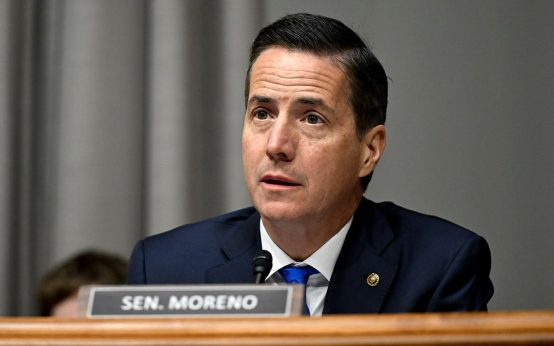 Senator Bernie Moreno Urges DOJ to Address Drug Policy Enabling Forced Abortions
  Karoline Leavitt Offers Insights on Trump’s Calls With Putin and Xi
  Curtis Pushes for Investigation into Trump Jr. and Biden
  Israeli Prime Minister’s Visit to the U.N. Amid Controversy
  Reader Perspectives on Social Security Reform and Competency-Based Degree Programs
  Republicans in Battleground States Urge End to Iran Conflict