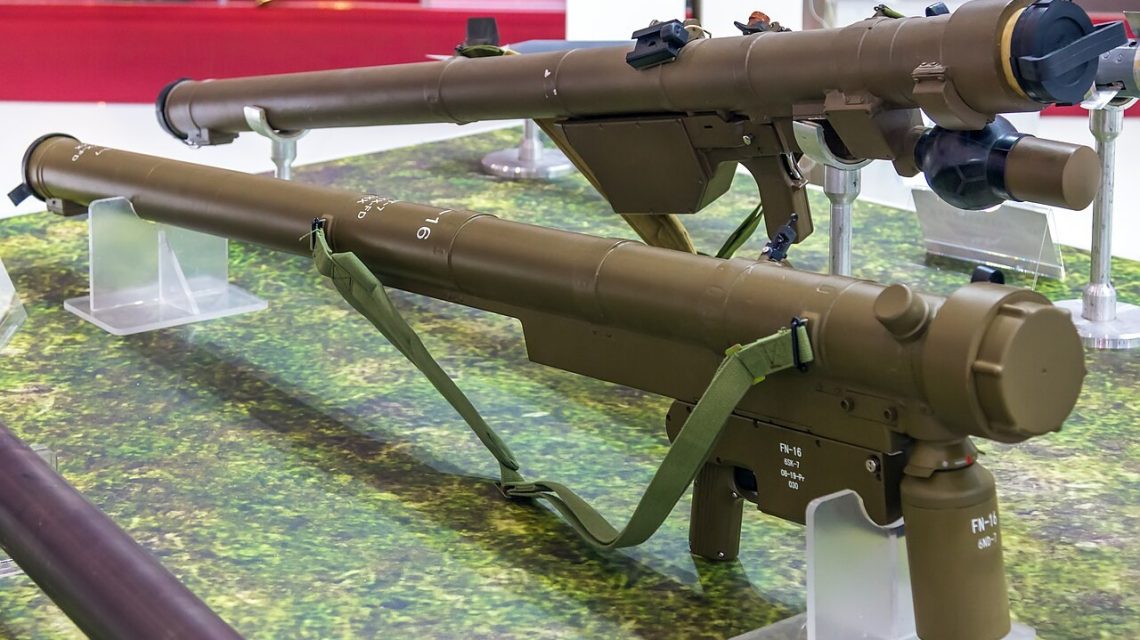
A report by Reuters indicates that a Chinese company is preparing to supply Iran with hundreds of portable anti-air missile systems. This move comes as Iran aims to rebuild its air defenses following recent strikes by the United States and Israel. The report emerges days after U.S. President Donald Trump stated that Chinese leader Xi Jinping assured him that Chinese firms would not arm Tehran.
While China maintains a political alliance with the Iranian government and has criticized the U.S.-Israeli strikes, Beijing has largely avoided direct involvement in the conflict. Instead, China engages in diplomatic measures behind the scenes. Additionally, reports suggest that China has provided Iran with satellite imagery of U.S. military positions around the Gulf.
Details of Arms Deal
Reuters reported that Iran and Zhongqing Baoshang International Investment have entered a $60-70 million deal for 300-400 man-portable air defense systems, known as MANPADs. The information came from anonymous sources due to the sensitivity surrounding the transaction. Zhongqing Baoshang International serves as an intermediary for the Chinese supplier, facilitating the delivery of FN-16 and QW-12 missile systems.
Newsweek reached out to the Chinese and Iranian foreign ministries and the parent company, Zhong Qing Bao Shang Group, for comments but received no immediate response.
Transportation and Delivery
The current plan involves transporting the weapons from Urumqi, in China’s Xinjiang region, to Pakistan before their transfer to Iran. However, specifics regarding the second leg of the journey remain uncertain, including whether the transport would occur via air or road. The delivery schedule and quantities may also be subject to change, according to sources.
Official Responses and Diplomacy
China’s Foreign Ministry has dismissed the report as “completely groundless,” while Pakistan’s military referred to it as “absolutely concocted and false.” A White House official stated that external actions aiding Iran do not enhance their capability to target Americans.
Trump’s Assurance from Xi
During Trump’s visit to Beijing in May, Xi promised not to sell weapons to Iran under any circumstances, a statement encompassing Chinese companies. Trump further claimed that Russian President Vladimir Putin had reassured him that Moscow was not supplying weapons to Tehran.
Ceasefire and Peace Efforts
The U.S. temporarily halted its air campaign against Iran to allow diplomatic space following Iranian strikes on commercial shipping in the Strait of Hormuz. A ceasefire was declared on April 8, with a memorandum brokered by Pakistan aimed at a lasting peace agreement.
Chinese Missile Systems
Chinese systems like the C-802 anti-ship cruise missile have been utilized by Iran and its proxy forces. The Yemen-based Houthis have recently used these systems against Saudi oil tankers in retaliation for military strikes in Yemen. Additionally, there were reports on Iran nearing a deal for China’s CM-302 supersonic anti-ship missile prior to the U.S.-Israeli offensive.
 U.N. General Assembly Set to Host Key Diplomatic Moment
  Suspects in Haitian President’s Assassination Await Extradition to U.S.
  Ambassador Avoids Timeline on Prolonged Iran Conflict
  Controversy Surrounds Children’s YouTube Star and Journalist’s Revelations
  German Chancellor Friedrich Merz Faces Challenges After Election Losses
  Trump’s Approach to Iran at the United Nations