
Abdulah Buji, a 21-year-old aspiring teacher from northern Morocco, rushed to Ceuta on his motorcycle, joining throngs attempting to swim to the Spanish enclave in North Africa. Like many others, he dreamed of reaching Spain to start a new life in Europe.
Despite stepping onto Spanish soil, Buji quickly realized how far he was from his ultimate goal. The path to mainland Europe remained across the Mediterranean. Spanish authorities ordered migrants to return or face deportation. Buji almost became one of over 50 fatalities attempting the swim beside the border fence. Crossing successfully, he lost his belongings and money. Facing legal limbo, he turned back.
“I’ve studied for about 14 years, but at home, there is nothing. I would have to work 12-hour shifts for a poor wage,” Buji shared with The Associated Press. “That’s why I came here. Yet, I found no opportunities and must go back.”
Crisis Triggered by Migrant Influx
The sudden migration surge saw 60,000 cross within a day, with about 45,000 returning to Morocco quickly, many spending nights on Ceuta’s streets. The influx equaled 70% of Ceuta’s population, leading authorities to call in police and military for order. The residents feared the presence of young men wandering aimlessly.
This incident recalled a similar yet smaller crisis in 2021 when Morocco relaxed border controls, allowing thousands into Ceuta. This time, the humanitarian impact was far greater.
Driven by Desperation
As images of migrants reaching Ceuta spread online, more people moved north, hoping for entry into the European Union. Rabat and Casablanca train stations overflowed with those trying to reach Ceuta’s border. Local media showed police blocking access to trains and buses.
The migration wave’s cause is unclear, but social media flooded with posts encouraging Moroccans to attempt the crossing. These messages provided practical border-crossing advice, aiming to boost chances of being allowed to stay.
Researcher Myriam Cherti interviewed migrants who lost count of their crossing attempts. “They act out of desperation, striving to secure a future and support their families,” she explained. “This becomes viable if they reach Spain, but unlikely if they remain in Morocco.”
Ahmed Karim, a 33-year-old unemployed Moroccan, managed to cross. He believes many share the aspiration to reach Europe or America but lack opportunity.
Searching Amidst Chaos
Others crossed seeking lost loved ones. Ikrra Khai, a seasonal agricultural worker in Spain, was in Ceuta searching for her friend’s missing brother.
I don’t know if he’s dead or alive. I have his residence card. But I don’t know where he is. I’m searching for him.
Wilson reported from Barcelona, with contributions from AP journalists Danica Kirka in London and Akram Oubachir in Fnideq, Morocco.
This story was translated from English by an AP editor using AI assistance.
 Trump Administration Seeks to Influence NIH Grantmaking
 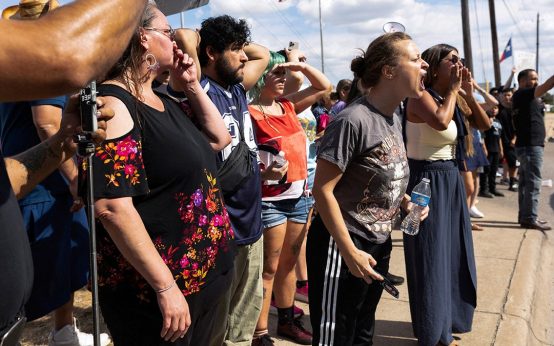 Protests in Austin: Analyzing the Coordination Behind Anti-ICE Demonstrations
  Controversy Surrounds Inglewood Mayor Amid Allegations
  White House Launches Trump TV Amidst Press Dispute
  Media Organizations Sue Trump Administration Over Press Access
  Venezuelan Leadership at the United Nations