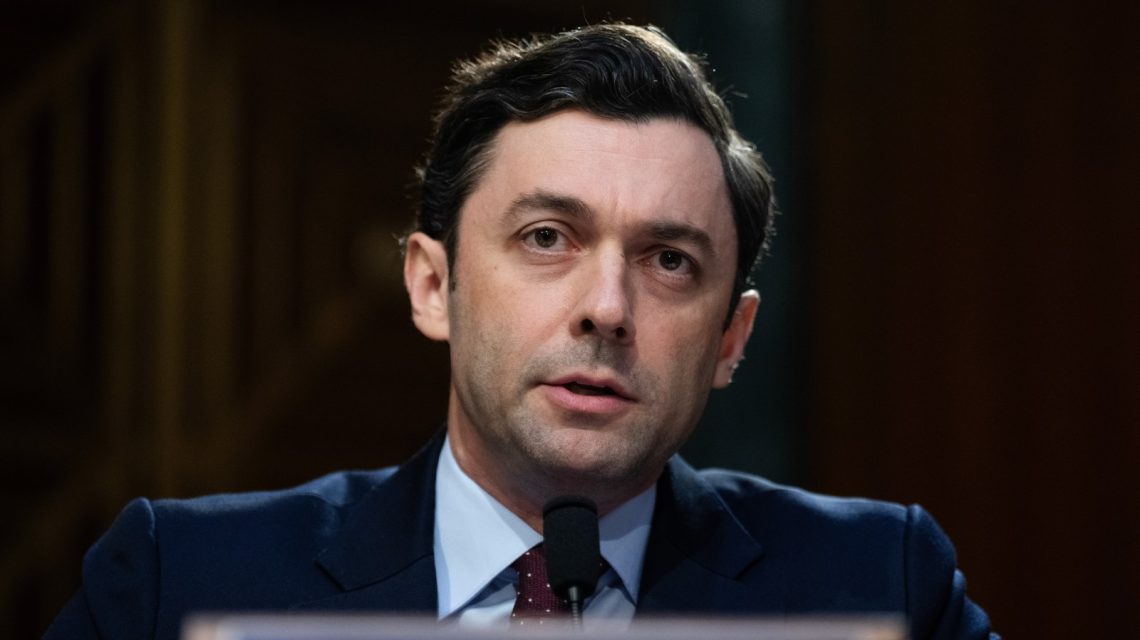
Ossoff’s Financial Advantage
Senator Jon Ossoff, a Democrat from Georgia, has emerged as a top fundraiser in the current Senate cycle. Recent Federal Election Commission (FEC) records show Ossoff with approximately $42 million on hand. This amount dwarfs the nearly $2 million reported by his Republican challenger, Mike Collins. Despite this financial dominance, Ossoff’s campaign maintains a continuous push for funds. In a July email, supporters were encouraged to donate $5, highlighting the high costs of airing ads in Georgia’s expensive media markets.
Such calls for small donations are a staple of modern political campaigns. They serve to keep donor enthusiasm alive and prepare for increased future expenses. Georgia’s Senate race is pivotal as Democrats defend a rare seat in a state won by Trump in 2024. The University of Virginia’s Center for Politics upgraded Georgia’s race from “lean Democratic” to “likely Democratic” recently.
Georgia stands as a crucial battlefield in elections. Trump secured it by 2 percentage points in 2024 after Biden’s narrow win in 2020, marking a significant Democratic win since 1992. Currently, Republicans govern the state, yet Democrats hold both Senate seats, highlighting Georgia’s electoral competitiveness.
Newsweek contacted both Ossoff’s and Collins’ campaigns for comments via email.
Ossoff’s Campaign Fundraising Details
Georgia Senate candidates are known for formidable fundraising, driven partly by the state’s battleground status. Democrat Raphael Warnock raised more than $206 million between his 2020 and 2022 election cycles. Ossoff himself has built one of the most sizeable campaigntreasuries among Senate candidates.
Per a July 15 FEC report, Ossoff accumulated over $81 million during the 2026 election cycle, with $14.6 million raised in the second quarter alone. His campaign held $42.58 million by June 30.
Analysis of individual contributions revealed California leading with $7.35 million in donations, outpacing Georgia’s $6.86 million. Large Senate races usually attract significant out-of-state contributions. This phenomenon often occurs in high-stakes races with national interest.
Google ad records show Ossoff’s campaign spent nearly $5 million on Google ads over the past year. Roughly $2 million targeted Georgia voters, $500,000 in California, and about $250,000 in New York, per Google’s Ad Transparency Center.
Fundraising Strategies and Political Dynamics
A July email from Ossoff’s campaign emphasized their need for continued financial support to counter “Trump puppet” Mike Collins. Following Collins’ nomination, the campaign warned of potentially missing fundraising goals.
Responding to financial scrutiny, an Ossoff spokesperson referenced heightened Republican spending against him, including $44 million from a leading Republican Super PAC. Collins lags behind significantly with $4.2 million raised and $2 million on hand, as per recent FEC filings.
Collins’ campaign claims grassroots support, while Ossoff’s national donor base shows wide enthusiasm. His manager claimed, “Fundraising reflects who candidates truly serve.” He asserts that Ossoff’s major support comes from non-Georgians fueling a “socialist agenda.”
Georgia’s Political Climate
Ossoff won his Senate seat in January 2021, defeating Republican David Perdue in a pivotal runoff that shifted Senate control. This win, alongside Raphael Warnock’s, signaled a political shift in Georgia.
Collins, representing Georgia’s 10th Congressional District since 2023, has Trump’s endorsement and prominent MAGA backing. However, his campaign has faced controversies, including family-related issues involving antisemitic content. Collins, however, maintains strong support for Israel.
Republicans currently have a 53-47 advantage in the Senate, making Georgia crucial as Democrats seek a Senate majority. Democratic win of this state is essential to their strategy given the challenging electoral map.
Polling and Electoral Outlook
Polls consistently show Ossoff leading Collins by single to mid-digit margins. The latest AARP poll reported Ossoff at 52% against Collins’ 43%. Demographic divides are evident, with Ossoff leading among younger voters and Collins favored by the older demographic.
Ossoff benefits from strong support among independents, with 55% favoring him over Collins’ 35%. AARP’s poll, conducted among 1,060 likely voters in mid-July, had a margin error of ±3 percentage points.
A recent Wick survey showed Ossoff leading by 4 points, and a Fox News poll confirmed Ossoff ahead at 56% versus Collins’ 43%—a 13-point gap.
With over three months left, campaign spending on ads is expected to escalate. Candidates will aim to sway undecided voters and energize their bases as Election Day draws near.
 Experts Doubt Export Ban Will Lower Fuel Prices
  Trump Delivers Warning to Iran, Cuba at UN General Assembly
  Trump Delivers Stern UN Speech on Iran, AI, and Global Security
  Lukashenko and Putin’s Unique Relationship and Belarus’ Strategic Role
  Harris Discusses Potential 2028 Presidential Run
  Far-Left Groups Allegedly Organize Protests in Austin