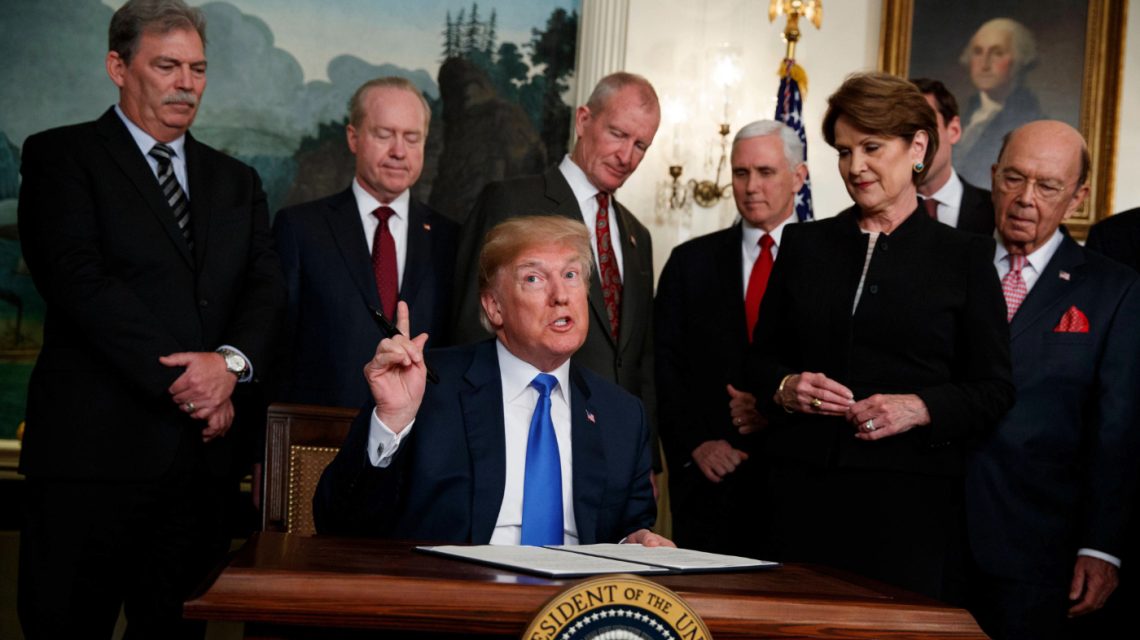
President Donald Trump once used his authority to impose tariffs and investment restrictions on China in March 2018. This move has sparked a debate about the intention and application of Section 301 of the 1974 Trade Act.
Section 301 was not originally created as a general tariff law. It was meant to be a specific trade remedy. This detail is crucial in a lawsuit challenging the Trump administration’s implementation of these tariffs.
The Liberty Justice Center has filed a case concerning tariffs on imports from 60 economies. These tariffs are for those economies’ alleged failures to address forced labor. However, the central issue is whether Section 301 remains a targeted tool or if it has become a broad presidential tariff authority.
The statute demands a specific chain of procedures. The U.S. Trade Representative must pinpoint a particular act that burdens U.S. commerce and choose a feasible response to eliminate the practice.
This sequence is vital as it represents the statute’s limitation. Section 301 was crafted as targeted economic diplomacy. Tariffs serve as an instrument to pressure foreign governments into changing specific practices. The latest legal challenge suggests this connection is weakening.
The court must resolve if the almost uniform tariffs on imports from 60 economies effectively persuade those governments to counter forced labor. This determination is essential as per Congress’s requirements.
If the executive isn’t required to prove a tariff’s likely result in changing a practice, Section 301 might no longer meet its original purpose. Instead, it could transform into a broad authority to impose tariffs whenever deemed necessary by the executive.
American trade law structure supports this perspective. Congress divided tariff authority across various specialized statutes. Section 232 deals with national security, and Section 122 allows temporary tariffs during payment crises.
Section 301 fulfills a different role by targeting specific foreign trade practices. These statutes were designed for distinct purposes. Section 122’s restrictions underscore Congress’s intent for temporary and politically accountable broad tariffs.
If Section 301 could support extended tariff programs, it would undermine those deliberate constraints. Courts usually avoid interpretations that create redundancies in statutes. Congress doesn’t write overlapping laws. Statutes are meant to complement, not override each other.
The Court of International Trade should adhere to this principle. This case isn’t about determining whether tariffs benefit policy or forced labor merits a strict response. It’s about maintaining the statutory limits Congress placed on economic authority delegation.
Congress authorized a specific power to identify foreign practices that burden U.S. commerce. Section 301 is not a general tariff law. If courts allow the chain of command to break, Section 301 will transition from a trade remedy to a default tariff authority. This would exceed Section 301’s original purpose and erase important limits on executive tariff imposition.
Marc L. Busch is a professor at Georgetown University, and Petros Mavroidis teaches at Columbia Law School.
© 2026 Nexstar Media Inc. All rights reserved. This material may not be published, broadcast, rewritten, or redistributed.
 Trump Delivers Warning to Iran, Cuba at UN General Assembly
  Trump Delivers Stern UN Speech on Iran, AI, and Global Security
 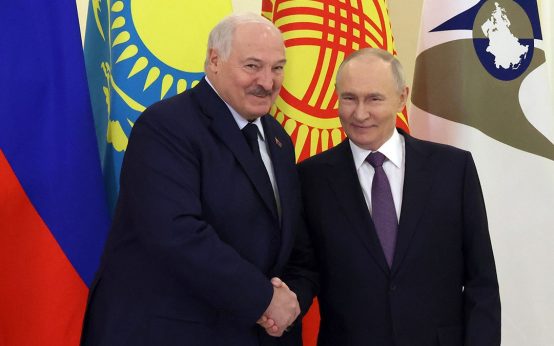 Lukashenko and Putin’s Unique Relationship and Belarus’ Strategic Role
 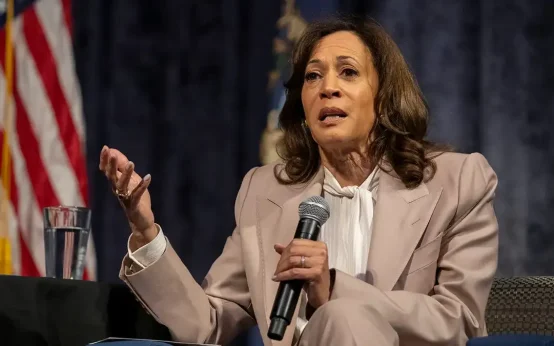 Harris Discusses Potential 2028 Presidential Run
  Far-Left Groups Allegedly Organize Protests in Austin
 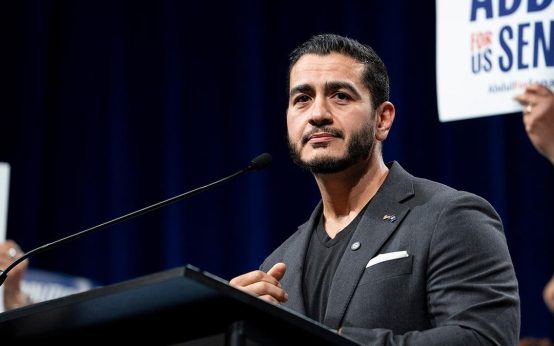 Michigan Senate Nominee Abdul El-Sayed Criticized for Remarks on Reproductive Rights