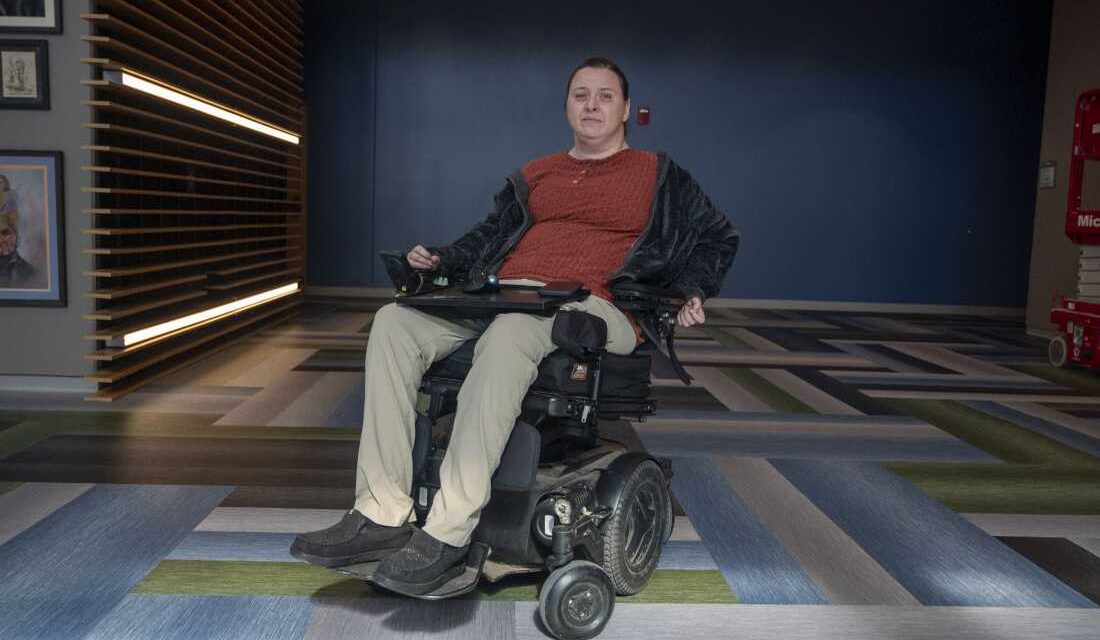
Erica Carter from Sioux City, Iowa, is a finance manager for the Omaha Nation public school district in Nebraska. She focuses on securing grants and openings for low-income students. However, when she learned her income was too high for the Iowa Medicaid program, she faced a tough choice: leave her job or lose her benefits.
Carter is dedicated to her work, and she supports students with grants for projects like a student-run garden. The garden provides students with jobs, marking their first work experience.
At 41, Carter is paralyzed from the chest down, a condition she’s had since her early 20s. Despite this, she has progressed in her accounting career and obtained a master’s degree in human resource management.
In November 2023, Carter received a notice from Iowa’s Department of Health and Human Services stating her income surpassed the 2023 limit for working individuals with disabilities, which was $36,450 for a household of one.
Carter now earns $110,000 annually, but the Medicaid buy-in program in Iowa limits income eligibility.
For years, advocates have urged changes to these income limitations. Massachusetts, Minnesota, New Jersey, and Rhode Island made significant changes, eliminating such limits.
Carter chose to retain her job and relinquish her Medicaid coverage. Her decision means incurring about $35,000 annually in expenses, previously covered under Medicaid, including nursing visits and wheelchair maintenance.
Medicaid buy-in programs emerged in the 1990s to encourage work by disabled individuals. Iowa was among the early adopters. Still, restrictions exist based on income and assets, which some argue prevent financial growth and self-sufficiency.
Carlyn Crowe, from the Iowa Developmental Disabilities Council, highlights these limitations as barriers. Her organization advocates for removing hard limits on income and assets.
Despite bipartisan efforts, legislative attempts to amend these caps often stall. Critics point to potential cost increases as a concern in altering Medicaid eligibility.
Some experts argue that allowing more disabled individuals to work could eventually reduce broader societal costs through increased tax revenues and reduced dependency on other government aid programs.
A recent, less ambitious proposal in Iowa sought to raise the income cap and remove certain asset restrictions. However, it got removed from a major public assistance bill. This left many, like Carter, still without viable alternatives.
Erica Carter remains committed to her role at the school district, taking on extra jobs to cover medical and necessary expenses. Her story underscores persistent challenges and ongoing debates surrounding disability rights and support systems.
This report is a collaboration among NPR, Iowa Public Radio, and KFF Health News.
 Gene Editing’s Ethical Dilemma and Potential
  The Role of Home in Addressing Children’s Mental Health
  Teens and Distracted Parenting: Impact on Emotional Well-being
  Global Cancer Burden from Infections: Findings for 2024
  Voluntary Recall of Mezzetta Peperoncini Due to Pest Contaminant
  Leila Mirhaydari’s Journey Through Kidney Transplant Challenges