
Current economic indicators suggest that life for middle-class Americans should be prosperous. Unemployment rates are low, and incomes have risen compared to 50 years ago. Nonetheless, many middle-class individuals question why financial stability remains out of reach despite following the traditional path of education, work, and family.
The discrepancy arises from the difference between being “middle-income” and “middle-class.” Middle-income is an economic measure, whereas middle-class conveys a sense of security and comfort, along with the expectation of providing equal or better opportunities for the next generation. Increasingly, people can earn middle-income while lacking middle-class stability.
Recent data highlights this dilemma. Despite favorable economic metrics, Americans’ attitudes toward their financial circumstances are at a low not seen in nearly 50 years. Inflation has eroded wage increases, and critical expenses like housing and childcare now consume a substantial portion of family budgets. Technological advancements, particularly in AI, have injected uncertainty about future employment, while stock market gains disproportionately benefit those with substantial investments.
“There’s a belief that if you follow the rules… you’re supposed to do better than the generation before you,” states David Autor, an MIT economist.
This gap between perceived and actual economic health bothers many Americans, who feel their expectations are reasonable, not inflated. Experts across various sectors are examining why discontent persists when the economic picture seems positive.
An example is Tasha Coats from Plymouth, Minnesota, who once felt securely middle-class but now finds maintaining that lifestyle more challenging. Coats and her husband both work, yet find themselves pinching pennies. It’s a sentiment echoed by many responding to a Minnesota Star Tribune survey about middle-class life elements and affordability.
The survey asked respondents to define what constitutes a middle-class existence, offering options ranging from basic needs like housing and transportation to additional comforts such as vacations and dining out. Many identified as middle-class but reported difficulty affording key aspects of that lifestyle, including homeownership and savings.
One respondent, a 44-year-old Minneapolis woman, living with her freelance-working spouse, embodies this issue. Despite earning a six-figure salary, her income barely covers fixed expenses, forcing reliance on savings for additional costs.
Data from various economic measures, like the University of Michigan’s consumer surveys and the Federal Reserve’s Beige Book, reflect the complex attitudes toward economic conditions. Middle-income households, in particular, feel the pinch of necessary frugality.
Ryan Stewart, another Minnesotan, illustrates the generational shift. The comfortable life his parents afforded through steady employment now requires dual incomes. Despite military-related disability payments, his family’s budget remains tight, limiting leisure and home improvements.
Older generations often recount surpassing their parents’ achievements but fear today’s youth face greater hurdles. Dave Cunningham and Coats share a common worry that their children will struggle to reach the same level of security they achieved.
Coats’s children, like many young adults, lack the certainty of improving their parents’ standard of living. She compares current difficulties with past familial aspirations for future generations and anticipates ongoing instability as costs rise and retirement remains elusive.
Coats reflects on her current reality: “We’re solid middle-class and we still have to think about everything we do.” This sentiment encapsulates the modern middle-class experience, where maintaining a once assured lifestyle requires increasingly careful management.
 Trump Issues Order to Combat Mosquito and Tick Populations
  Hurricane Polo Poses Flood Threat as It Approaches Southwestern U.S.
  Family Struggles with Tragic Loss Amid Deportation Proceedings
  Maritime Expert Investigates Nantucket Shipwreck Exposed by Nor’easter
  Incident on USS Dwight D. Eisenhower Injures U.S. Service Members
 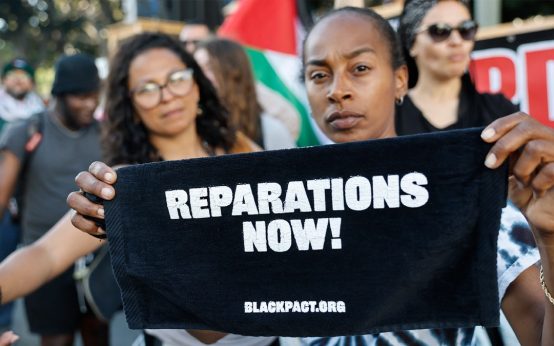 Reparations Debate Heats Up in New York Amid Delays