
The Trump administration initially appeared reluctant to adjust vaccine policies due to potential political repercussions. However, a recent executive order has shifted focus back to childhood vaccines.
President Trump introduced a new federal policy scrutinizing childhood vaccination, alongside key health officials such as Health Secretary Robert F. Kennedy Jr. The revised policy suggests reducing the recommended vaccines for children from 18 to 11 types, with a prolonged schedule for doses. Specifically, it proposes dividing the MMR vaccine—measles, mumps, and rubella—into three separate shots, despite this format being unavailable in the U.S. Health experts warn this approach could increase susceptibility to infectious diseases.
In the Oval Office, Trump made several inaccurate statements about vaccines, associating them with the increase in autism rates. He argued that earlier generations, who received fewer vaccines, were healthier, and autism rates were much lower. However, Trump provided no evidence for these claims, ignoring extensive research showing no connection between vaccines and autism.
Tony Fabrizio, Trump’s lead pollster, had previously warned against changing vaccine policies, labeling such actions as politically risky. When questioned about this risk, White House representatives emphasized the order’s basis in “gold standard science” and its importance as a presidential priority. While the federal government cannot mandate vaccines, its schedule significantly influences state policies and insurance coverage decisions.
The Hill’s Healthcare newsletter by Nathaniel Weixel and Joseph Choi examines this development. President Trump’s executive order under the “Make America Healthy Again” campaign advocates for separating combined vaccines and reducing childhood immunizations to 11 essential vaccines.
Senator Bill Cassidy criticized the decision to separate the MMR vaccination, citing the President’s lack of expertise and affirming vaccine safety. Republican Senators Rand Paul and Ron Johnson shared text messages from Dr. Anthony Fauci from 2021, discussing the safety of the COVID-19 vaccine for pregnant women.
In other recent news, the Trump administration has revoked over 175,000 visas due to alleged criminal activities and threats to U.S. citizens.
Nationwide, healthcare headlines highlight policy impacts. Politico reports on state rejections of a temporary Medicaid support offer by the Trump administration. CalMatters discusses Medicaid cuts’ broad impacts, affecting rural health providers in Louisiana.
Additional health news notes NIH’s funding restrictions for international researchers on visas and rising healthcare costs linked to hospital monopolies. A recent alert from CNN highlights Taylor Farms’ jalapeño product recall due to salmonella risk.
 Holding Washington Accountable: Combatting Corruption and Self-Enrichment
  Court Order Leads to Removal of Trump’s Name from Kennedy Center
  Irish Prime Minister Rejects Claims of Antisemitism in Israel Criticism
 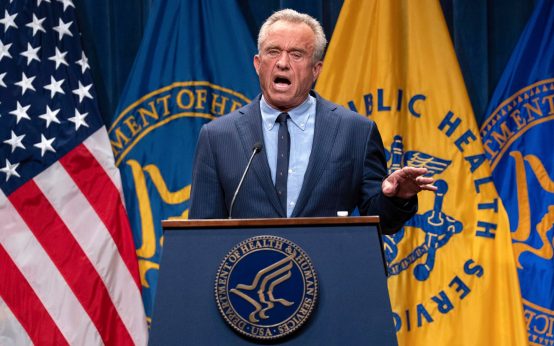 Potential Impact of Changes to the National Vaccine Injury Compensation Program
  Governor Newsom Signs Bills to Protect LGBTQ Community in California
  Living with Sickle Cell: The Glover Family’s Journey