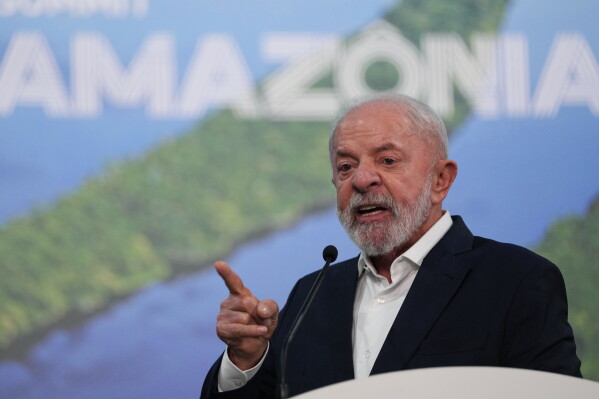
Brazil’s Supreme Court is poised to evaluate significant cases that could redefine protections for the Amazon rainforest and the Indigenous communities reliant on it. These cases cover Indigenous land rights, recent environmental safeguard rollbacks, and infrastructure projects, all converging at the Supreme Court.
In recent years, a predominantly conservative Congress approved measures that many environmentalists believe contravene constitutional rights. President Luiz Inácio Lula da Silva, who promotes an eco-friendly agenda, vetoed some of these measures fully and parts of others. Nonetheless, Congress overruled these objections, bringing the disputes to the Supreme Court. Environmental advocates see the Supreme Court as the crucial defender against the erosion of Brazil’s environmental protections.
The cases highlight the challenges facing the Lula administration. Despite significant strides in reducing deforestation and channeling resources into ecological investments, the government has faced difficulties contending with a conservative Congress influenced significantly by agribusiness interests.
The government struggles in the legislative field, often opposing anti-environmental bills but lacking the power to influence Congress effectively.
The Lula administration faces a lack of bargaining power in Congress compared to prior governments. Lawmakers now have more authority over the federal budget, a vital tool for political negotiation.
Agribusiness, a strong economic sector in Brazil, holds sway in Congress, furthering measures that dilute environmental protections. Consequently, the Supreme Court serves as a counterbalance, safeguarding parts of Lula’s environmental agenda when congressional actions counteract it.
The presidential chief of staff’s office declined to comment on pending Supreme Court cases. As the world’s leading producer of soybeans and beef, Brazil exports most of its soybeans, with China (its largest trading partner) purchasing 70% of soybean exports from January to July 2026. Beef exports similarly follow, with China buying 50%.
The expansion of agricultural frontiers, primarily through cattle ranching and soybean production, remains Brazil’s top cause of deforestation, notably in the Amazon. The Parliamentary Agricultural Front did not respond to commentary requests, although agribusiness entities have publicly denounced illegal deforestation, emphasizing the rise in agricultural productivity as forest clearing rates have decreased.
Amazon rainforest conservation is vital for climate change mitigation. The region aids climate and rainfall regulation and houses significant carbon reserves that, if unleashed, could intensify global warming.
Indigenous Lands’ Future
Brazil’s Supreme Court commenced reviewing final appeals on a 2025 ruling that dismissed the “time limit” thesis, a legal view endorsed by agribusiness pushing to restrict Indigenous land claims to territories present or contested when the Constitution commenced on October 5, 1988.
Proponents believe the cutoff offers legal clarity to landowners. Indigenous groups argue it overlooks decades of evictions and forced displacements, mainly during Brazil’s 20th-century agricultural growth.
Judges are addressing appeals from the government, political factions, farmers, and Indigenous groups, with a decision expected by August 18. These deliberations include compensation guidelines and possible timelines for finalizing Indigenous land demarcations.
A lawyer from the advocacy group Articulation of Indigenous Peoples of Brazil noted some proposals might hinder future demarcations by introducing bureaucratic barriers and expanding compensation rights for non-Indigenous inhabitants, allowing continued residence on contested land until compensation occurs.
The Kawahiva Indigenous community, remaining secluded and uncontacted within the Amazon, may feel the impact of these proceedings. Authorities confirmed their Mato Grosso state presence in 1999, demarcating their territory fully earlier this month according to a mapping process.
Survival International states the Kawahiva live as nomadic hunter-gatherers, having survived past assaults and illnesses while continuing to avoid outside contact.
Other Cases Impacting Amazon Governance
On a pivotal note, Brazil’s highest court will address additional cases concerning Amazon governance, including state laws concluding the soy moratorium and a new environmental licensing law approving strategic infrastructure projects.
In January, significant grain producers retracted from the soy moratorium, a nearly two-decade agreement reducing Amazon deforestation by restricting soy cultivation on cleared lands. The accord fell after major soy-producing states passed legislation annulling participating companies’ tax benefits. Justice Flávio Dino’s injunction halted state legislation, pending comprehensive court scrutiny.
The court will also inspect the new environmental licensing law implemented in February, expediting permits for projects with substantial impact, including mines, highways, and industrial plants.
Environmentalists anticipate the Supreme Court may nullify unconstitutional law provisions, particularly those facilitating self-licensing for projects of moderate environmental influence.
Araújo cites significant consequences from this law in the Amazon, mentioning the paving of a contentious highway and plans to dredge a principal river without necessary environmental assessments.
The environment ministry defended the soy moratorium, underscoring its role in mitigating Amazon deforestation amid Brazil’s production surge. Concerning the environmental licensing law, the ministry conveyed its earlier veto attempts on contentious provisions, stressing their commitment to uphold fundamental national standards.
The ministry asserted Brazil requires an effective, foreseeable, and technical environmental licensing system to expand infrastructure investment while addressing biodiversity loss and climate change issues.
This report receives backing from diverse private foundations. The Associated Press retains responsibility for the content.
 Drought Drives Bears Closer to Human Habitats
  Viral Video Captures Elk Smashing Car Window in Colorado
  Unprecedented Quiet: September Ends Without Atlantic Hurricanes
 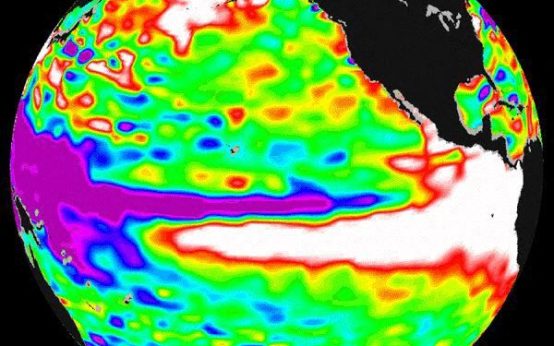 Impact and Predictions of the Strongest El Niño in History
  Record-Breaking September Temperature in the U.S.
  States Lead the Way in Energy Policy