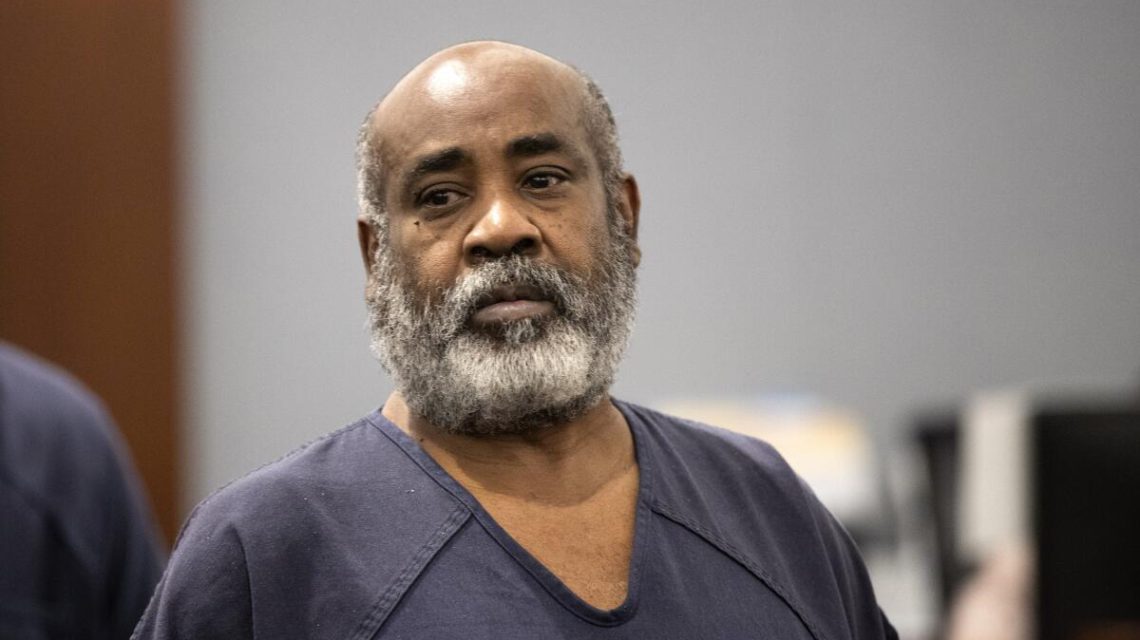
For nearly 30 years, Duane “Keffe D” Davis, a former Compton gang leader, has been a prominent figure in the discussion surrounding the murder of rapper Tupac Shakur. Shakur was at the height of his career when he was fatally shot on September 7, 1996, in Las Vegas, while riding in a BMW with Death Row Records boss Marion “Suge” Knight. Despite extensive investigations, the mystery of Shakur’s murder remains.
This week, Davis faces trial in Las Vegas, accused of orchestrating Shakur’s murder. Prosecutors argue Davis himself is the key witness in their case. They claim he did not pull the trigger but masterminded the killing, providing the gun as part of a revenge plot over a gang feud. While Davis has retracted some statements, a judge has allowed them to be used in court.
In his memoir “Compton Street Legend,” Davis claimed he and his associates were in Las Vegas to watch a Mike Tyson fight. They learned Davis’ cousin, Orlando “Baby Lane” Anderson, was attacked by Knight’s Death Row Records affiliates. Davis described giving a gun to one of his crew members, who then fired into Shakur’s vehicle. Davis, now 63, denies being in Las Vegas that night.
“Tupac made an erratic move and began to reach down beneath the seat … and that’s when the fireworks started,” Davis recounted.
Legal experts indicate prosecutors will need more than Davis’ admissions. Former federal prosecutor Neama Rahmani noted the challenges in corroborating Davis’ account with forensic evidence, owing to the case’s age. Prosecutors may rely on testimony from former gang members.
During a 2008 LAPD proffer-protected interview, Davis identified Anderson as the shooter, indicating the murder was retribution for a prior attack. Despite repeating this narrative in media interviews, Davis altered his story in his book. Greg Kading, a former LAPD detective, claimed Davis incriminated himself through admissions, citing ego and greed as his downfall.
Davis maintains his innocence, claiming his book was ghostwritten to aid his family financially.
“I did not write the book; a ghostwriter wrote that book,” Davis said.
Prosecutors plan to call witnesses who will support Davis’ past admissions. Meanwhile, Davis’ defense argues there are no forensic links or credible witnesses, as Knight, the sole living witness, has not identified Davis. Denvonta Lee, a South Side Crip associate, is expected to testify, detailing the rivalry between Davis’ Crips and the Mob Piru Bloods, tied to rival record labels.
Investigators initially linked the shooting to a gang rivalry, tracing back to a chain-snatching incident involving Anderson. The attack on Shakur was alleged to be a continuation of gang hostilities, with Davis purportedly supplying the weapon used.
In 1997, Knight was imprisoned for violating probation related to the assault on Anderson, and in 2015, he received a 28-year sentence for voluntary manslaughter in a separate incident. Knight asserts no involvement in Shakur’s trial, warning of repercussions if included.