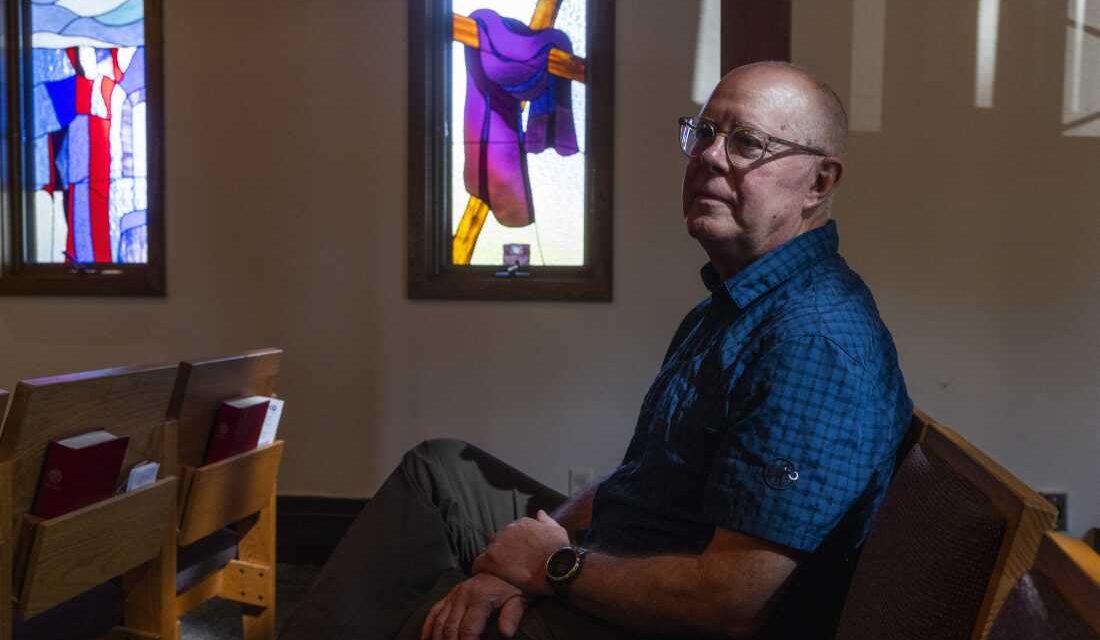
Rev. Steve Sylvester, interim Pastor of Prince of Peace Lutheran Church in Roseville, Minnesota, informed his congregation about surveillance by the Department of Homeland Security (DHS) during a federal immigration enforcement surge last winter. He revealed this was linked to a federal court motion in an ongoing conspiracy case against ICE protesters. According to the motion, a DHS undercover agent attended a protest meeting at the church, recording license plates and compiling personal dossiers.
It feels weird. It feels like I’m living in 1950s Eastern Europe,
Sylvester expressed to NPR, highlighting his concerns about government overreach.
Surveillance Widespread in Community Spaces
DHS surveillance extended to various locations like churches, libraries, and schools in the Twin Cities. The operations included infiltrating private communications and seeking financial records from national labor unions. Rachel Levinson-Waldman of the Brennan Center noted the breadth of government activities revealed by the documents.
Cody Sanders, another interim pastor at University Baptist Church, learned an agent wore a wire during a self-defense class at his church. Sanders shared his surprise and concern over potential mistrust within his congregation.
Government’s Justification and Legal Perspectives
Sergio Manancero, general manager of La Doña Cerveceria in Minneapolis, acknowledged the presence of an agent at a meeting, understanding government motives but questioning their methods. Levinson-Waldman compared these tactics to COINTELPRO, a controversial FBI program from the mid-20th century.
Prosecutors argued in court that surveillance targeted those charged in the conspiracy case, labeling their actions as standard enforcement practices. Aaron Terr from the Foundation for Individual Rights and Expression raised concerns about potential First Amendment violations, as lawful activities were also monitored.
Political and Ethical Implications
The investigation involved examining financial records of various organizations. A controversial DHS document presented in court showed a network of 18 groups, implying interconnectedness among them. However, the government refuted claims of targeting these groups solely based on associations.
Bernie Burnham, President of the Minnesota AFL-CIO, criticized the government’s actions as reminiscent of McCarthyism. Terr cautioned that such surveillance could discourage civic engagement due to fear of government scrutiny.
The DHS refrained from commenting on ongoing investigations, directing inquiries to the U.S. Attorney’s Office, which also declined to comment. A hearing for the conspiracy case is scheduled for this week.
 Abdul El-Sayed and Jesse Watters Clash Over Key Issues in Michigan Senate Race
  The U.S.-Canada Trade Dispute and Lessons in Coercive Diplomacy
  Examining the Impact of Climate Change on Heat Waves
  Challenges and Triumphs at Camp Cranium: A Haven for Children with Brain Injuries
  China’s Response to U.S. Sanctions on Iran
  Vitamin D and Cognitive Health: New Insights