
Launching the Roman Space Telescope
The Nancy Grace Roman Space Telescope launched on Sunday, carried by a SpaceX Falcon Heavy rocket. This pivotal mission aims to address profound questions about the universe. The telescope, valued at $4.3 billion, is named in honor of pioneering astronomer Nancy Grace Roman, renowned as the “Mother of Hubble.” This launch represents one of NASA’s major scientific initiatives in recent years.
According to NASA, the telescope’s extensive field of view will enable astronomers to map large sections of the universe more swiftly than prior observatories, supplementing the findings of the Hubble and James Webb space telescopes. Nicky Fox, NASA’s science mission director, stated the observatory is anticipated to locate “thousands of supernovae, tens of thousands of planets, billions of galaxies, and tens of billions of stars.” These discoveries have the potential to transform our comprehension of galaxy formation, planetary development, and the universe’s evolution over billions of years.
Nancy Grace Roman’s Legacy
Nancy Grace Roman, NASA’s inaugural chief astronomer, was instrumental in advancing U.S. space science. Born in 1925, Roman pursued astronomy during a time when women in the field faced considerable hurdles. After joining NASA in its formative years, Roman championed the establishment of its astronomy program. She advocated for deploying powerful telescopes beyond Earth’s atmosphere to minimize interference from weather and atmospheric distortions.
Her contributions were pivotal in the creation of the Hubble Space Telescope, earning her the nickname “Mother of Hubble.” Roman dedicated decades to fostering scientific research and promoting opportunities for women in astronomy. She passed away in 2018 at the age of 93.
The Role of the Roman Space Telescope
The Nancy Grace Roman Space Telescope is designed for conducting wide-field surveys of the universe on an unparalleled scale from space. NASA indicates its observational field of view is over 100 times greater than the Hubble’s, enabling rapid imaging of vast sky areas while retaining similar sensitivity.
The observatory will travel for over three months to reach its destination near the second Lagrange point. This gravitationally stable zone, roughly 1 million miles away from Earth, is also occupied by the James Webb Space Telescope. During its planned five-year mission, the Roman Space Telescope will explore exoplanets, map billions of galaxies, research black holes, and study dark energy and dark matter. By tirelessly scanning large portions of the sky, scientists expect to uncover new objects and phenomena.
For more information, contact Newsweek editors Amanda Castro and Anthony Murray.
 Data Center Development Sparks Debate in St. Louis
  NASA’s New Space Telescope Launch: A Breakthrough in Cosmic Exploration
  States Tackle AI-Driven Energy Needs with Different Strategies
 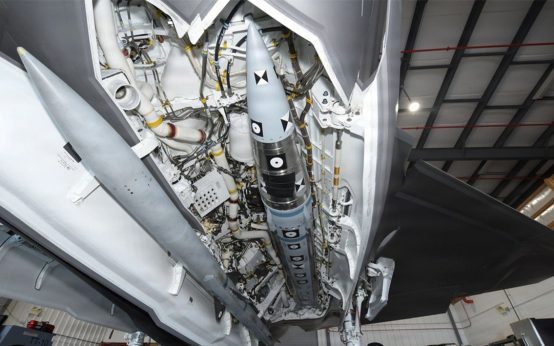 U.S. Navy’s New Long-Range Missile, ‘MALICE’, Enhances Air Defense
  Educators Confront AI’s Limits in Human Creativity
  Proposed $7.85 Million Settlement for PlayStation Users