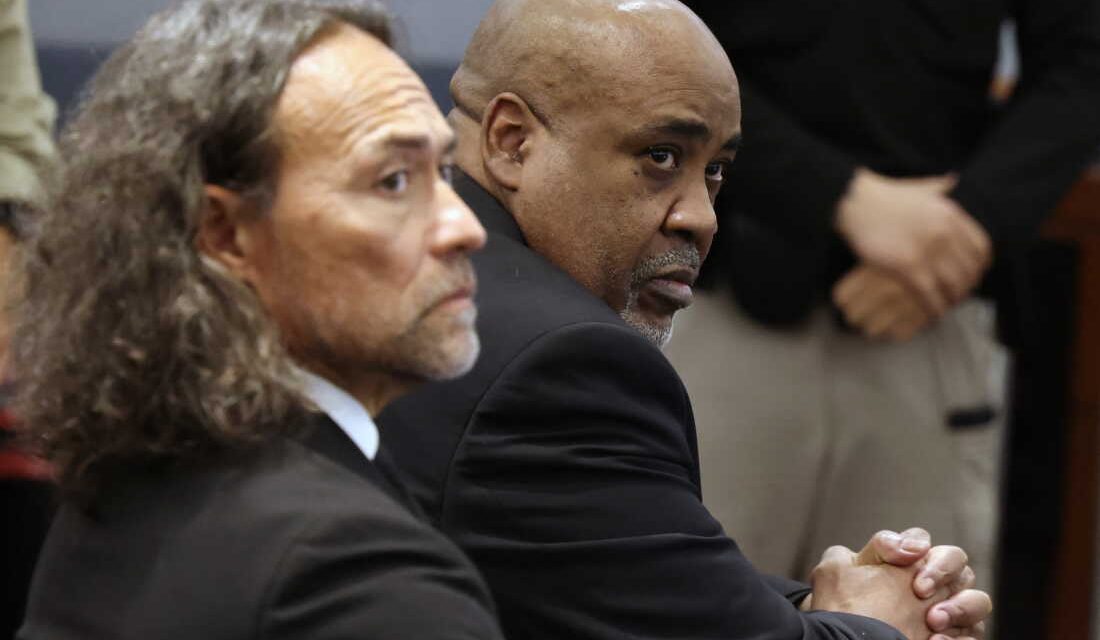
Duane Davis, also known as Keefe D, has been found guilty of orchestrating the 1996 murder of rap legend Tupac Shakur. The decision was reached by a jury in Las Vegas, concluding a case that has intrigued hip-hop fans for decades. Davis, aged 63, was convicted of murder with a deadly weapon and may face a life sentence. The jury took less than three hours to deliberate after a trial that lasted several weeks.
At the verdict’s announcement, Shakur’s sister, Sekyiwa Shakur, showed emotion by crying and embracing the prosecution team. Meanwhile, Davis’ son reacted by covering his face. Chief Deputy District Attorney Binu Palal characterized Davis as the mastermind of the attack, having sought out Shakur and Marion ‘Suge’ Knight the night of the murder. Palal urged jurors to recognize Davis’ role in the crime.
The prosecution argued that Davis admitted, on multiple occasions, to being in the white Cadillac from which the shots were fired. Although he did not fire the gun, evidence suggested that as a gang leader, he called for the attack. Defense attorney Michael Sanft challenged the prosecution’s narrative, questioning whether Davis had orchestrated the crime before or after the event. The trial saw testimony from 24 prosecution witnesses and three defense witnesses over nine days.
The prosecution agreed to drop a gang enhancement charge due to logistical challenges with witnesses. They refrained from commenting after the verdict, while Shakur’s family expressed they would wait for the sentencing scheduled in October before commenting further.
This trial concludes a long-standing case that has captivated both hip-hop fans and crime experts. In 1996, Shakur was fatally wounded while at a Las Vegas intersection when a white Cadillac pulled alongside his vehicle and opened fire. He passed away six days later, while Knight sustained injuries but survived. No charges were filed until Davis began publicly discussing his involvement, admitting he was in the Cadillac and had handed the gun to others as retaliation for an earlier incident involving his nephew.
Davis remains the lone survivor among those prosecutors identified in the vehicle. Witnesses detailed the bitter rivalry between Los Angeles gangs, Mob Piru and Davis’ Southside Compton Crips, leading up to the murder. These gangs were tied to record labels: Mob Piru with Knight’s Death Row Records and Southside Compton Crips with Sean ‘Diddy’ Combs’ Bad Boy Records.
Sanft contended that Davis’ public boasts and book were meant to enhance his image for monetary gains, not confess to the murder. He highlighted a lack of physical evidence and challenged the credibility of Davis’ statements. During rebuttal, prosecutor Marc DiGiacomo criticized Davis’ fascination with Shakur’s death, as evidenced by a scrapbook containing related articles.
Davis’ 2019 memoir, “Compton Street Legend,” played a significant role in the trial. Prosecutors maintained that while it included disclaimers, the core story remained consistent with their case. Sanft also referenced the memoir in defense, leading to a controversial moment when he read aloud from it. Throughout the trial, gang and record label rivalries were cited as context for the shooting.
The murder of the Notorious B.I.G. six months later frequently surfaced in the courtroom, with law enforcement mentioning earlier suspicions of Davis’ involvement, only to ultimately dismiss him. This case remains unsolved, adding to the ongoing intrigue among hip-hop enthusiasts.
 U.S.-Venezuela Oil Deal Sparks Attention
  Podcaster Confronts Children’s Educator over Anti-Israel Comments
  Iran Seeks Support from India Amid Ongoing Conflict
  Survival Challenges After Catastrophic Flooding on Nepal-China Border
  Russia Launches Massive Attack Near Kyiv
  Spanish Prime Minister Addresses Disinformation in Migration Crisis