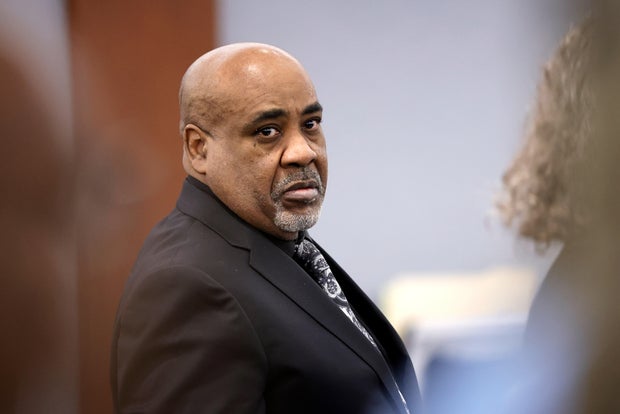
Duane “Keffe D” Davis’ defense attorney, Michael Sanft, expressed his concern over the jury’s decision in a conviction of first-degree murder for the 1996 shooting of Tupac Shakur. Sanft accused the jury of having “preconceived notions” about his client, suggesting they might not have thoroughly examined all the evidence available. He voiced his surprise and skepticism, noting the jury reached their guilty verdict in less than three hours. “I’m surprised. With the amount of evidence that should have been considered by the jury, I don’t believe that they went through it,” Sanft shared with CBS News.
Nevada law allows juries to reach a verdict without a required deliberation period. When questioned about the jury’s impartiality from the trial’s onset, Sanft acknowledged larger issues predisposing him to focus on pre-trial motions related to permissible evidence. According to the prosecution, Davis orchestrated the Las Vegas drive-by shooting on September 6, 1996, as retaliatory action for an assault on his nephew, Orlando “Baby Lane” Anderson, earlier that night.
Chief Deputy District Attorney Binu Palal described Davis as actively searching for Shakur and Death Row Records co-founder Marion “Suge” Knight, who sustained injuries but survived. “It is a slam-dunk, absolutely no defense to murder case,” remarked Chief Deputy District Attorney Marc DiGiacomo during his closing statement.
While prosecutors did not claim Davis was the shooter, Nevada law allows conviction for aiding in a crime. They presented an audio recording from a 2008 interview where Davis recounted passing the gun to Anderson, who allegedly fired the shots from the backseat. Anderson was never charged and died in an unrelated incident 20 months after the shooting. Davis remains the sole figure tied to the shooting still alive.
Davis denied guilt. He initially had protection from prosecution for cooperating with authorities, but this agreement was voided after the release of his book “Compton Street Legend” in 2019 and multiple public interviews. In his book, Davis claimed he was in the Cadillac during the shooting and described acquiring a Glock .40 from Eric “Zip” Martin. He later distanced himself, saying he had “never read” it and was attributed merely as a co-author.
Sanft criticized Judge Carli Kierny’s decision to allow evidence of Davis’s past gang involvement and drug activities, viewing it as “inappropriate.” Further, he contested Kierny’s instructions that if the jury believed Davis’s self-incriminating statements, no additional corroboration was necessary. “It’s like a football game where it was 52 to 0 walking in at the opening kickoff,” Sanft analogized, emphasizing disadvantages in court.
In court, Sanft’s strategy included questioning his client’s credibility due to the reliance on Davis’s statements alone. “It’s the only defense strategy,” he stated, stressing a lack of evidence placing Davis in Las Vegas on that day.
In absence of hard evidence for conviction, Sanft insists the decision was based on perception rather than concrete support. Davis awaits sentencing scheduled for October 13, facing a maximum life sentence. Sanft plans to appeal, expecting this to last over a year.