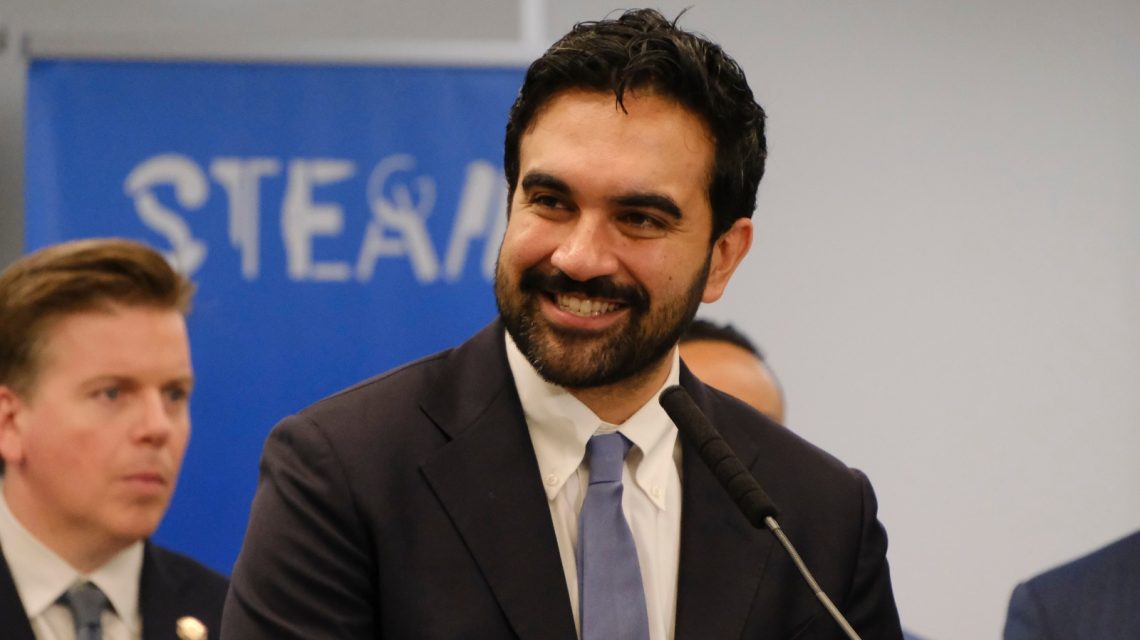
New York City Public Schools, the nation’s largest school district, has announced a one-year halt on student-facing generative artificial intelligence (AI) tools for students up to eighth grade. This decision marks a significant restriction on AI in American classrooms. Mayor Zohran Mamdani and Schools Chancellor Kamar Samuels made the announcement, stating this pause will allow officials to study AI’s effects on learning and development.
The moratorium impacts approximately 600,000 students and includes a prohibition on AI chatbots. Mamdani emphasized that children need real teachers and human interaction to develop critical skills. He expressed concerns about students needing to work through difficult problems independently. Samuels highlighted this initiative aims to preserve the essential human connection and creativity that contribute to children’s growth.
“Innovation doesn’t mean more technology,” Samuels said, underscoring the importance of technology serving learning, not dominating it.
This move comes amidst a debate among educators, parents, and policymakers regarding AI’s role in education. While some districts expand AI literacy, others enforce restrictions, citing concerns over critical-thinking abilities, increased screen time, and issues of academic integrity and privacy.
NYC AI Moratorium: Implementation and Rationale
The policy affects students from pre-K through eighth grade, beginning in the 2026-27 academic year. The Technology in Schools coalition, composed of diverse stakeholders, will evaluate the policy’s impacts and publish findings. Mayor Mamdani asserted that while the tech industry pushes AI in early education as inevitable, the city plans to critically assess its implications.
Additionally, five limited AI pilot programs will be introduced for high school students using tools like Quill and Edia. This balanced approach aims to explore AI’s educational benefits for older students.
New York Governor Kathy Hochul supported Mamdani’s decision, aligning it with the state’s broader educational goals of prioritizing genuine learning experiences over excessive digital interaction.
Comparison with Other Districts
According to Meredith Coffey from the Thomas B. Fordham Institute, New York City’s policies are among the strictest, albeit not entirely unique. For instance, Los Angeles Unified School District (LAUSD) also prohibits AI for students under 13, and Fairfax County in Virginia bans AI use in grades K-5. In contrast, Chicago integrates AI literacy across all grades.
LAUSD limits digital device use, responding to concerns about technology’s impact on attention and learning. Similarly, Katy Independent School District in Texas has introduced an AI framework focusing on foundational skills before allowing extensive AI use.
State Initiatives on AI in Education
Fairfax County recently set restrictions on AI tools for elementary students as part of a broader tech policy. Secondary students can use AI tools with principal approval for specific tasks.
Oklahoma’s Responsible Technology in Schools Act, effective in 2026, mandates all districts develop AI policies by 2027. Idaho plans to introduce a statewide AI framework addressing privacy and academic integrity among other concerns.
Overall, while there is consensus on AI’s growing role in education and work, the debate persists on its implementation in schools. Supporters highlight AI’s potential for personalized learning, whereas critics warn of risks including cognitive dependency and privacy issues. More research and balanced approaches may bridge these perspectives.
 Interest Rate Reduction Offer for Federal Student Loan Borrowers
  Alabama Democrat Proposes Bill to Reverse Graduate Loan Restrictions
  New York City Schools Ban AI Tools in Classrooms Through Eighth Grade
  Educators Confronting AI’s Limitations
  Harvard’s Controversial Anti-Racism Resources for Parents
  Senator Calls for Re-examination of Teachers Union Charter