
In June, a U.S. diplomat quietly traveled through West Africa, meeting with officials from countries including Ivory Coast, Gambia, Guinea Bissau, Togo, and Gabon. Christian Ehrhardt, a State Department official, was tasked with a new mission: the Office of Remigration. This division focuses on persuading countries to accept individuals deported from the U.S. despite not being their citizens.
The controversial ‘third country’ deportation deals were initiated under the Trump administration’s hard-line immigration stance. Ehrhardt’s team negotiates these deals, which have seen rapid expansion, with at least $410 million committed to agreements with 31 countries, mostly in Africa and Latin America, by June’s end.
Expulsions Without Connections
Under these deals, migrants have been deported globally to countries they have no ties to. Arrangements included flights to Costa Rica for migrants from China, Russia, Iran, and Afghanistan, and to Eswatini for individuals from Vietnam, Laos, Cuba, and Jamaica. Stephen Miller, the White House deputy chief of staff, is a key figure driving these deals, using key appointments to prioritize deportations over other foreign policy objectives.
Ehrhardt acts as a White House envoy during meetings with foreign leaders, emphasizing the seriousness of the deals. The agreements vary; some countries, like Uganda, accept only African nationals, while others, such as the Democratic Republic of the Congo, will not accept anyone from Africa. Conditions of acceptance also differ based on criminal records.
Financial Incentives and Human Rights Concerns
To secure these deals, the Trump administration has made substantial financial commitments, including $81 million in direct payments to 13 foreign governments. Such sums often represent a significant increase for countries receiving U.S. funds. These deals are often crafted to bypass statutory requirements and human rights safeguards associated with foreign aid.
The administration has shifted focus from resettling refugees to expelling them, with significant funding pledged to the International Organization for Migration and the U.N. Refugee Agency for related projects. However, these organizations are not directly part of the agreements. Some payments act as ‘sweeteners’ to ensure compliance from foreign governments.
The Trump administration desired “fast money, with no strings attached,” circumventing congressional oversight, according to a former State Department official.
Diverse Agreements and Concerns
Agreements range in scope; Ghana, for example, only accepts nonviolent offenders. The deals are implemented swiftly, occasionally in countries with authoritarian regimes where human rights abuses are prevalent. The State Department’s own reports note severe abuses in several host countries, yet the contracts maintain minimal oversight on funding allocation and migrant treatment.
Despite the potential for abuse, administration officials argue that third-country deportations are necessary for removing certain migrants, including violent criminals, whose home countries refuse repatriation. Immigration attorneys counter that this strategy leads to refoulement, the unlawful expulsion of refugees to potentially harmful regions.
The Trump administration faced legal challenges, with a federal appeals court ruling the policy unlawful due to denial of rights for deportees to contest their expulsion to specific third countries.
Restructuring and Rebranding
The administration restructured departments and shifted funding to support ‘Project Homecoming,’ encouraging voluntary return of migrants. Departments were realigned to monitor deportation-related expenditures and statistics.
Critics accuse the administration of labeling the PRM’s mission around the contentious term ‘remigration,’ a term with roots in supremacist movements. This rebranding is part of broader administrative changes seeking to realign U.S. immigration policy to prioritize deportation over refugee resettlement.
Impacts and Future Directions
Since the Trump administration’s second term, over 25,000 people have been deported to at least 28 third countries. While these deportations represent only a fraction of total deportations, the broader deterrent effect dissuades migrants from seeking refuge in the U.S.
Public and international backlash against these deals is ongoing, as concerns grow over migrant treatment and the integrity of these agreements. The State Department continues pursuing negotiations with other countries, as international organizations navigate their roles under new U.S. funding conditions.
The full impact of these deals remains uncertain, as they face ongoing legal, ethical, and humanitarian scrutiny.
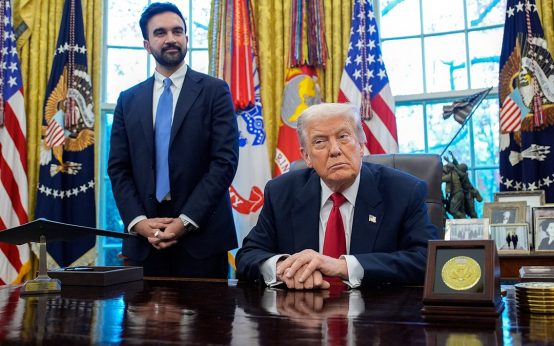 Trump and NYC Mayor Mamdani: Political Divides and Collaborative Efforts
  Rep. Jared Golden Endorses Mike Lawler for Reelection
  Seattle Protects Nonmonogamous Relationships from Discrimination
  Democratic Lawmakers Criticize Trump’s $5,000 Payout Promise
  Judge Assigned to White House Press Access Case
  Hasan Piker Faces Backlash Over Controversial Comments