President Donald Trump has taken a unique approach to China, differing from his predecessors by reshaping the U.S.-China trade relationship. He implemented tariffs and measures to adjust trade flows and mitigate supply chain risks, aiming to support American industrial workers affected by factory closures and unfair trade practices.
Chinese leader Xi Jinping has strategically responded, placing pressure on the U.S. by limiting access to vital minerals, manipulating the renminbi, and using third countries to mitigate U.S. tariffs’ impact. While the U.S.-China trade deficit has decreased, China still enjoys an overall trade surplus, reaching $1.2 trillion last year.
As Xi prepares for a significant summit in Washington on September 24, Trump must focus on three major issues: cars, currency, and chips.
Auto Industry Risks
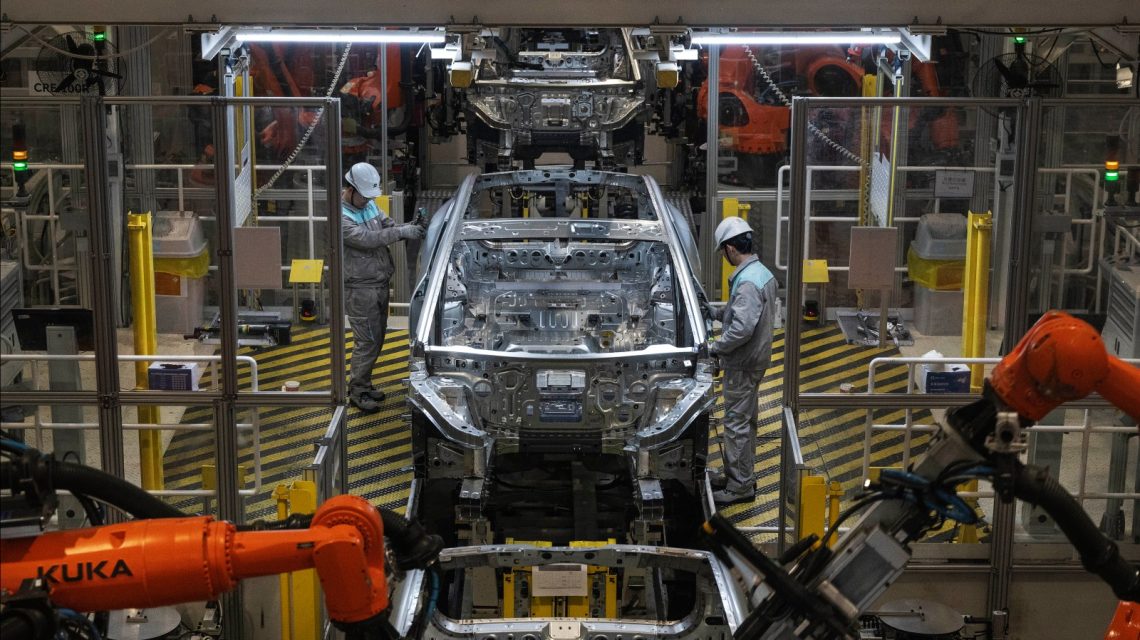
China’s auto sector poses significant challenges. Utilizing subsidies, technology transfers, and supply chains involving forced labor, it has grown into a global powerhouse. In 2024, experts labeled it an existential threat to American auto jobs. However, Trump has suggested openness to Chinese factories in America, raising concerns about foreign influence on this critical sector.
The auto industry supports a vast manufacturing ecosystem in the U.S. Allowing foreign control could undermine national security during crises.
Currency Manipulation
China’s currency, the renminbi, is tightly managed by Beijing, often keeping its value low. This devaluation encourages cheaper exports, negating U.S. trade enforcement efforts. Despite existing tariffs, Chinese exports to the U.S. increased significantly.
There are mechanisms available, such as Treasury confronting exchange rate manipulation and Commerce pursuing countervailing duties. Yet, Trump’s administration has not acted decisively against this issue.
Semiconductor Chip Concerns
Trump has made strides in domestic semiconductor production with significant investments and reshoring commitments. However, he sometimes accommodates multinational complaints, such as Nvidia’s desire to sell military-grade chips to China.
These mixed messages may weaken efforts to reduce dependence on foreign electronics, risking the goal of a strong U.S. chipmaking industry.
Trump’s approach to China has mostly been straightforward, avoiding the ineffective dialogues of previous administrations. His landmarks, like the “Board of Trade” proposal and stable tariffs, demonstrate a firm trade stance. Balancing priorities on cars, currency, and chips could create a coherent trade strategy that aligns with his administration’s larger goals.
Scott Paul is president of the Alliance for American Manufacturing. The views expressed in this article are the writer’s own.