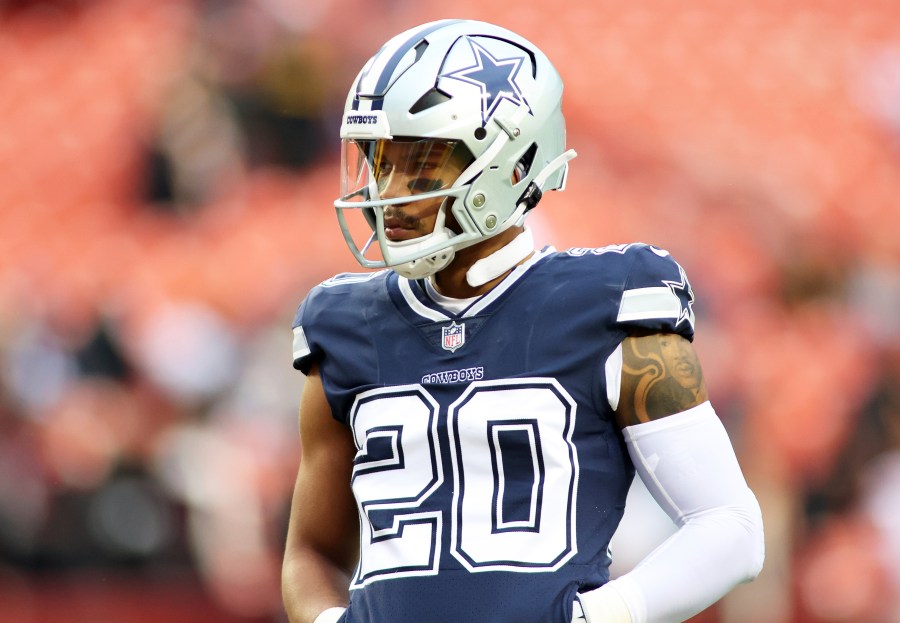
Recently, viewers of NFL games might have noticed players wearing distinctive horseshoe-shaped collars. These are known as Q-Collars. While they may seem new, players like former Carolina Panthers linebacker Luke Kuechly began wearing them as early as 2016. The device aims to protect athletes’ brains during head impacts.
The Q-Collar received authorization from the Food and Drug Administration (FDA) in 2021. The FDA states that the collar “may reduce the occurrence of specific changes in the brain that are associated with brain injury.” Notable players like Dallas Cowboys running back Tony Pollard have been seen wearing it.
Traumatic brain injuries (TBIs) are a significant risk during sports, often caused by blunt trauma accidents according to the National Institute of Neurological Disorders and Stroke. These impacts cause the brain to move unrestrained within the skull, a phenomenon the FDA describes as “slosh.”
The Q-Collar works by compressing the jugular veins, increasing the blood volume in the skull’s blood vessels. This results in a tighter fit, which limits the brain’s movement inside the skull and potentially reduces “slosh.”
The Q-Collar isn’t limited to athletes; the U.S. Army awarded a $2.8 million contract for research on whether the device can reduce blast-induced TBIs among soldiers. However, the FDA emphasizes that it shouldn’t be used by athletes with certain conditions and cannot prevent concussions.
Experts like Adil Hussain, a specialist in brain injury medicine, compare the Q-Collar’s function to a seat belt for the brain. Still, they caution against overestimating its preventive capabilities for serious brain injuries.
In October 2022, the FDA expressed concerns over research validity linked to the Q-Collar’s approval. The study found differences in brain tissue changes in athletes wearing the collar, but the connection to actual brain injuries remains unvalidated.
Further research is essential to determine the collar’s benefits. Despite uncertainties, many athletes wear the collars, including ambassadors such as Tony Pollard, Boston Scott, and Vernon Davis.
 Washington Mystics’ Struggles in WNBA Playoff Opener
  Living with Alzheimer’s: A Young Man’s Journey
  New York Giants Adjust Quarterback Strategy After Jaxson Dart’s Injury
  Aaron Rodgers Expresses Frustration in Steelers’ Victory Over Bengals
  Chris Simms Faces Backlash Over Halftime Comments
  Tennessee Titans Struggle: Quarterback Cam Ward Under Scrutiny