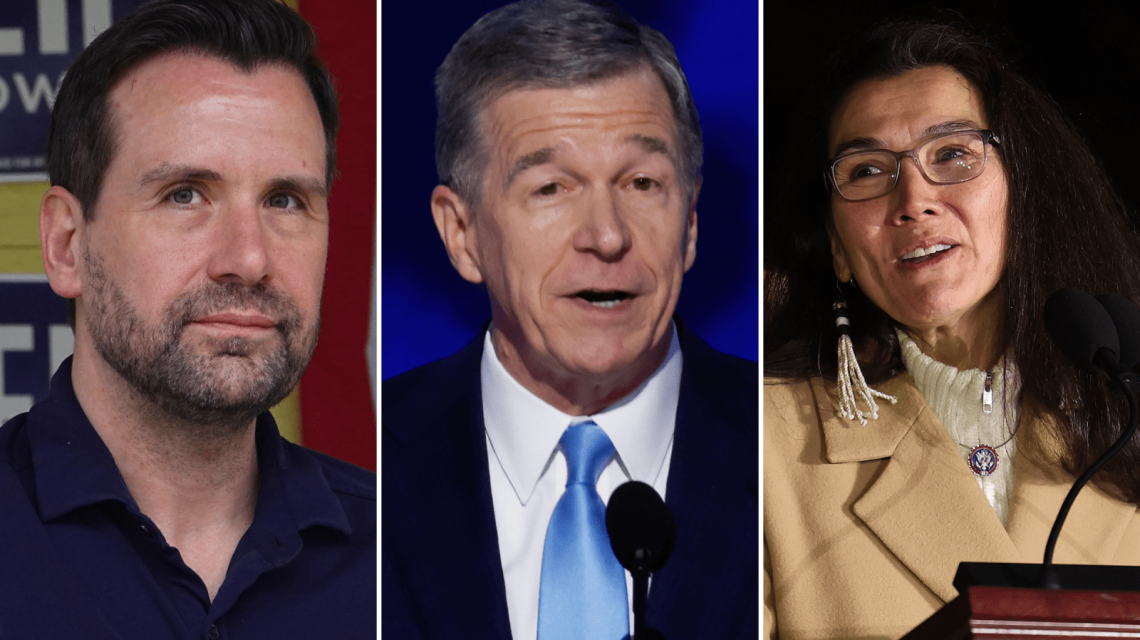
Democrats have made strides in reducing the voter registration gap against Republicans in several pivotal states ahead of the 2026 midterm elections. Despite Republicans still holding advantages in some conservative areas, the contest for Senate control is fiercely competitive as November 3 approaches.
Changing Dynamics in Senate Race
Recent polls indicate Democrats leading in traditionally conservative states like Alaska, Iowa, Ohio, and Texas, which heavily supported President Donald Trump in 2024. The declining approval ratings of Trump, amid economic concerns such as inflation and high gas prices due to the Iran conflict, have boosted Democratic optimism to broaden the electoral map in these challenging states.
While voter registration trends offer insights into political shifts, they don’t always predict election outcomes, particularly during wave years influenced by national sentiment. Several factors, including population changes, migration, and voter roll adjustments, can sway these numbers. Notably, states like Georgia, Michigan, Minnesota, Ohio, and Texas, though competitive, do not register voters by party.
Stephen Farnsworth, a political science professor at the University of Mary Washington, highlighted that midterm elections often see the president’s party face adversity. Trump’s unusually low approval rating exacerbates Republican challenges beyond the typical difficulties faced by the incumbent party.
“Angry voters are more engaged, as demonstrated by recent registration figures. Concerns about job availability and the impact of AI are significant among young voters, distancing them from Trump’s policies,” Farnsworth noted.
States Where Democrats Are Gaining
Several states, though still Republican-leaning, have seen Democrats gain ground in voter registration, which has impacted competitive Senate races.
Alaska
In Alaska, GOP Senator Dan Sullivan faces Democrat Mary Peltola in a tight race. The Republican voter advantage decreased slightly from 73,829 to 72,290 between December 2025 and September 2026. Polls reveal a close contest in this traditionally Republican stronghold, influenced by a leftward shift in urban areas like Anchorage.
Recent Alaska Survey Research polls show Peltola narrowly ahead in ranked-choice voting, while a Data for Progress poll gives her a 6-point lead. Yet, a New York Times-Siena University poll shows Sullivan leading by 2 points. The Cook Political Report characterizes the race as a toss-up.
Iowa
Iowa, a previous battleground now more conservative, has seen Democrats eroding the Republican advantage from 196,755 to 182,715 by September 2026. Despite Trump’s strong support in 2024, shifting demographics in suburban areas fuel Democratic hopes.
Republican Ashley Hinson competes against Democrat Josh Turek in a close race. Turek leads in a Marist University poll by 8 points, while other surveys show varied results within narrow margins. The Cook Political Report considers the race as a toss-up.
Kansas
Kansas displays heightened competitiveness with the Republican advantage dropping from 401,710 to 394,642 since November 2025. Despite Trump’s 16-point win in 2024, the Democratic presence remains strong, driven by suburban changes near Kansas City.
Republican Senator Roger Marshall faces Democrat Adam Hamilton, with polls indicating a tight race. The Emerson College poll suggests a statistical tie, while co/efficient surveys show Marshall leading slightly.
Nebraska
In Nebraska, Republican Senator Pete Ricketts faces independent Dan Osborn, who aims for bipartisan support. The Republican advantage decreased from 294,750 to 292,049 since 2025.
Polls show a competitive fight with Osborn slightly ahead in several surveys, though forecasters view Ricketts as the favorite.
New Hampshire
In New Hampshire, though backing Kamala Harris by 3 points in 2024, Republicans maintain an advantage reduced from 49,635 to 43,022 since 2025. Independent voters play a crucial role in the state’s moderate political climate.
The Senate race between Chris Pappas and John Sununu sees varied polling results, with Pappas leading in some surveys and others reflecting a statistical tie.
States Where Republicans Are Gaining
Conversely, Republicans have bolstered their position in Maine and North Carolina.
Maine
In Maine, Senator Susan Collins faces Troy Jackson, with Republicans gaining ground despite Democrat voter roll advantages shifting from 43,755 to 31,732 by March.
Polls reflect a competitive race with differing leads among candidates. The Cook Political Report views the race as a toss-up.
North Carolina
In North Carolina, Republican Michael Whatley competes with Democrat Roy Cooper. The Democrat advantage flipped to Republican, with a 7,403-vote edge by September following a previous 604-vote Democrat lead in 2025.
Despite Cooper’s apparent lead in several polls, North Carolina remains a battleground with no Democrat winning statewide federal office in decades.
Democrats’ Prospects for Senate Control
Farnsworth expressed optimism about Democrats’ chances of flipping the Senate, driven by voter concerns over economic issues and dissatisfaction with Trump’s presidency.
Prediction markets have shifted, showing increased probabilities for Democrats gaining control of the Senate from earlier trends favoring Republicans.
These markets reflect trader sentiment regarding political forecasts, though not always accurately predicting outcomes. Monitoring polling and political developments remains crucial as the election nears.
Reporters and editors at Newsweek produced this story using Martyn, an AI assistant.
 Irish Prime Minister Rejects Claims of Antisemitism in Israel Criticism
  Potential Impact of Changes to the National Vaccine Injury Compensation Program
  Governor Newsom Signs Bills to Protect LGBTQ Community in California
  Trump Administration Faces Legal Scrutiny Over Use of Pocket Rescission to Cut Funding
  Natalie Harp’s Role and Media Portrayal
  President Trump’s Visit to the Presidents Cup in Medinah