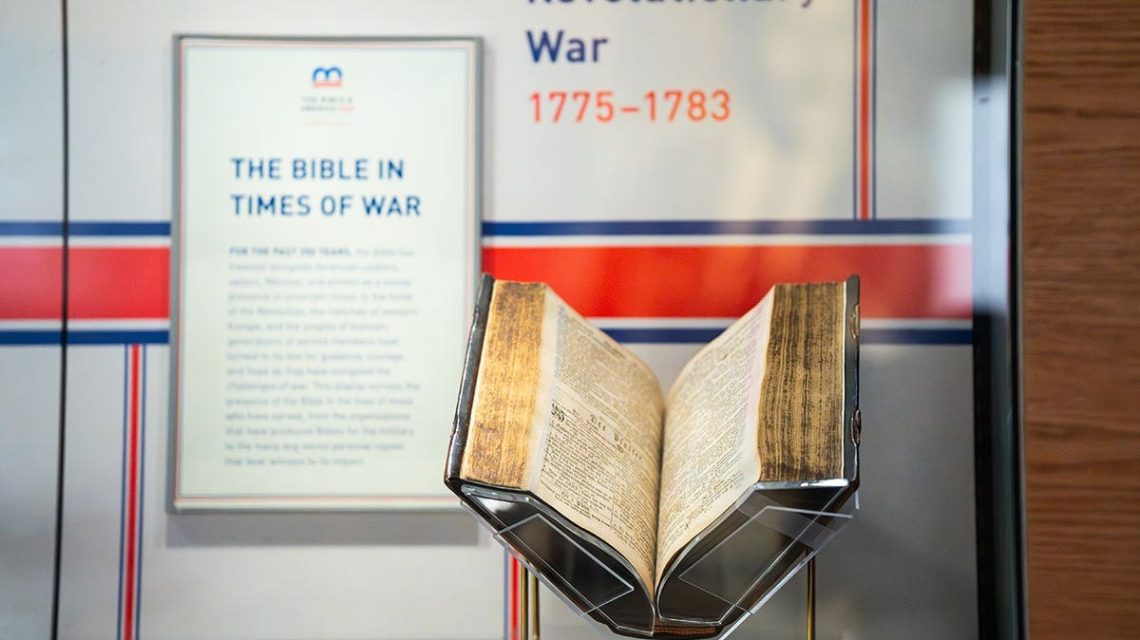
For many generations, American service members have relied on the Bible as a source of strength while facing unknown challenges. Carrying a Bible was often considered one of the most important things found in their uniform pockets. Some Bibles returned from war showing signs of wear and tear, and others were cherished for the prayers written within by family members hopeful their loved ones would return home.
A unique type, encased in metal and worn over the soldier’s heart, served as a symbolic protection. Another Bible was taken to Antarctica, spreading Scripture to distant parts of the world. The Museum of the Bible in Washington, D.C., marks the 250th anniversary of the Declaration of Independence with its exhibit, “Bible in Times of War.” This exhibition showcases how American service members have turned to the Bible for solace and hope during times of conflict.
The Day After Memorial Day, America’s Debt to the Fallen Still Remains.
The exhibit features historical artifacts curated by Wesley Viner, an early modern curator and Marine veteran. He highlights powerful stories from ordinary Americans, often anonymous, who have been forgotten by history. Notably featured are the “Heart Shield Bibles,” small and pocket-sized Bibles with thin metal covers, carried by service members during World War II and the Korean War.
These Bibles, typically bought by families for departing troops, fit into a breast pocket over the heart. It fueled tales that the metal could stop bullets. Viner explains the reality was less dramatic, but he acknowledged the metal could potentially protect someone from shrapnel or debris. The mystique surrounding these Bibles often exaggerates their true capabilities. What mattered more was their symbolism of protection and strength for the families who gifted them.
The exhibit includes heartfelt notes within the Bible covers. Many Bibles were mass-produced, allowing families to gift them to sons, brothers, and husbands preparing to deploy. Written messages like, “To my dear boy, may God keep you safe,” or “praying for you at Christmas,” remain impactful. These messages are often anonymous, intensifying their emotional weight.
The exhibit also tells the story of John Weissenheimer, a Union soldier whose tattered Bible reveals his journey. Weissenheimer served in the 107th Ohio Volunteer Infantry during Civil War battles such as Gettysburg. Despite a lack of detailed personal records, surviving evidence portrays him as someone who found solace in his Bible.
Not every Bible went into battle. In the 1950s, Navy chaplain Peter Boal participated in Antarctic operations, giving a Bible to a recipient simply known as “Bill.” While Bill’s full identity isn’t established, inscriptions hope for safe passage and express prayers for a safe return.
The exhibit includes one of the oldest Bibles printed in Philadelphia in 1776 by Christoph Sauer, known as the “Gun-Wad Bible.” Despite legendary tales of its pages being used as musket wadding by British soldiers, Viner believes these stories reflect the high regard held for Scripture at the time.
Service members often used blank pages in their Bibles to record their movements. One World War I soldier documented his journey across various locations, effectively using his Bible as a personal record of deployment.
The collection demonstrates a varied response from service members facing war. Many sought strength, courage, relief, and hope in the Bible. The exhibit vividly preserves the encounters of servicemen who relied on Scripture amid danger, capturing an enduring connection still recognized in contemporary eyes.
The “Bible in Times of War” exhibit is situated on the second floor of the Museum of the Bible. Jasmine Baehr, responsible for breaking news at Fox News Digital, covers topics such as politics, the military, legal debates, and cultural issues.
 Arrival of Giant Pandas Strengthens U.S.-China Relations
  The Enduring Obsession with True Crime in Modern Media and Culture
  Revival of Son Jarocho: A Musical Heritage in Veracruz
  Exploring Recommended Reads from Diverse Authors
  Digital Divide: America’s Two Economies
  Rose Friedman: A Dedicated NPR Journalist Remembered