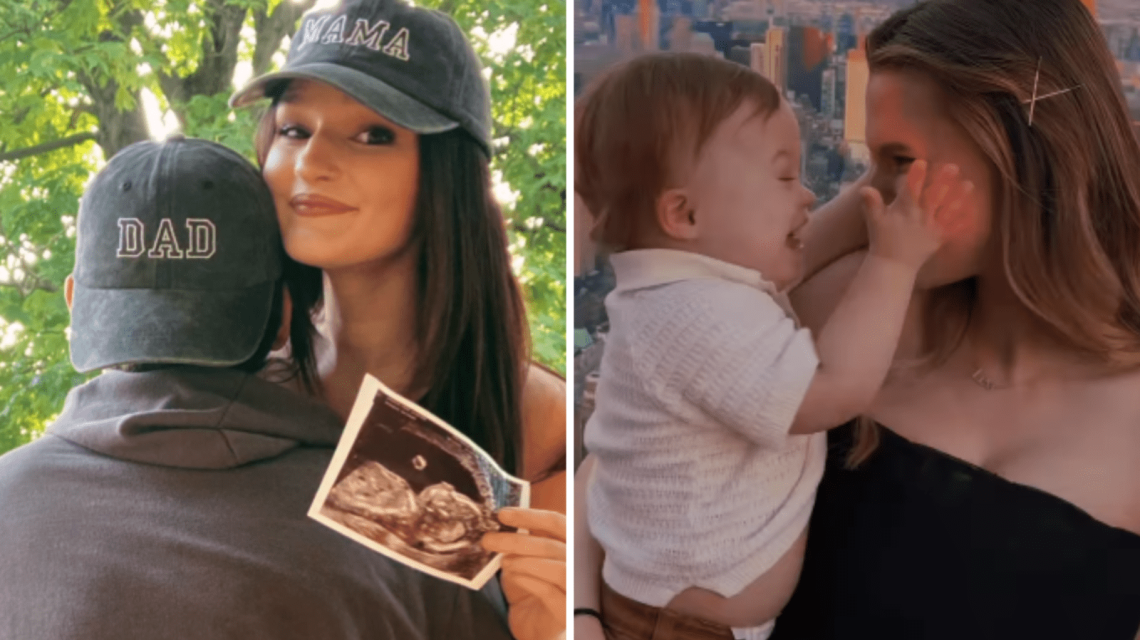
In Indiana, a young mother named Paige Crowder, aged 27, takes pride in sharing her journey as a mother to Levi, her baby born in January 2025 with Down syndrome. Crowder has committed herself to raising awareness about the realities of raising a child with this condition.
During her pregnancy, Crowder received the diagnosis that Levi would have Down syndrome. This prompted her to rethink her understanding of the condition. She realized that much of her previous beliefs were based on misconceptions rather than actual knowledge.
“Getting Levi’s diagnosis during pregnancy was something that completely changed the way I viewed Down syndrome,” Crowder told Newsweek.
Down syndrome, or trisomy 21, is a genetic disorder where a person has an extra copy of chromosome 21. This leads to unique physical traits, learning challenges, and behavioral differences. Annually, about 5,700 children in the U.S. are born with this condition. While some may require lifelong support and are more susceptible to certain health issues, advancements in care and understanding allow many individuals to lead active lives well into adulthood.
For Crowder, Levi is more than his diagnosis. She describes him as joyful, affectionate, and independent.
“He is funny, affectionate, determined, incredibly happy, and completely his own person,” she said.
On her Instagram, @paigevictoriacrowder, Crowder documents moments from their life. One memorable video reflects her reaction upon learning about Levi’s diagnosis. When asked about her plans, she confidently replied, “I’d like to be his mom.” The video highlights joyful moments with Levi, showcasing a life filled with laughter, adventures, and love.
Crowder’s mission with her social media presence is to allow others to see Levi not through the lens of Down syndrome but as a vibrant child. She aims for the audience to witness his character, relationships, and milestones, alongside the regular and special moments in his life.
Reflecting on her feelings at the time of the diagnosis, Crowder wants to connect with other mothers who might be in a similar situation.
“If another mother receives a Down syndrome diagnosis and finds our family, I want her to be able to look at Levi and think, ‘Maybe my baby’s life can be beautiful, too.'”
While Down syndrome is a lifelong condition, treatments such as physical therapy, speech therapy, early intervention, and special education support are available to help children maximize their potential. Other interventions, like eyeglasses, hearing aids, and treatments for health conditions, such as heart ailments, are often necessary for about half of those born with Down syndrome.
Crowder describes her everyday life as a blend of activities familiar to any family with a toddler.
“There are milestones, routines, messes, cuddles, appointments, laughs, and plenty of chaos. Levi has his own additional needs, but those needs don’t define our family or the way we experience him,” she said.
This story was edited by Sirena Bergman and Emma Lee-Sang at Newsweek.
 Female Athletes Discuss Competing Against Transgender Athletes
  Toddler’s Unusual Bedtime Request Helps Him Sleep
  Potential Impact of Changes to the National Vaccine Injury Compensation Program
  Living with Sickle Cell: The Glover Family’s Journey
  Living with Alzheimer’s: A Young Man’s Journey
  Discovery of a WWII Coat Connects Generations