Ukraine’s military has found a novel way to combat enemy defenses by transforming armored personnel carriers (APCs) into improvised explosive devices, according to a statement from one of Kyiv’s military leaders. Brigadier General Andriy Biletsky, commander of the Third Army Corps, revealed that Soviet-era BTR-60s have been adapted into robotic kamikaze complexes to break through enemy front lines in the Donetsk oblast.
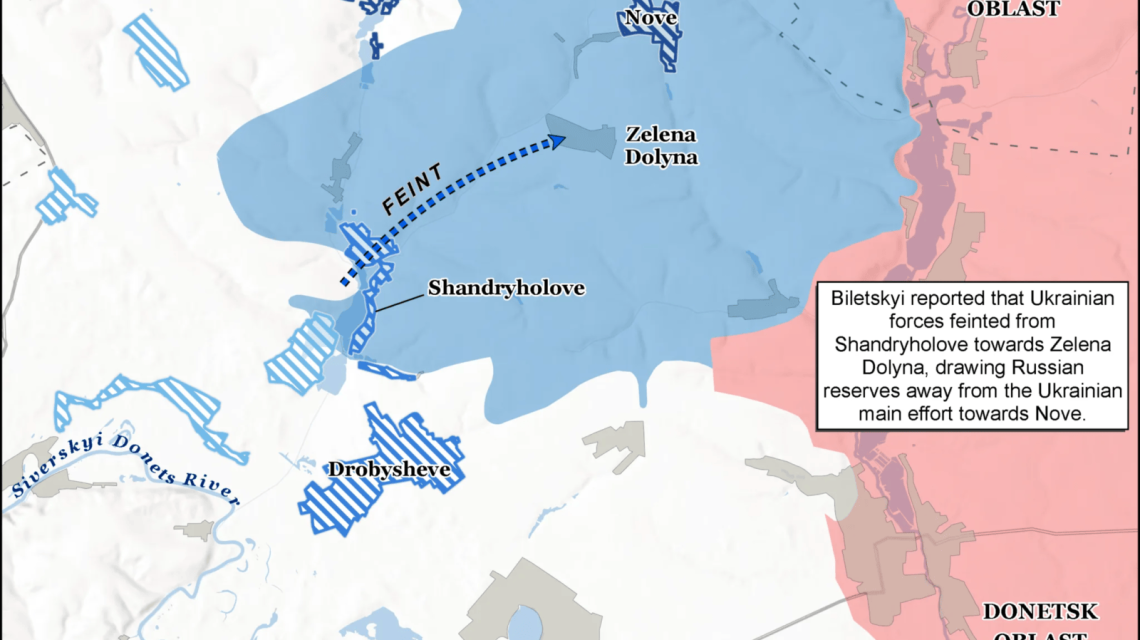
A strategic map highlights the progress made by Ukrainian forces in the Lyman sector, following the deployment of these APCs during a counteroffensive featuring innovative use of drones and unmanned vehicles. Code-named Operation Vivaldi, this strategic endeavor has impeded Russian attempts to seize fortified cities within Ukraine’s Donbas region, crucial for maintaining control.
“To break through the enemy’s defenses, the Third Army Corps employed its own invention—Soviet BTR-60s converted into robotic kamikaze complexes.”
– Brigadier General Andriy Biletsky.
How Were BTR-60 Armored Personnel Carriers Used?
Operation Vivaldi, ongoing over the summer, has been described in new detail by Biletsky. Ukrainian forces used tactical deception, diverting Russian attention from their primary target at Nove, north of Lyman. They executed a feint from Shandryholove towards Zelena Dolyna, misleading Russian forces.
“The enemy was convinced that the main direction of the strike was Shandryholove—Zelena Dolyna,” explained Biletsky.
This strategic misdirection forced Russian forces to waste reserves in counterattacks on a false target, while Ukrainian troops focused on capturing Nove. The success of this maneuver is attributed partly to the BTR-60 APCs, originally designed by both Russian and Ukrainian forces for troop transport. These vehicles were repurposed as vehicle-borne improvised explosive devices (VBIEDs) to demolish robust fortifications held by Russian forces.
“They were used to demolish the enemy’s strongest fortifications,” Biletsky stated. “Russians surrendered in entire subunits, along with officers, pilots, and artillerymen.”
Biletsky reports that the third phase of Operation Vivaldi resulted in the liberation of 19 square miles, accumulating a total of 67 square miles regained throughout the operation.
Analysts attribute part of Ukraine’s success to the element of surprise, achieved through strict operational security and counter-drone tactics that hindered Russian operational awareness. Major Maksym Zhorin, deputy commander of the 3rd Army Corps, credited a “protective drone” system of electronic warfare for maintaining secrecy.
Despite some resistance from Russian military bloggers who deny Ukraine’s advancements, Ukrainian military observer Yuriy Butusov criticized the spread of doctored footage and misinformation by pro-Moscow milblogger channels. ISW reports confirmed Ukrainian control over both Nove and Shandryholove, with Russian positions significantly distanced from these areas.
There is a divide in Russian sources, among whom some have criticized Moscow’s defense ministry for failing to acknowledge the real status of Operation Vivaldi and the existing front line.
 The Urgent Need for Enhanced Protection Against Ubiquitous Technical Surveillance
  Dutch Euthanasia Case for Child with Disabilities Sparks International Debate
  Heroism Averts Disaster on FlyDubai Flight
  Illegal Immigrant Crimes Stir Policy Debate in Fairfax County
  Emergency Landing of Flydubai Plane Highlights Cockpit Security
  Passengers Prevent Mid-Air Crisis Amid Pilot Stabbing Incident