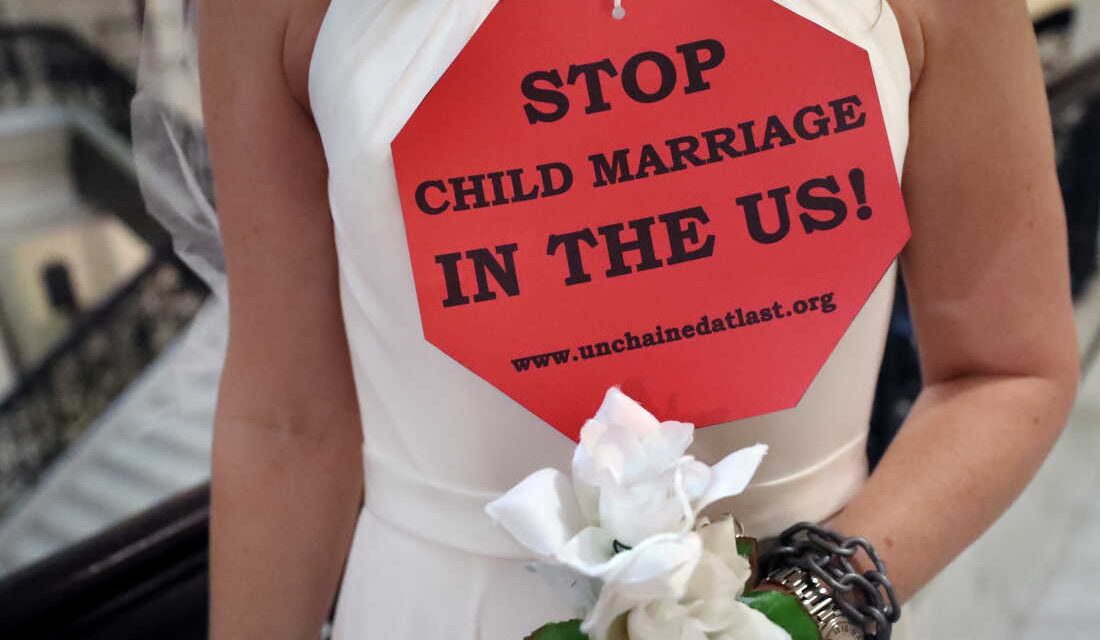
A protestor in Massachusetts, dressed in a bridal gown, participated in a demonstration urging state lawmakers to end child marriage. David L. Ryan of The Boston Globe captured the moment, highlighting a year of significant progress for child marriage activists in the U.S.
On September 30, California Governor Gavin Newsom signed Bill AB 1267 into law. It established 18 as the minimum marriage age in California, without exceptions. This legislation, championed by Unchained at Last and the California Commission on the Status of Women and Girls and authored by Assemblymember Gail Pellerin, overturned previous laws that allowed minors to marry with parental and judicial consent. It also removed provisions permitting minors to enter domestic partnerships. This law marks the peak of nearly a decade of advocacy by survivors and other groups to make marriage before 18 illegal in California. The state is now the 18th to prohibit child marriage without exception, though in 32 states, such marriages remain legal with various restrictions.
The signing ceremony spotlighted survivor advocates like Courtney Stodden. Stodden, who married a 50-year-old actor at 16 due to parental permission, became a vocal opponent of child marriage. Assemblymember Pellerin emphasized the survivors’ stories, stating, “The heart of this effort has always been the survivors,” noting the challenges minors face in seeking legal aid or escaping restrictive environments. “Because of them, California children are safer,” Pellerin added.
A Global Issue
Child marriage—defined as a union where one partner is under 18—is a worldwide concern. The United Nations (UN) labels it a “human rights violation,” citing risks such as early pregnancy, social isolation, interrupted education, and domestic violence. Annually, the UN estimates that 12 million girls enter child marriages. While less common, child grooms face pressures to assume adult responsibilities and may leave school to support families. The UN aims to eliminate child marriage by 2030.
From Sierra Leone to England, the Philippines to the Dominican Republic, various countries have enacted laws setting marriage ages at 18 without exceptions. In the U.S., while some support a national ban, others express reservations about proposed federal legislation. Despite laws against it, like in India, child marriage persists due to cultural norms. The National Family Health Survey reveals one in five Indian women aged 20-24 married before turning 18. UNICEF estimates 1.5 million Indian girls marry before 18 each year.
National Efforts in the U.S.
As California and others tackle child marriage, the U.S. is weighing a nationwide ban. On July 16, Wisconsin Rep. Gwen Moore, along with Senators Dick Durbin, Brian Schatz, and Kirsten Gillibrand, introduced the Child Marriage Prevention Act. This federal bill proposes setting a national minimum marriage age at 18. Moore stated, “In 34 states, including Wisconsin, child marriage is legal. Many are between young girls and adult men. It’s time we end this predatory practice.” This legislative push seeks to support state reforms and gather data to address the prevalence of child marriage.
Data from advocacy groups reveal over 314,000 minors married in the U.S. from 2000 to 2021, with some brides as young as 10. Most were married to adult men. Unchained At Last indicates that 66,415 of these were at ages where sexual relations would constitute a crime, but state exemptions in statutory-rape laws often protect adult spouses from prosecution.
The Tahirih Justice Center, a long-time advocate against forced and child marriage, supports the federal legislation. Casey Carter Swegman from Tahirih stressed that a child’s verbal consent may not reflect genuine choice, highlighting situations where minors are coerced by family members. “A child in court pregnant by an adult should signal statutory rape, not approve marriage,” Swegman stated.
While praised by many child-marriage activists, the federal proposal faces criticism for some provisions. Fraidy Reiss, founder of Unchained At Last, critiqued federal grant approaches that support studying, rather than banning, child marriage. Reiss, having experienced forced marriage at 19, also opposes spousal visas for minors, warning it could enable trafficking.
Resistance to such changes at the state level persists. Some oppose state bans, citing concerns over government overreach. Missouri, for example, experienced such opposition until it prohibited child marriage in 2025.
Comparing U.S. Efforts to Global Initiatives
As the U.S. debates the proposed legislation, other countries have enacted stricter laws. Sierra Leone’s Prohibition of Child Marriage Act 2024 sets marriage age limits at 18 without exceptions, with penalties for those facilitating child marriages. Similarly, Colombia and Bolivia have instituted outright bans on under-18 marriages.
While laws provide a legal framework, enforcement and deep-rooted cultural norms pose challenges. In regions like sub-Saharan Africa and India, child marriage prevails despite laws against it. Renu Singh from Young Lives India notes that poverty and societal customs often drive early marriages.
Research by Young Lives India, ongoing since 2002, reveals complex motives behind early marriages, often unrelated to income. In many cases, girls marry to alleviate parental concerns about safety or to fulfill dowry traditions, even within diverse socio-economic groups.
Singh further states that societal acceptance of child marriage must end for laws to be truly effective, stressing the need for community-wide change. Swegman echoes this, identifying entrenched gender roles and outdated views on female sexuality as significant barriers in the U.S.
Global initiatives continue emphasizing the issue. Bhuwan Ribhu, founder of Just Rights for Children, helped push for an International Day to End Child Marriage. Ribhu believes this provides a platform to pressure governments and ultimately end child marriage by 2030.
 Federal Report on Cargo Plane Crash at Miami International
  Maryland Bans Dynamic Pricing in Grocery Stores
  British Police Arrest Dual Citizen Over Suspected Terrorist Plot
  Lisdoonvarna’s Matchmaking Festival: Tradition Meets Modern Romance
  Wisconsin Mosque Leader Faces Deportation on Security Grounds
  Bolivia Faces Security Challenge Amid Shield of the Americas Initiative