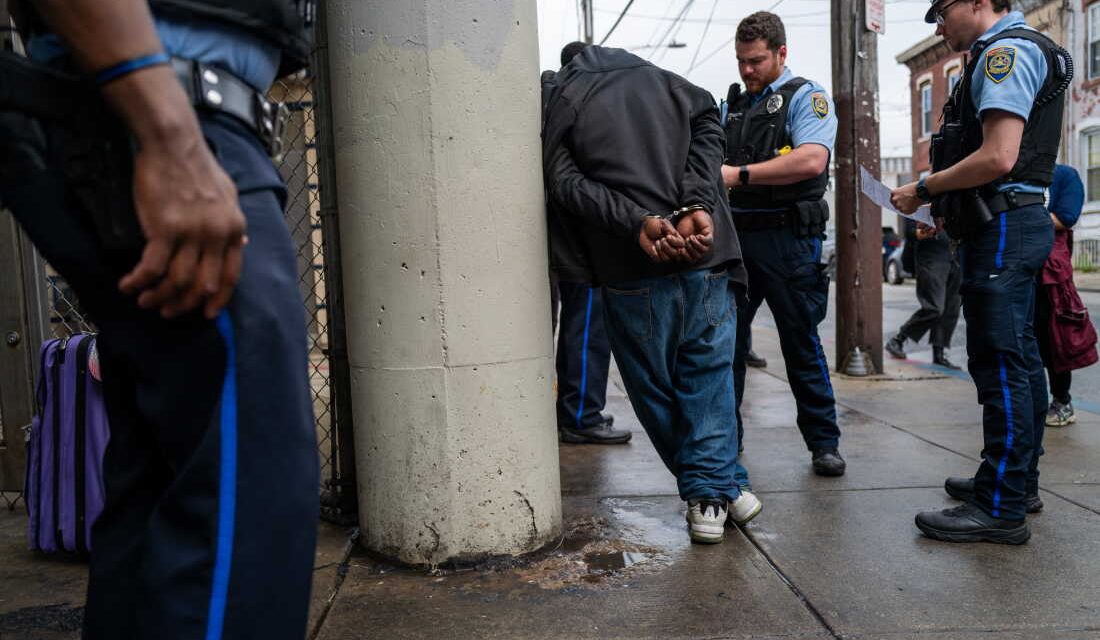
On May 8, 2024, police detained a man while Philadelphia started removing a drug encampment in Kensington. Arrests for minor offenses like vagrancy and drug possession increased in the U.S. from 2024 to 2025. At the same time, violent crime rates, including homicide, dropped to historic lows. This data comes from a new analysis by the advocacy group FWD.us.
Zoë Towns, Executive Director of FWD.us, spoke to NPR before the report’s release. She noted, This increase signals a troubling return to some of the law and order policies from the 80s and 90s,
referencing policies that led to mass incarcerations. The report reviews FBI and immigration arrest data but lacks details on whether charges were dropped or if jail time was served.
According to Towns, An arrest has life-changing consequences for those involved and for their families. It can mean time in jail, job loss, or missed rent, and cause family separations.
An FBI representative did not comment on the analysis.
Report Findings
California, Hawaii, Nevada, and Arizona contributed to over half of the increase in vagrancy arrests. Vagrancy legally means moving place to place without permanent employment or resources. It mostly affects the homeless population. Arrests for vagrancy increased by 44% from 22,769 in 2024 to 32,728 in 2025.
Two main demographic groups, Asian Americans and Native Hawaiians along with other Pacific Islanders, accounted for most of these arrests. Although they make up about 7% of the U.S. population, they were 17% of the increase in vagrancy arrests.
Marijuana possession arrests grew by 6%, particularly in Southern states that have yet to legalize it. In 2024, there were 190,182 arrests; this rose to 201,273 in 2025. There was a significant racial disparity as Black people represented 83% of the increase in marijuana arrests and 45% of all cannabis arrests.
Non-marijuana drug possession arrests rose slightly between 2024 and 2025, with a national increase of 3%. California experienced the largest increase following the roll-back of a law that changed drug possession from a felony to a misdemeanor. Proposition 36, approved in 2024, raised penalties for repeated drug offenses, leading to over 14,000 more arrests that year. Oregon reinstated criminal penalties for drug possession, causing a 39% rise in arrests.
Arrests for immigration violations increased by 188%. In 2024, there were 109,936 immigration arrests; this jumped to 316,304 in 2025.
Reasons Behind the Increase
FWD.us attributes these trends partially to federal changes during President Trump’s second term. His administration focused on a tough-on-crime stance, significantly boosting deportation efforts. Many individuals arrested had no criminal convictions.
Federal funding through the 287(g) program allowed local police to conduct immigration arrests. FWD suspected that deployments of immigration officers and the National Guard increased policing, resulting in more arrests.
Trump claimed a crime emergency
in cities like Washington, D.C., despite record-low violent crime in 2024. In response, he deployed National Guard troops. FWD.us discovered that marijuana arrests doubled in D.C. after this deployment.
Vagrancy arrests might also correlate with a Supreme Court decision permitting cities to forbid sleeping and camping in public. This ruling allowed states like Oregon to restrict where homeless individuals could reside.
Insha Rahman, President of the Vera Institute, emphasized positive crime trends overall. Drug crime arrests peaked in 2006 at 1.7 million, over 2.5 times the 1980 count. The numbers continue to decline, reflecting states investing in effective solutions.
These investments include treatment and diversion programs, community violence interventions, youth services, counseling, and alternative response programs.
 International Endorsements and Criticisms in U.S. Politics
 Controversy in Ohio Governor Race: Attack Video Targets Amy Acton
 Endorsements, Political Contributions, and International Affairs in U.S. Politics
 Pelosi’s Endorsement Disrupts San Francisco Political Race
 Government Allocates Funds for Surveillance Amid Controversy
 Vance and Rubio Face Uncertainty in 2028 Republican Nomination