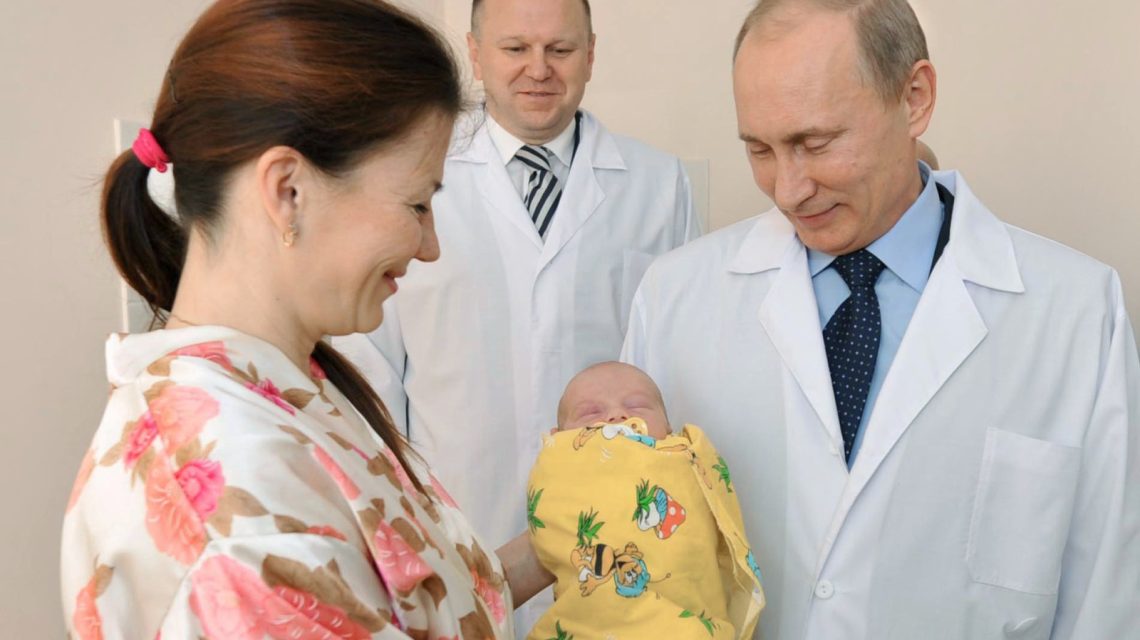
President Vladimir Putin is urging Russian women to have more babies. While abortion remains legal nationwide, Russian authorities are adopting measures to limit it. Private clinics face pressure to discontinue abortions, and women encounter waiting periods and counseling before undergoing the procedure.
Putin’s recent directive requires the government to adjust search engine results to prioritize pregnancy support sites over abortion services. Resources meant to support women choosing motherhood are overshadowed by defense spending,
with Moscow allocating over a third of its budget to defense, leading to reduced regional healthcare funding.
Building the Motherland
Putin’s focus on boosting fertility reflects Soviet-era policies. In 1944, Stalin introduced the Mother Heroine award for women with ten or more children. Putin reinstated this award in August 2022. At the Eastern Economic Forum, Putin emphasized low fertility as a major national security concern.
Russia’s fertility rate was disclosed by Deputy Prime Minister Tatyana Golikova at 1.352—significantly below the 2.1 replacement rate. Demographers estimate 1.19 million births in 2025, a post-Soviet low. The population is projected to decline from 146 million in early 2025 to around 141 million by 2036.
The government launched the Family project in 2025, providing maternity grants, subsidized mortgages, and child benefits. Eligible families receive housing funds and educational support for children. Russian regions introduced fines for those advocating abortion.
Economic hardships are crucial in abortion decisions, as seen in Vologda’s regional plan. Factors include insecure incomes, unemployment, and housing issues.
War Comes First
Russia’s projected 2027 budget allocates vast sums to defense, dwarfing healthcare funding. Though funds for the Family project account for 5.9 percent of the budget, this is less than initially planned.
Regional healthcare expenditure fell by 5.8 percent in early 2025 compared to the previous year. Primorsky Krai cut spending significantly to accommodate wartime needs, delaying social payments but redirecting funds to military support.
Despite Putin’s assertion that low fertility isn’t entirely due to the war, allocating resources to a prolonged conflict reduces attention on social supports. Some suggest that addressing these issues could encourage Russian women to have more children.
 Men Charged with Security Offenses in RAF Fairford Plot
 US Intelligence Warns of Iran’s Increased Threat to Americans Abroad
 Israeli Elections: Key Developments and Key Figures
 Harry Kane and Alexia Putellas Shine at Ballon d’Or Ceremony
 Netanyahu Faces Crucial Election Amid Security Challenges
 Controversy Surrounds Malian Asylum Seeker Featured on ’60 Minutes’