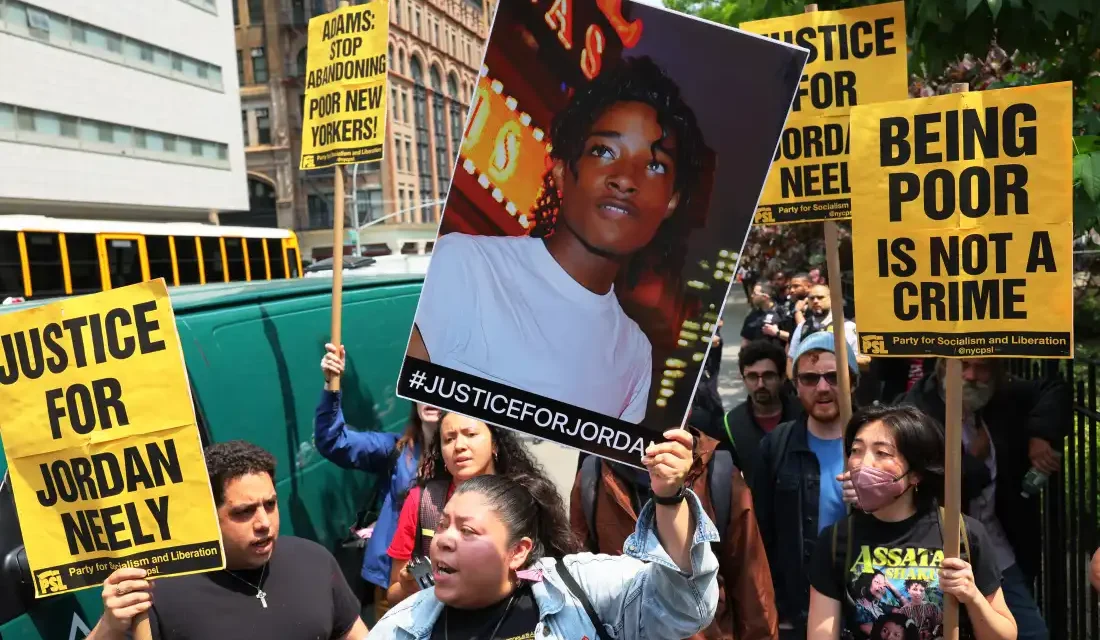
An unfortunate event transpired on May 1, 2023, when Jordan Neely, a homeless black man known for his Michael Jackson impersonations, boarded a subway in New York City. His crisis manifested in threats, which distressed passengers. Daniel Penny, a white former Marine, intervened with a chokehold that lasted six minutes, resulting in Neely’s death. The incident, captured in a video, sparked divisive opinions nationwide. Daniel Penny’s actions were viewed by some as fulfilling a gap left by police, while others saw Neely as another black victim whose life was undervalued.
Journalist Anand Giridharadas explored the issues underlying the incident. Through his investigations, he concluded that both Neely and Penny experienced neglect from systemic structures supposedly meant to protect them. Giridharadas argues Neely felt abandoned over time, with valid reasons, while Penny claimed abandonment in law enforcement’s absence, allowing Neely to reach such a vulnerable state.
Giridharadas suggested this pervasive abandonment compels individuals to act independently, often tragically. He emphasized the importance of recognizing these conditions. The case drew significant attention. In December 2024, Penny was acquitted of criminally negligent homicide after a hung jury led to the dismissal of a manslaughter charge. Shortly after the verdict, Penny joined Vice President-elect JD Vance and President-elect Trump at the Army-Navy game. A venture capital firm in Silicon Valley later employed him.
“Human beings become caricatures when tragic stories become social media fodder.” – Anand Giridharadas
In his new book, Man in the Mirror: Hope, Struggle, and Belonging in an American City, Giridharadas explores the broader theme of abandonment. He highlighted Neely’s history with law enforcement. Though initially accused of minor infractions common among the homeless population, Neely’s record evolved into more serious offenses, including assaults, leading to time at Rikers. Neely participated in a rehabilitation program in lieu of incarceration, but he fled. Months later, outreach workers failed to recognize him when he exhibited erratic behavior, leading to his death.
Penny’s hometown in West Islip, Long Island reflects a deeper, complex relationship with New York City. These communities, shaped by ‘white flight’, often exhibit concealed contempt. Understanding this dynamic may provide insight into Penny’s background.
Assessing Penny’s remorse proved challenging. During interactions after the incident, he appeared indifferent, lacking curiosity about Neely’s fate. His involvement with political figures such as JD Vance and Trump and choosing employment in a prominent Silicon Valley firm paints a picture of ideological neutrality.
The case’s politicization drew parallels to the Mangione incident, where vigilante justice arose from perceived system failures. Both right and left echo similar sentiments of systemic inadequacy, prompting action. Figures like Black Lives Matter’s Hawk Newsome propose community autonomy as solutions. Giridharadas questions whether the shared thread is a call to self-action amid perceived abandonment.
The reality remains complex and highlights societal flaws requiring collective contemplation and action.
 Emergency Declared at Savannah River Site Due to Laboratory Fire
 Convicted Murderer Escapes Tennessee Prison
 Knicks Alleged Internal Tensions Over Potential White House Visit
 DOJ Identifies Over 400 Noncitizens Illegally Registered to Vote in Washington
 Trump’s Plan for East Potomac Golf Course Faces Legal Challenges
 Floods Devastate Four Corners States Amid El Niño Rainstorms