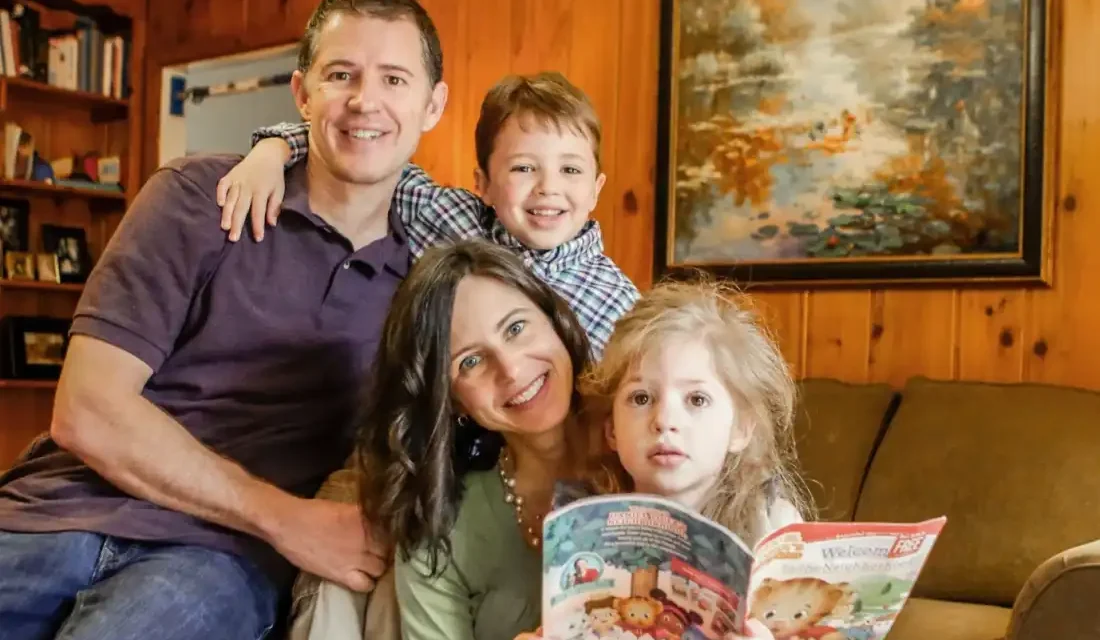
Glenn, Beckham, Cara, and Eliza O’Neill posed for a family photo in 2015. Eliza, who has Sanfilippo syndrome, a rare inherited disease, was always fond of accessories like hats and scarves. Her mother, Cara O’Neill, recalls Eliza wearing high heels around the house, creating moments of both amusement and concern.
Cara and Glenn, living in Columbia, S.C., noticed that Eliza was not reaching developmental milestones by the age of three. Diagnosed with a pragmatic speech delay, Eliza knew many words but didn’t use them in typical social interactions. In 2013, a colleague suggested testing Eliza for metabolic disorders. The results confirmed Sanfilippo syndrome, bringing a sense of dread as Cara remembered the disease from medical school.
“When they said the word, it all kind of came rushing back,” Cara says. “And it was just this bale of dread, like, oh, my goodness, this is horrific.”
Children with Sanfilippo have a faulty gene preventing them from breaking down heparin sulfate, leading to severe complications. Such children typically lose the ability to speak and walk, experience seizures, and rarely live past their teenage years. This prognosis motivated the O’Neills to establish the Cure Sanfilippo Foundation.
For Glenn, the reality of Eliza’s degeneration struck hard at home. He realized immediate action was necessary.
Research on treatment was underway at Nationwide Children’s Hospital in Columbus, Ohio, by researcher Haiyan Fu. Fu was developing a gene therapy using a modified virus to deliver a functional gene to patients’ cells, a project she began in the late 1990s. Fu recognized its potential to cure if treated early.
However, funding challenges almost halted her work in 2009 until families like the O’Neills provided support. They urged her to continue, contributing funds so she could pursue her research. This collaboration with eight patient foundations, including organizations like Ben’s Dream and a Cure for Kirby, helped advance Fu’s work to the first human trial stages.
Conducting a clinical trial required substantial funds. Glenn O’Neill proposed a fundraising strategy. In 2014, with the help of filmmaker Benjamin Von Wong, they created a viral video titled “Saving Eliza.” The campaign quickly raised a million dollars, eventually reaching $2 million, enabling the first human trial in May 2016. This success attracted interest from the biotech industry, and in 2022, Ultragenyx acquired rights to the therapy and continued research.
The Food and Drug Administration approved the gene therapy, named Fayuvi, in September. Emil Kakkis, CEO of Ultragenyx, emphasized the importance of early treatment, as younger patients retain more brain function. Further, despite the high cost of the therapy, nearly $4 million, Kakkis stated Ultragenyx’s commitment to access for all patients.
“There should be no logistical location, site or state or other kind of rule that stops us from getting the patient treated,” Kakkis asserts.
The O’Neills received the FDA approval news shortly after its announcement. Messages arrived from families who had supported this journey, some having lost children before reaching this milestone. Fu expressed mixed emotions, acknowledging the positive outcome but lamenting the prolonged struggle.
Eliza, almost 17, was the first to receive the therapy in 2016. She cannot speak but communicates with picture cards and devices. Proud of Eliza’s resilience, the O’Neills celebrate her achievements; this summer, she swam and learned to float on a pool noodle.
Glenn O’Neill reflects on their journey. “I just feel proud of my girl,” he shares. “It’s been a rough road for her, but we also know she’s very lucky.”
 Impact of GLP-1 Drugs on Marriages
 Health and Environmental Impact Assessment of Paper Straws
 Stay Cool with Discounted Nectar Mattresses
 AI Chatbot Usage Among Youth and Its Impact on Mental Health
 Cannabis and Sleep: Surprising Research Findings
 E.coli Outbreak Linked to Popular Pumpkin Farms