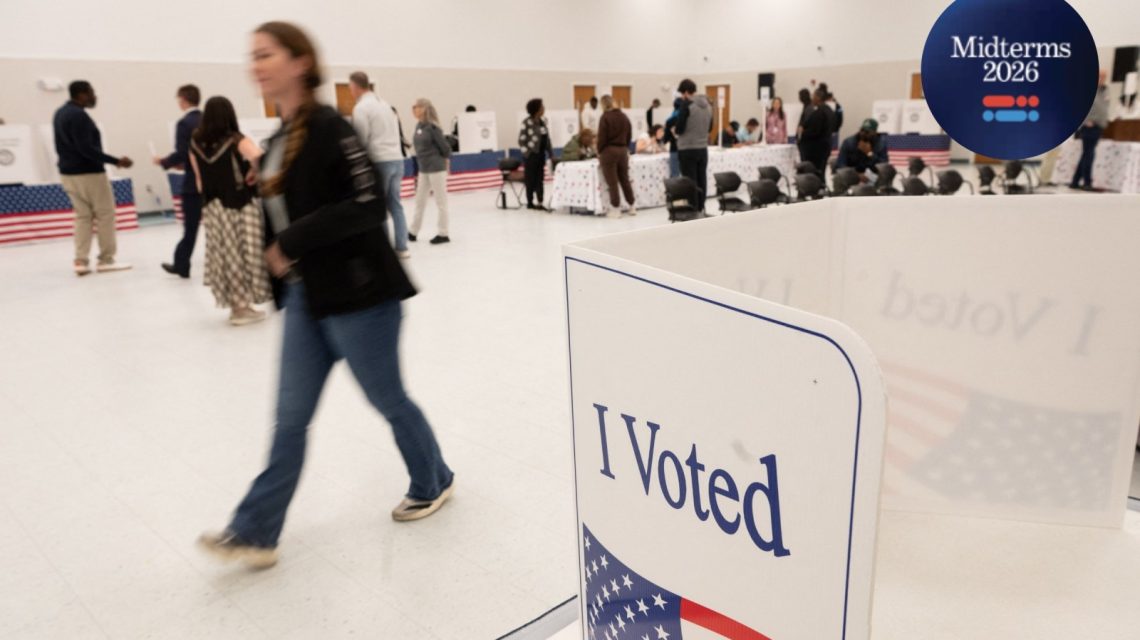
Democrats secured significant victories beyond the U.S. Capitol in the recent midterms. Across the nation, voters gave the party control of several state legislative chambers. These bodies influence key issues such as abortion laws, school funding, taxes, voting rules, and congressional maps. Wisconsin saw a major shift with Democrats flipping both legislative chambers and retaining the governorship, creating a unified Democratic government for the first time in 16 years. Additionally, Democrats gained control of five state governments, further enhancing their influence.
According to Thad Kousser, a political science professor at the University of California San Diego, this shift resulted in many Democratic trifectas, where a party controls both legislative houses and the governor’s office in a state.
State Legislatures with Democratic Gains
While complete results were pending at the time of analysis, reports showed significant Democratic gains in states like New Hampshire, the Pennsylvania Senate, and the Houses in Michigan, North Carolina, Texas, and Minnesota. In Georgia and Arizona, incomplete results suggested Democrats might take control of their lower chambers.
Boris Shor, a political science expert at Houston University, noted that despite Democratic majorities in Congress, a presidential veto might result in legislative gridlock. However, state-level Democratic control allows for more legislative activities.
Heather Williams, president of the Democratic Legislative Campaign Committee (DLCC), stated that recent wins demonstrate a significant political shift, impacting state legislation and the Democratic Party’s future.
Importance of Statehouse Control
While Congress handles issues like immigration and federal health programs, state legislatures are crucial for policies ranging from education to transportation. Political science professor Steven Rogers explained that state legislatures often pass double the laws compared to Congress. Democrats’ state-level control enables them to influence policies on Medicaid, education funding, and environmental regulations.
Shor highlighted that controlling both legislative chambers and a governor’s office, or a trifecta, is beneficial for implementing budgets and changing state policies.
Historical Context of the Democratic Shift
The Republican dominance in statehouses since 2010 faced significant challenges in this election cycle. Changes from 1992, when there were three Republican trifectas and 16 Democratic ones, illustrate a more partisan landscape now. Texas, for example, has seen a shift with a Democratic governor and a flipped lieutenant governor’s office, although the Senate remains under Republican control.
Impact on National Politics
State legislatures could influence national issues like AI regulation, which Congress has largely ignored. Voters cited AI as a crucial issue during the midterms. Additionally, Democrats’ control could impact redistricting efforts and potentially affect the Electoral College. States with 222 electoral votes have agreed to the National Popular Vote compact, and new Democratic trifectas in states such as Pennsylvania and Michigan could sway this initiative.
Kousser predicted state legislatures would focus on cost-of-living issues, housing, and health care, rather than electoral reforms.
Future Outlook
Kousser emphasized that American politics changes rapidly. Following a period of concern for the Democratic Party two years ago, recent wins suggest a demand for change. As Democrats take over more state houses, public expectation shifts. The outcome of future elections depends on the party’s ability to follow through on these victories and deliver substantial results.
 Controversial Construction of Triumphal Arch in Washington
 Media Coverage Following Election Results
 Stephen Miller’s Rise Signals Continuing Political Strategy for Trump
 Addressing Homelessness in Los Angeles: Can Nithya Raman Succeed?
 Republican Redistricting Strategy Fails
 Stephen Miller’s New Role as Trump’s Chief of Staff