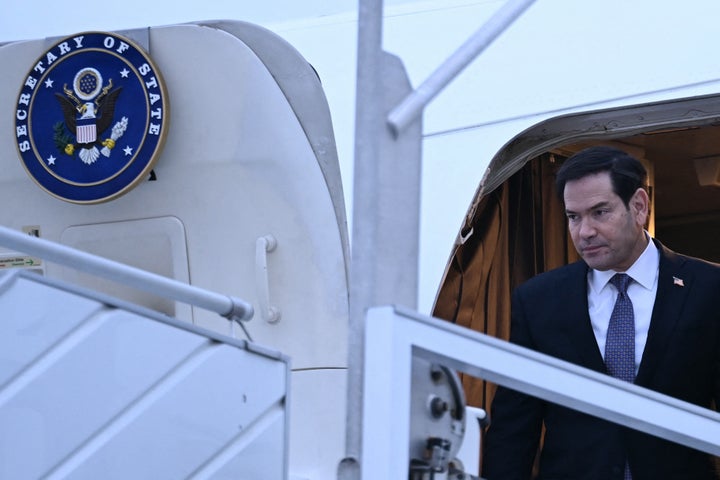
Foreign ministers from the Group of Seven (G7) industrialized democracies convened in Paris for two days of discussions amid several global crises. This gathering comes as questions loom about U.S. foreign policy under President Donald Trump following significant Republican losses in the recent midterm elections.
U.S. Secretary of State Marco Rubio is anticipated to tackle queries about potential shifts in the administration’s positions on ongoing issues such as the Russia-Ukraine conflict, the Iran conflict, energy security, and artificial intelligence. Ministers from the U.S., Britain, Canada, France, Germany, Italy, and Japan are participating in these essential discussions.
This meeting marks Rubio’s first international trip since the midterm elections, where unpopular policies contributed to the Republican Party losing control of Congress. The timing aligns with widespread protests in Europe, including in Paris.
Political Dynamics Post-Elections
Secretary Rubio, upon arriving in Paris, acknowledged the inquiries from allies regarding the impact of U.S. election results. He noted that other countries have also encountered governmental divisions.
Canadian Foreign Minister Anita Anand remarked on the uncertainties concerning Washington’s future strategy. The shift in the U.S. Congress’ leadership has left many questioning the administration’s approach.
Despite Democratic gains, President Trump’s strategy shows little sign of change. His recent appointment of Stephen Miller, known for advocating strong positions, as chief of staff indicates a continued firm stance on both domestic and foreign policy.
Focus on International Conflicts
Discussing the wars in Iran and Ukraine remains a primary topic. Trump has proposed collaborating with Europe to resolve Russia’s war in Ukraine. U.S. representatives, including Steve Witkoff and Jared Kushner, are scheduled to engage with Ukrainian and Russian officials in the UAE. Rubio emphasized the importance of establishing post-conflict security guarantees for Ukraine and Europe.
German Foreign Minister Johann Wadephul expressed the necessity of European involvement in any resolution. Wadephul highlighted America’s efforts while insisting that a European presence at the negotiation table is essential.
Similar discussions are underway concerning the conflict with Iran, which affects fuel prices and regional stability. Rubio indicated that current diplomatic efforts face challenges, as some Iranian demands are deemed unreasonable.
Additional International Engagements
France has extended invitations to Brazil, Egypt, Saudi Arabia, and Ukraine for certain discussions, with priorities focusing on Africa, China, Cuba, and Haiti. Scheduled meetings include sessions on artificial intelligence and support for Ukraine.
Upon his arrival in Paris, Rubio reiterated his commitment to advocating for accountability at the United Nations, signaling a continued emphasis on U.N. reform. The U.S. administration has already withdrawn from several U.N. bodies and aims to challenge the International Criminal Court (ICC), arguing against its actions toward American citizens.
This approach has created tensions within the G7, particularly concerning the support for Ukraine and NATO. All G7 members, apart from Japan which has a different alliance with the U.S., are NATO members.
 Democrat Scott Colom Maintains Lead in Mississippi Senate Race
 Mississippi State Auditor Shad White Launches Gubernatorial Campaign
 Trump Dismisses Third Impeachment Prospects Amid Political Landscape
 Attorney General Blanche Defends Trump Administration Against Democratic Threats
 Elizabeth Warren’s Return to Senate Banking Could Shake the Crypto World
 Challenges in U.S. Foreign Policy