The results of the 2026 midterm elections have dramatically shifted the political landscape in the United States. The Democratic Party’s substantial wins suggest a significant shift in the control of Congress, presenting challenges for President Donald Trump.
This Democratic surge brings potential consequences for the Supreme Court’s independence. As Democrats strengthen their legislative power, future efforts may focus on altering foundational American institutions. Among possible changes, expanding the Supreme Court poses a significant threat to the foundations of limited government and natural rights.
Democrats’ Significant Victory
The scale of the Democrats’ victory was unexpected. Historically, midterm elections during a president’s second term often result in losses for the ruling party, but few predicted such a robust rejection of President Trump and the Republican Party. With 24 races pending, Democrats secured 254 seats, surpassing the 218 required for a majority, while Republicans retained 157 seats. In the Senate, Democrats flipped at least seven seats, establishing a 54-44 majority. Remarkably, these victories occurred even in Republican strongholds like Kansas, Texas, Iowa, South Carolina, and Ohio.
Implications for the Supreme Court
The change in Senate control raises concerns among conservatives about its impact on the Supreme Court’s balance. The current composition includes justices appointed by Presidents George H.W. Bush, George W. Bush, and Trump, alongside those appointed by Presidents Obama and Biden. This 6-3 conservative majority has delivered key conservative outcomes like overruling Roe v. Wade, affirming Second Amendment rights, and ending racial preferences in certain programs.
“The change in Senate control in January means that no conservative justice is likely to retire until 2028.”
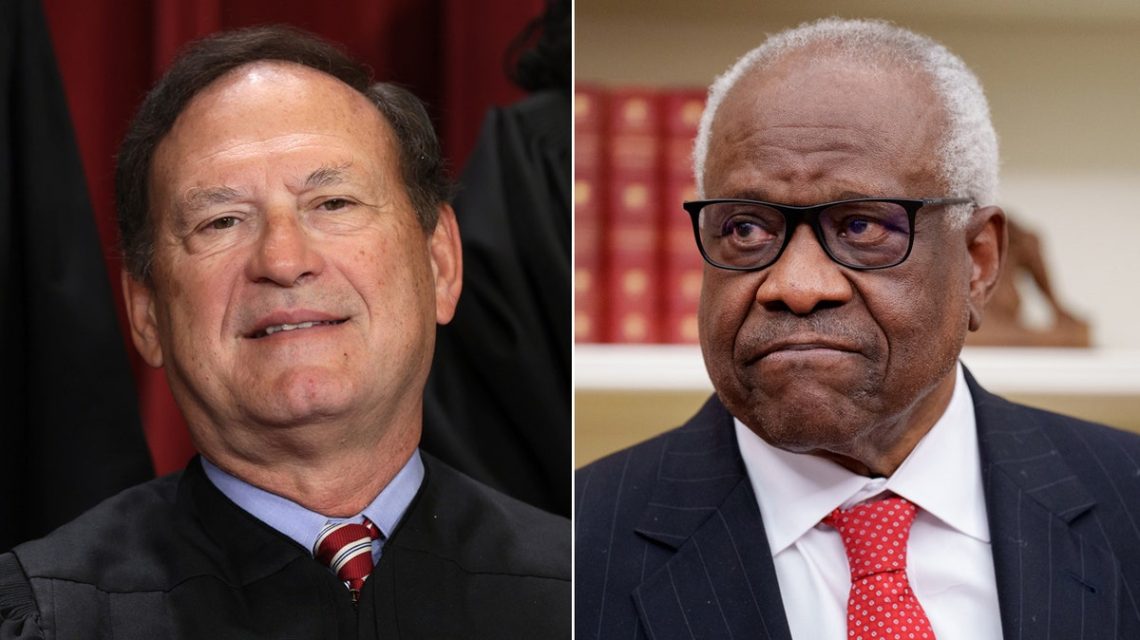
With justices Clarence Thomas and Samuel Alito aged 78 and 76, respectively, the possibility of their departures poses challenges for maintaining the Court’s current ideological balance. Senate precedent suggests resistance to confirming new justices in the final year of a presidency, potentially extending this period to two years.
Political Calculations and Court-Packing
Political calculations predict significant Democratic influence over the next presidential election in 2028. The historical trend of a ruling party losing after a two-term presidency suggests Democrats could seize control again, especially given Trump’s unpopularity.
Efforts are underway to place a young originalist on the Court during the remaining weeks of the congressional session. However, Justice Alito has declared no intention to retire soon, and such politicking does not align with long-term strategic planning.
Court Expansion Debate
As Democrats consolidate power, court-packing discussions gain traction. Proposals to increase the Court’s size from nine to 13 justices have surfaced, supported by prominent Democrats. They argue this change is necessary to address the Court’s perceived moral deficiencies. While Trump may veto court-packing bills, public votes set the stage for possible changes in the future if Democrats win the presidency in 2028.
The potential for court-packing raises concerns about transforming the Supreme Court into a political tool. This situation risks undermining the federal judiciary’s independence, a cornerstone for protecting natural rights against majoritarian tyranny.
For further insights from John Yoo, a professor of law, click here.
 Treasury Secretary Scott Bessent Relocated Due to Iranian Threat
 Opposition Leaders Challenge Netanyahu’s Legacy in Israeli Parliament
 Democratic Lawmakers Criticized for Missing Impeachment Vote
 House Vote Halts Impeachment of Defense Secretary Pete Hegseth
 Defense Secretary Pete Hegseth Avoids Impeachment as House Votes Down Effort
 Jim Jordan Elected as House Republican Leader Amid Controversy