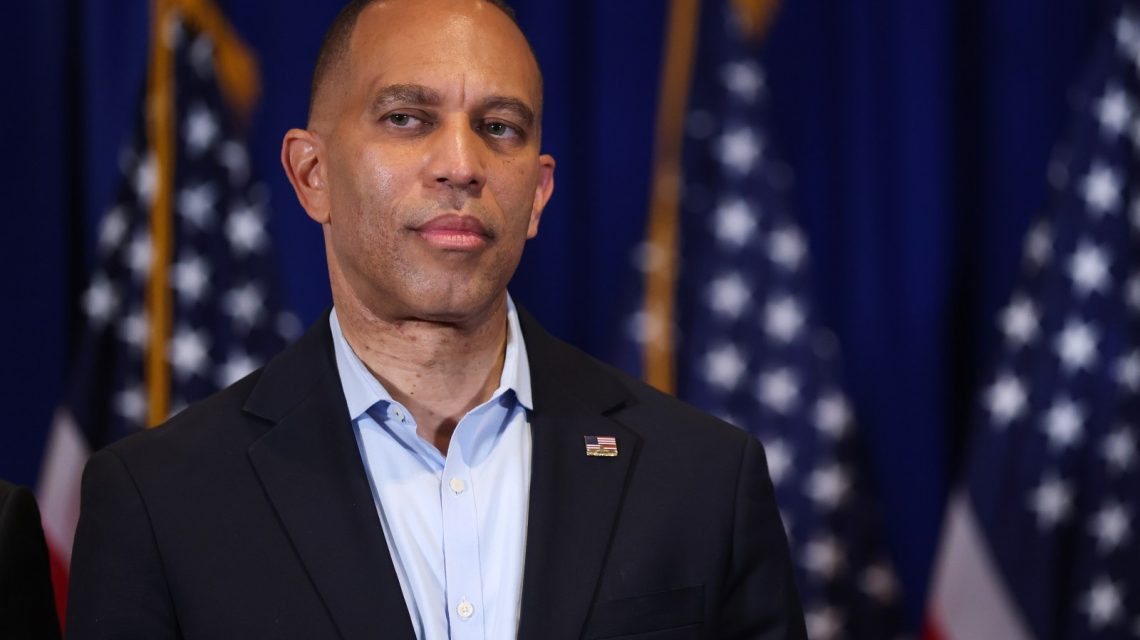
Kevin McCarthy’s time as House speaker was marked by intense Republican infighting, ultimately leading to his downfall. Now, Representative Hakeem Jeffries is aiming to assume the same position. He is viewed as the frontrunner to become the first Black speaker of the House when the new Congress begins in January. However, Jeffries, a Democrat from New York, encounters early opposition from the party’s progressive wing and has not yet gained support from several progressive members.
Some progressives disapprove of his stance on Israel and a private meeting he reportedly held with Jared Kushner, former President Trump’s son-in-law. This situation has raised speculation about whether Jeffries might face internal challenges similar to those that McCarthy experienced.
There is no current indication that Jeffries is dealing with a revolt like that which forced McCarthy through 15 ballots in 2023. Nonetheless, the pushback serves as an early test of whether he can maintain unity within a larger and ideologically varied majority.
“The main similarity [to McCarthy] would be that he’s being challenged from what you might consider the outer ideological edge of his party in the House, and that was true for McCarthy as well,” University of Tennessee professor Andy Busch told Newsweek on Tuesday.
The House speaker presides over the House of Representatives and leads the majority party, with significant influence over the legislative agenda and negotiations with the Senate and the White House.
Jeffries Faces Progressive Pushback
The House speaker vote will gauge whether Democrats can unify after their midterm elections win. Initial resistance to Jeffries suggests that his path to the position might be more difficult than anticipated. Jeffries, currently the House minority leader, announced his speaker bid on November 4, following the Democrats’ midterm success.
There are clear differences between Jeffries and McCarthy. Notably, Democrats now hold a much larger majority than Republicans did when McCarthy entered the speaker race in 2023. In January, Democrats will have at least 254 seats compared to 165 Republican seats, with some races still undecided a week after the midterms.
“I will be shocked if Hakeem Jeffries does not have the votes by January 3 to win the speaker’s gavel in the first round,” University of Akron political science professor David Cohen told Newsweek.
McCarthy’s challenge was managing significant division within his party, notably with far-right Republicans opposing him over government spending and party leadership. His slim majority allowed even a few dissenters to exert substantial influence, resulting in 15 rounds of voting before he became speaker.
Like McCarthy, Jeffries encounters some similarities, as Democrats remain largely aligned on major issues but differ on the party’s direction and governance under the new majority. Such differences are already contributing to resistance against Jeffries.
Reasons for Progressive Hesitation
A primary source of progressive opposition to Jeffries is his consistent support for Israel and connection with the American Israel Public Affairs Committee (AIPAC). Despite growing Democratic calls for conditions on U.S. aid to Israel, Jeffries opposed a bid to reduce military assistance. Critics urge him to distance himself from AIPAC and its influence in Democratic primaries.
Jeffries has hinted at a potential shift in U.S.-Israel relations, attempting to balance his pro-Israel background with a caucus that is increasingly divided over these issues. Opposition to Jeffries’ speakership bid extends to the public, illustrated by a petition urging Democrats to select someone else.
“I think the Democrats want to show that they can govern and will want to work out disagreements behind the scenes rather than let them spillover to the House floor,” Northwestern University professor Laurel Harbridge-Yong noted.
In 2023, McCarthy faced 15 demanding voting rounds before gaining the speakership by conceding to conservative holdouts. These divisions later contributed to his removal following a motion initiated by Matt Gaetz after McCarthy relied on Democratic votes to prevent a government shutdown.
What Lies Ahead
House Democrats are set to hold leadership elections on November 18. During these elections, Jeffries is expected to secure the Democratic nomination for speaker without contest. The decisive vote will occur when Congress convenes on January 3, 2027, with Jeffries needing a majority of votes on the House floor to become speaker.
Meanwhile, Republicans have chosen Representative Jim Jordan of Ohio as House minority leader and reaffirmed John Thune of South Dakota as Senate minority leader.
 Kennedy Family Opposes Trump’s Proposed Arch Near Arlington National Cemetery
 Palantir CEO Alex Karp Discusses Democratic Ties Amid Criticism
 White House and Congressional Democrats Prepare for Investigative Clash
 House Democrats Consider Further Impeachment Articles Against War Secretary
 Schumer Faces Pressure from Democrats Over Leadership
 The Hidden Costs of Price Controls in New York