
Three House Republicans joined forces with U.S. Representative Thomas Massie to push another vote on files related to Jeffrey Epstein, the sex offender who died in jail in 2019. This collaboration provided the Kentucky congressman with a bipartisan win shortly after his attempt to impeach Defense Secretary Pete Hegseth was blocked. On Wednesday, Massie revealed that his discharge petition for the Epstein Files Transparency Act II had reached the necessary 218 signatures. Republicans Brian Fitzpatrick, Nancy Mace, and Ralph Norman aligned with him and House Democrats in this effort.
As Democrats prepare to lead Congress following their midterm elections, they have indicated a renewed focus on the Epstein investigation. Robert Garcia, the leading Democrat on the House Oversight Committee, not only signed the petition but also vowed to hold public hearings and conduct thorough reviews, criticizing the Justice Department for not releasing millions of pages of Epstein-related materials.
Massie announced via social media, “This morning we reached the required 218 signatures on my discharge petition for Epstein Files Transparency Act II!”
When asked for commentary on Wednesday afternoon, the White House pointed Newsweek to a Truth Social post by President Donald Trump made the previous night. However, this post did not address the Epstein files. Instead, Trump remarked, “The Democrats’ attempt to impeach Secretary of War Pete Hegseth has miserably FAILED! Every single Republican, except Thomas Massie, a major LOSER, voted in favor of Pete.” He added, “The Democrats continue to weaponize and abuse the United States of America. They must be stopped! MAKE AMERICA GREAT AGAIN.” Massie’s office directed Newsweek to his social media post announcing the petition’s milestone for further comment.
Understanding the Discharge Petition
A discharge petition enables lawmakers to bypass House leadership and advance legislation to a floor vote with the endorsement of a majority, or 218 members, of the House. Massie initiated the discharge petition on August 31 and was the primary signatory needed. Ultimately, securing the 218-member threshold came from additional Democratic support. U.S. Representatives Adam Smith of Washington and John Garamendi of California were the last to sign on Tuesday and Wednesday, respectively.
The Epstein Files Transparency Act II
The original Epstein Files Transparency Act, signed into law by Trump in November 2025, obliged the Justice Department to publish almost all unclassified records linked to Epstein. The department claimed compliance after disclosing approximately 3.5 million pages, but lawmakers counter this, citing millions of unreleased pages, extensive redactions, and records withheld under legal privileges. The proposed Epstein Files Transparency Act II would allow survivors, state officials, and Congress members to sue the attorney general to ensure adherence to the original law’s requirements.
Massie, alongside U.S. Representatives Ro Khanna and Teresa Leger Fernández, introduced this bill in mid-July. “Since the Epstein Files Transparency Act was signed into law on November 19, 2025, the Department of Justice has flagrantly and consistently ignored EFTA’s disclosure requirements,” Massie commented. “The Department of Justice continues to unlawfully withhold over 3 million Epstein files that should be released to the public.”
The present initiative mirrors the coalition of the initial Epstein legislation that reached the House floor. This time, three Republicans joined Massie in support as well. Initially, the collective included Massie, Representative Lauren Boebert, and former Representative Marjorie Taylor Greene.
Next Steps
With Massie’s discharge petition acquiring the necessary 218 signatures, the Epstein Files Transparency Act II is on its way to a House vote. The petition must rest for seven legislative days per House rules before any signatory can propose bringing the measure forward. Although a specific vote date is yet to be set, current Congress still may deliberate over the legislation before the incoming Congress assumes office in January. If the House approves it, the measure must still pass the Senate and receive Trump’s signature to become law.
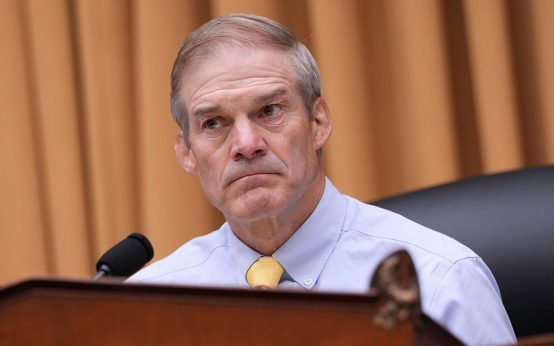 Jim Jordan Vows Action as Incoming House Minority Leader
 Mississippi Turns Blue in Historic 2026 Midterms
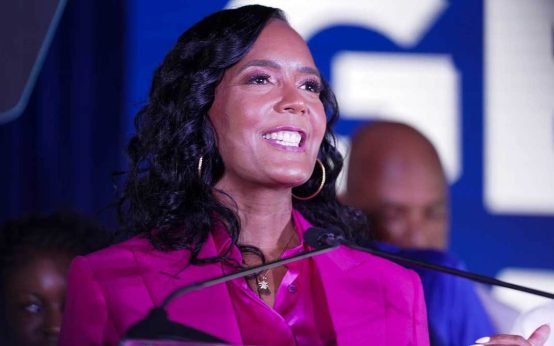 Guaranteed Income Advocates Celebrate Election Successes
 Senator-Elect Abdul El-Sayed Urges Secretary of War Pete Hegseth to Resign
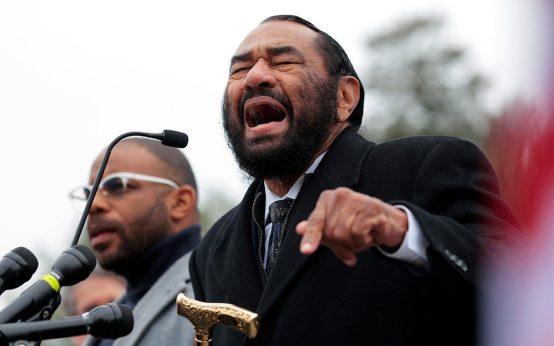 Democratic Efforts to Impeach Trump Gain Momentum
 Examining Leadership and Public Figures in Minnesota