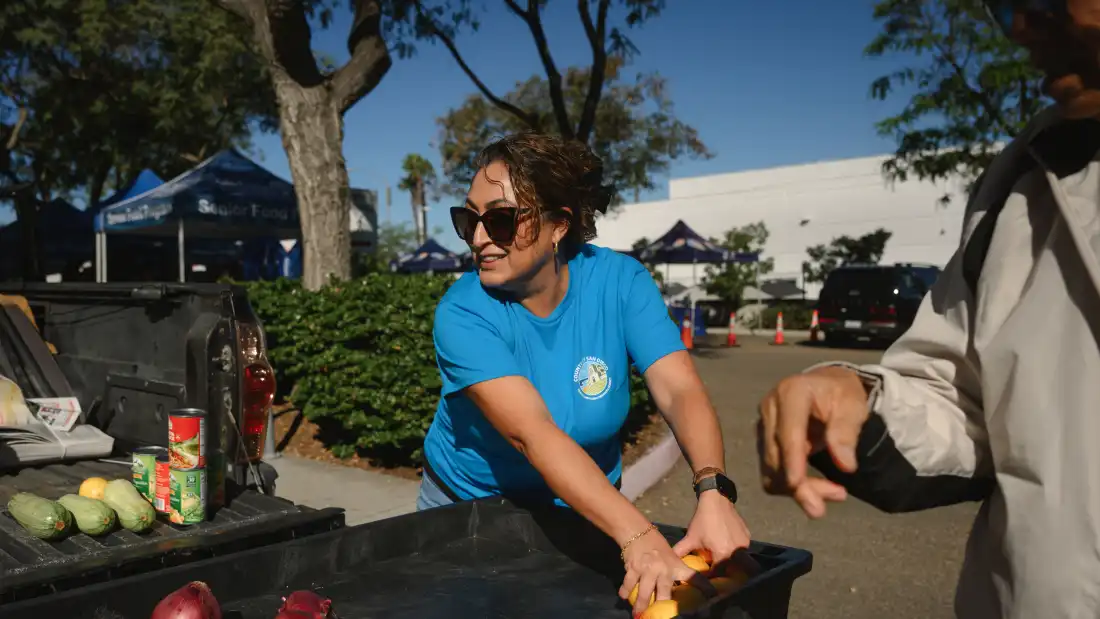
Rosa Rodarte, a human services specialist for San Diego County, was at work on a Saturday when she should have had a day off. She spent her time pushing carts of food and loading them into vehicles during a food distribution event in the Kearny Mesa neighborhood. Although her official role involves guiding people through programs like food assistance, these days she finds herself helping in a more direct way.
Rodarte reported, “We want to ensure everyone is assisted without judgment.” Participation in the Supplemental Nutrition Assistance Program (SNAP) has plummeted. The passage of the One Big Beautiful Bill led to this decline. The legislation reduced SNAP funding, tightened eligibility, and excluded most asylum seekers and refugees from receiving aid. It’s the most significant reduction in decades, surpassing federal projections.
The SNAP changes have strained both recipients and the government workers who administer the program. According to Nina Olivas, who leads San Diego’s Access Customer Service Call Center, the difficult part is hearing from people who need help immediately and not being able to assist promptly. San Diego County’s SNAP program saw 36,000 fewer participants by September compared to July 2025. The county responded by partnering with local food banks to provide free groceries at social service offices.

San Diego County offices have had to handle more paperwork due to new work requirements for certain groups, which supporters say encourage self-sufficiency. However, Olivas points out that many SNAP recipients already work, and the requirements add a cumbersome layer of documentation.
From January to October, San Diego processed over 830,000 more documents compared to the same period last year. Offices are grappling with the increased demands while ensuring help reaches those in need. Brenda Vargas-Ramirez, working for the county’s Health and Human Services Agency, emphasizes the importance of their efforts.

Other states have also struggled with the effects. Texas witnessed a backlog of SNAP applications grow from 3,700 in January to 175,000 in September, as noted by Texas congress members. Arizona saw a 50% reduction in its SNAP enrollment, attributed to staffing shortages and a stricter scrutiny of applications.
Louisiana reported a fall in SNAP enrollment by 154,000 due to procedural issues. To offset losses in federal funding, San Diego County allocated $15.8 million and hired 122 new social service employees. They aimed to maintain low call wait times and process paperwork efficiently.
Monica Montgomery Steppe, vice chair of the County Board of Supervisors, initiated ideas for food distribution events after concerns grew over the projected loss of food benefits. These events started in August, distributing nearly 70,000 pounds of food to over 5,200 people by September.
A line formed early at the latest event, drawing families, seniors, and veterans. Workers answered questions about changes and helped resolve any SNAP issues. Among the attendees was Ambar Santiago, who needed grocery help after a delay in her benefits. After receiving food, Santiago spoke with a worker about her case, finding some relief in knowing there would be help.
Santiago later prepared dinner using items from the distribution event. Having experienced homelessness and lived in various locations, she expressed gratitude for the assistance available in San Diego. “I feel blessed,” she remarked.
 Tyler Lundblade: Shooting Star with a Purpose
 Jacqueline Sommer Celebrates $1 Million Lottery Win
 Voices Shaping Chicago: From Legacy Building to Mathematical Genius
 Navigating Communication Challenges in Marriage
 Navigating Emotional Boundaries in Work Relationships
 Candace Cameron Bure’s Joyful Transition to Grandmotherhood