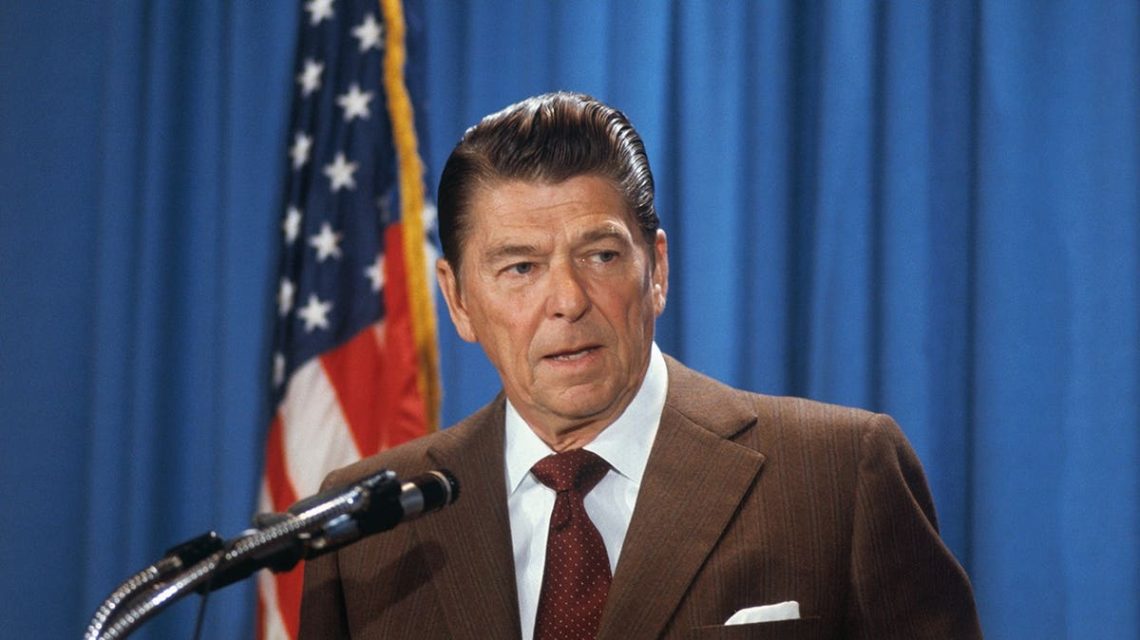
From the Cuban missile crisis onward, the United States contended with the Soviet Union’s quest for nuclear superiority. This Soviet buildup coincided with the U.S.’s involvement in the Vietnam War. Their advancements neared actual superiority when Ronald Reagan defeated President Jimmy Carter and initiated a significant defense buildup in peacetime U.S. history.
The narrative of this buildup, and how Reagan, with his defense team, crafted and promoted this policy, is captured in Roger Zakheim’s book, Peace Through Strength: How Reagan’s Military Buildup Won the Cold War. Zakheim is the Ronald Reagan Institute’s director, having previously been part of the D.C. law firm Covington & Burling LLP and serving as general counsel for the House Armed Services Committee.
Zakheim draws on his experience to detail Reagan’s decade-long effort to restore American military strength. This journey began soon after President Gerald Ford lost to Carter in 1976 and is linked with Reagan’s rise to the 1980 Republican nomination and his presidential victory, serving two terms from 1981 to 1989.
Reagan’s dedication to reconstructing the American arsenal is surprising to those unfamiliar with that era. Zakheim reviews the intellectual framework of the ‘peace through strength’ strategy. Names familiar in Washington decades ago, like Richard Allen and William Van Cleave, feature prominently, as well as lesser-known figures such as Fred Iklé and renowned figures like John Lehman. Zakheim meticulously reconstructs the plan’s development, showcasing the contributors involved.
The end goal envisioned by Reagan was to win the Cold War by creating an arsenal so formidable that no adversary would dare challenge America or its interests globally.
The defense initiative overseen by Reagan was complex and costly. Success hinged on administration allies like Secretary of Defense Caspar Weinberger, his deputy Frank Carlucci, and Congress members such as Senators John Tower and Sam Nunn. While there were setbacks, like the MX missile debate, triumphs such as deploying Pershing II missiles in Europe underscored perseverance.
Although Reagan and George H.W. Bush established a formidable arsenal, it was not eternal. Continued updating is necessary. In 1981, the national debt was under $1 trillion; today, it exceeds $40 trillion. President Trump has initiated the refurbishment of national security, but the continuation faces uncertainty with new Democratic majorities seeking reduced defense spending amidst growing threats from Russia and China.
Zakheim’s book arrives amid congressional debate over Pentagon allocations. It urges Republicans to remember the strides of the past, akin to when Reagan achieved a critical spending bill in 1981. It is a resource for aspiring presidents in both parties, reflecting on campaigns focused on America’s defenses.
The complexity of emerging threats necessitates a presidential campaign akin to the one sparked by an out-of-office governor who later led a significant protective strategy for America.
 Tyrus Tackles Headlines and Kamala’s 2028 Poll Concerns
 The Growing Influence of the MAHA Movement
 Congressional Democrats Push for Resumed Operations at East Potomac Golf Links
 Advocacy Debate Between Karoline Leavitt and Ms. Rachel
 Senate Leadership Challenge Highlights Potential Democratic Divisions
 Boston City Council Names Thanksgiving a ‘National Day of Mourning’