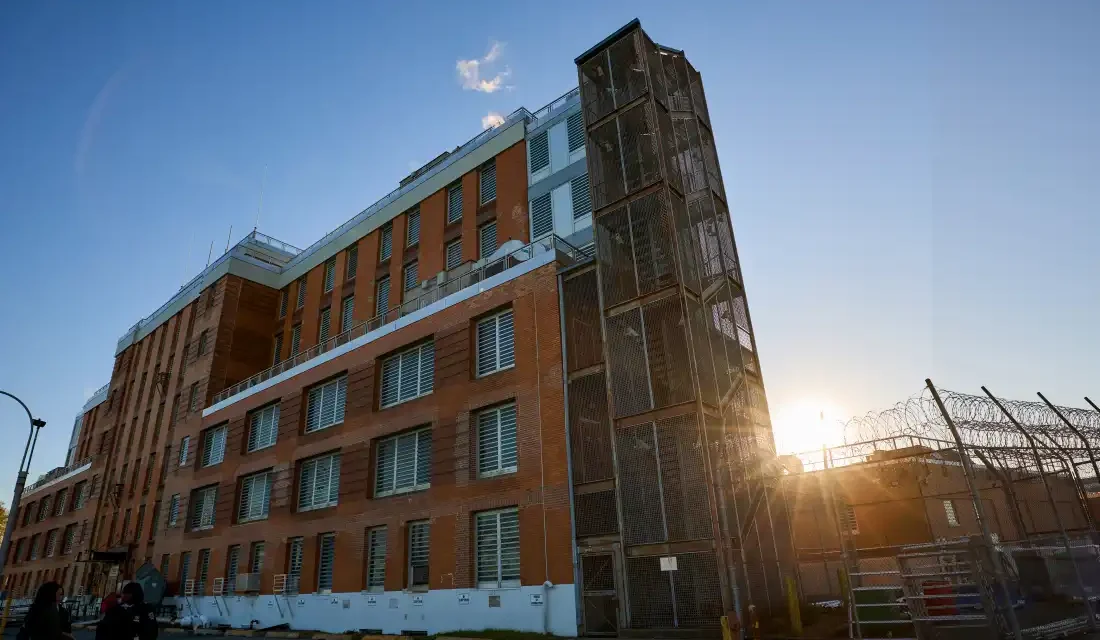
New York City officials have revealed a plan to close Rikers Island’s infamous jail complex and transition to smaller facilities within the city’s boroughs. Mayor Zohran Mamdani already took a significant step earlier this year by shutting down the North Infirmary Command building on Rikers Island.
For years, Rikers Island has been at the center of controversy, plagued by reports of abuse, neglect, and horrendous living conditions. Many see this planned closure as an overdue move to eliminate what Mayor Mamdani describes as a ‘moral stain’ on the city. Inmates have consistently accused the facility of extreme violence, with a federal judge labeling it an ‘unconstitutional danger’ for both detainees and staff.
An eye-opening figure highlights the urgency of the closure: Since 2022, more than 50 individuals have died in the Department of Correction’s custody, with most of these deaths occurring at Rikers.
Ambitious Plans for a Safer City
The recently unveiled plan is about more than closing Rikers; it aims to transform the way New York City approaches crime prevention and public safety. The city seeks to overhaul its justice process by focusing on smaller, borough-based jails placed more conveniently for families and legal representatives.
The plan sets ambitious goals, like improving jail conditions and reducing inmate numbers. Since 2019, the idea of closing Rikers and building four new jails in Brooklyn, Manhattan, Queens, and the Bronx was approved. These jails, closer to public transit and courts, promise better access for visitors, families, and legal counsel.
Efforts and Challenges
Although marking significant milestones, the city’s officials acknowledge they will not meet the 2027 target. However, Mayor Mamdani remains optimistic about current efforts to advance this critical initiative. Earlier this year, Stanley Richards, the first previously incarcerated person appointed as Commissioner for the Department of Correction, was tapped to lead the mission.
‘Previous administrations showed little interest in closure,’Mamdani emphasized.‘We are invested in changing that narrative.’
Progress can also be seen in housing initiatives for released individuals with medical needs and a newly opened therapeutic housing unit in Manhattan.
Adapting International Models
With support from international resources, city officials are also rethinking detention practices by drawing insights from systems abroad. Observing Germany’s approach—where dignity stands at the core of incarceration—offers a blueprint for change.
A delegation recently traveled to Germany to see how prisons operate there, aiming to apply similar principles in NYC’s planned borough jails. The challenges lie in adapting these principles within New York City’s unique context, focusing on respect and basic human rights.
Building for the Future
City officials recognize that even with new jails, systemic change requires more than improved infrastructure. Efforts are underway to reshape the criminal justice framework by reducing jail numbers and enhancing support and rehabilitation programs. These changes are supplemented by over $250 million in investments toward diversion programs and electronic monitoring.
Furthermore, the city faces the challenge of expediting prolonged court cases, which is a significant factor in current jail populations. With nearly a quarter of detainees awaiting trial for over a year, efforts are needed across the judicial system to clear this backlog.
Outlook on Change
Critics and experts alike have viewed this phase as pivotal. Vincent Schiraldi, a key advocate and former DOC commissioner, along with other experts, stress the need for contingency plans in case jail populations surge. New York faces similar hurdles experienced by other cities like New Orleans, which reduced its jail sizes post-Hurricane Katrina.
Despite these obstacles, stakeholders believe the redevelopment plan offers a chance to innovate, transforming the justice system while avoiding past failures. It also assures New Yorkers of a renewed focus on humanity within the incarceration system.
The path forward involves steady, deliberate change, shifting jail culture from one burdened by violence to one focused on dignity, a vital part of ensuring justice and safety for all city residents.
 Carmelo Anthony’s Defense of Baltimore Sparks Controversy
 Thanksgiving Remembrance: A Family’s Tribute to NYPD Detective Wenjian Liu
 Developments in Bar-tailed Godwit’s Migration, Trump-Cornyn Dispute, and Measles Resurgence
 Princeton Student Detained by U.S. Immigration After Conference
 Schaumburg Staff Settle into New Village Hall
 Clarification of Policy on LGBTQ+ Discussions in Liverpool Central School District