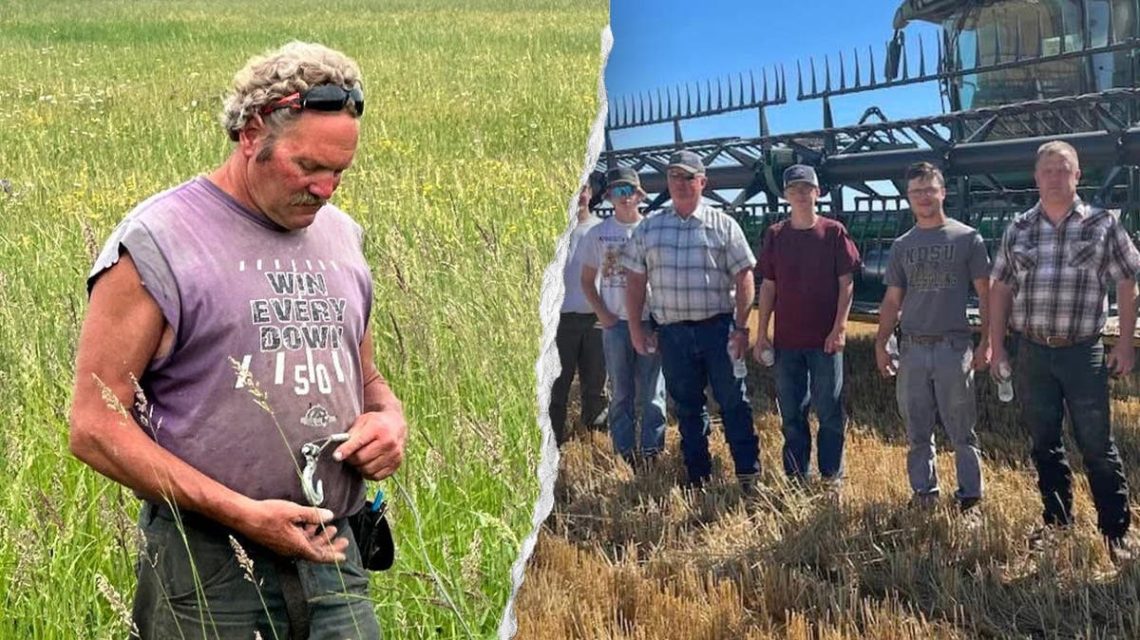
The debate over wildlife management has intensified as farmers and environmentalists clash over the presence of gray wolves. These apex predators are impacting livestock, and farmers demand control while environmentalists seek protection. The Trump administration’s decision on the issue is awaited.
Farmers Struggle with Wolf Attacks
Shayne Isane, a farmer from Minnesota, has dealt with numerous gray wolf attacks on his livestock. Over 40 years, he has lost several calves. He describes hearing wolves howling and seeing the devastation they cause. Wolves present a unique challenge, as nothing preys upon them.
“We can’t shoot or intervene when wolves attack our livestock,” Isane stated. “It’s against the law and a significant concern for farmers like us.”
Farmers in the Great Lakes region face similar challenges. With nearly 300 cattle, Isane experiences constant stress and financial loss due to wolf predation. States like Minnesota, Wisconsin, and Michigan could be affected by new federal policies aimed at giving farmers more control. The Interior Department has set a deadline to assess the recovery of gray wolves and consider changes in their protective status under the Endangered Species Act.
Environmental Concerns
Environmentalists argue against delisting gray wolves, fearing it may lead to hunting and declining populations. They argue that protections have contributed to the species’ recovery. Groups like the Humane World Action Fund oppose using wolves as negotiation tools, urging attention to broader agricultural issues.
Shawn Regan of the C3 Journal noted that states can manage wolf populations effectively without federal oversight.
Gray wolf populations remain stable, with around 2,400 in Minnesota as of 2026. The Minnesota Department of Natural Resources asserts confidence in their population estimates.
Balancing Act: Control and Conservation
Farmers like Jonathan Miller highlight efforts to find a balance through protective measures such as fencing. Miller has adjusted to prevent further losses. While acknowledging that wolf attacks signal thriving conservation efforts, he emphasizes the need for effective management.
“Seeing a wolf take an animal is tough, but we understand it as part of maintaining balance,” Miller shared.
Farmers support Trump’s proposals for state-level management, seeking a solution that allows coexistence without illegal measures.
This issue exemplifies the broader political discussion on wildlife management beyond Washington. The outcome significantly impacts farmers and their communities, underscoring the complexities of conservation alongside agricultural interests.
 Ambassadorial Dinner with Canine Guests
 Protests Rise in Spain Against Data Center Expansion
 Trump’s Push for Bipartisanship with Democrats
 Tyler Lundblade: Shooting Star with a Purpose
 Highlights from Recent News Stories
 Former Press Secretary Criticizes GOP’s Election Strategies