
Democratic Senator Jon Ossoff’s substantial victory in the Georgia Senate reelection has increased interest in his potential as a presidential contender in 2028. Despite speculation, Ossoff, aged 39, currently dismisses any intention of running for the White House. In an October debate, he expressed having “zero interest in running for president” in 2028.
Early polls hint at Ossoff’s popularity for a potential 2028 run. An Emerson College post-election survey indicates he leads the hypothetical primary, securing 17% of respondents’ support. He is slightly ahead of figures like former Vice President Kamala Harris and Rep. Alexandria Ocasio-Cortez. The survey also includes former Transportation Secretary Pete Buttigieg and Gov. Gavin Newsom in the top five.
Ossoff captures interest from both centrist and progressive voters, following his decisive win in a highly contested state. At Crooked Con, a progressive gathering in Washington, Ossoff outperformed others like Ocasio-Cortez and Buttigieg in a straw poll, receiving 38% of first-choice votes.
“He would be an appealing presidential contender for the Democrats,” said Jerry Gonzalez, CEO of the GALEO Impact Fund PAC, a Latino political action committee in Georgia that backed Ossoff. “He doesn’t shy away from holding the Trump administration accountable and works towards coalition-building.”
GALEO Impact Fund supported Ossoff’s reelection campaign with “Ossoff Lotería” merchandise. Statewide successes for Democrats, especially in conservative or swing states, often lean on moderates, aligning with Ossoff’s approach.
Charles Bullock, a veteran political science professor at the University of Georgia, noted Ossoff’s moderate stance, appealing to moderate conservatives. “He discusses issues that lie comfortably within the mainstream.” However, the effectiveness of a moderate in early nominating states remains uncertain as Democratic primaries may favor ideological purity.
Ossoff’s voting record opens him to criticism from both sides. Progressives fault his support for the Republican-backed Laken Riley Act and his hesitation on “Medicare for All.” Meanwhile, some pro-Israel Democrats disapprove of his votes on certain weapon sales to Israel and his critiques of its military actions.
His recent reelection win against GOP candidate Mike Collins by approximately 18 points emphasizes his success, improving his previous Senate win margin of just over one percentage point. Ossoff formed a robust voter coalition, attracting groups like Black voters, who gave him 93% of their votes.
While failing to win over the majority of White voters, who comprise over half of Georgia’s electorate, he significantly improved his standing, achieving 40% support compared to Harris’ earlier 28%. Notable improvements were seen among White voters without college degrees and White evangelical or born-again Christians.
Ossoff outperformed Harris in gaining the support of younger Georgians, securing 85% of voters under 30. He also narrowed the gap among voters aged 45 and older compared to Harris’ significant loss in this demographic. His gains with Hispanic voters, pivotal swing voters, highlight a growth of seven points from Harris’ previous performance.
“Ossoff’s office is accessible to all Georgians, contributing to his win,” Gonzalez stated.
Latino voter support has notably increased, evidenced by a Democratic surge in Georgia precincts with significant Hispanic populations. Comparing previous elections, precincts flipped from supporting Trump to favoring Ossoff decisively.
Gonzalez attributes the Latino voter shift to affordability concerns and stringent immigration policies affecting these communities. Ossoff’s investigations into federal immigration detention centers during his Senate duties also played a role.
Moving forward, Democratic demographics such as Latino and Black voters, men, younger voters, and those without college degrees, all leaned back toward the party, reversing previous rightward shifts. These groups are expected to be instrumental in the upcoming Democratic primaries and general elections.
The Democratic schedule change places states with large Black and Latino populations early in the primary calendar, a move potentially beneficial for Ossoff given his support base. The increased presence of Latino voters, now over four million, marks a significant change from previous electoral cycles.
Despite Ossoff’s assertion of no current presidential ambitions, his electoral performance provides an insight into what his coalition might resemble if he opts to pursue a higher office.
 Global Events and Key Developments
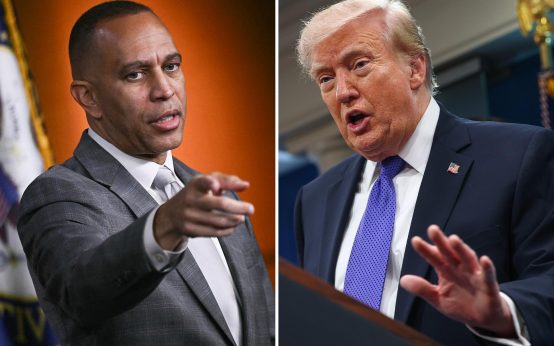 Democrats Consider Impeachment Under Jeffries’ Leadership
 Nikki Haley Critiques Trump’s Summit with Putin and Xi
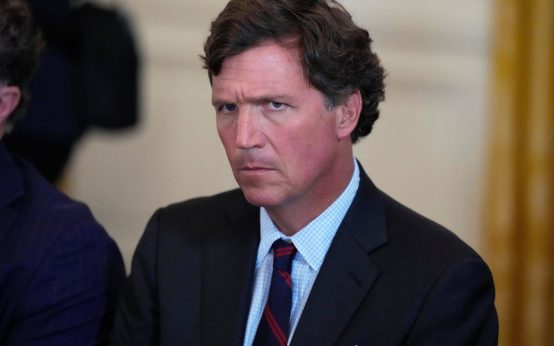 Tucker Carlson Criticizes Hakeem Jeffries Over U.S.-Israeli War Policy
 Democrats Achieve Historical Majority in House Elections
 Florida’s Property Tax Reform and Its Political Implications