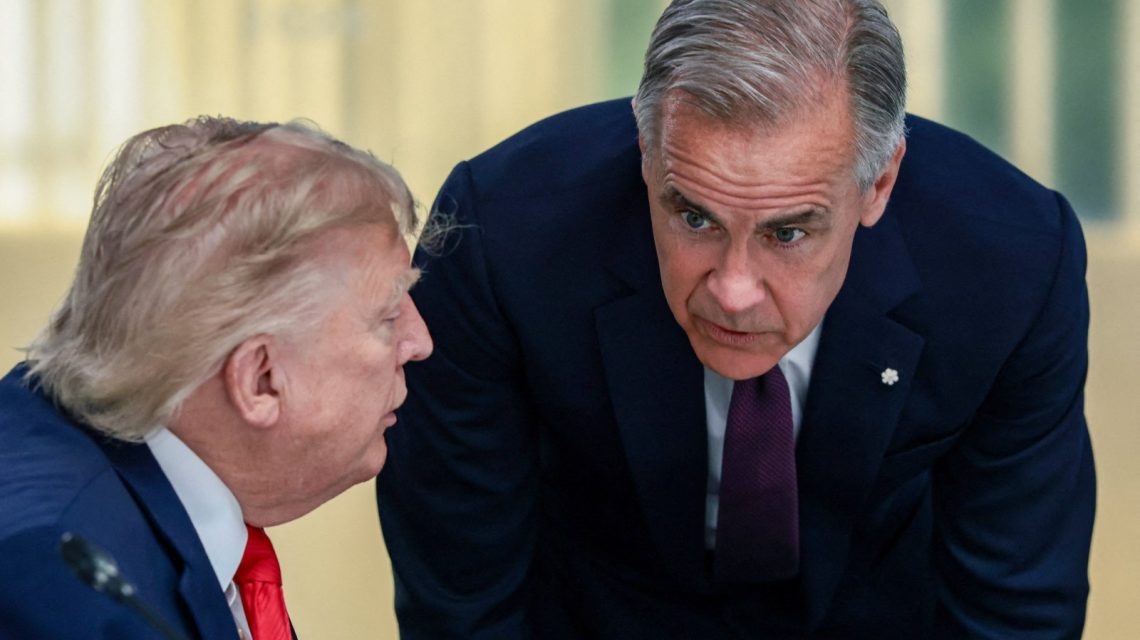
The United States has indicated a willingness to address Canadian interests in a future trade agreement. Jamieson Greer, U.S. Trade Representative, stated that any potential trade deal with Canada must consider Canadian priorities. Currently, discussions remain at an impasse over critical sectors such as steel, aluminum, and automobiles.
During an interview with CNBC Breakfast, Greer emphasized the importance of a mutually beneficial North American trade environment. He remarked, “We want to ensure that trade in these products benefits the United States. Naturally, there should be provisions for Canada as well.”
Greer expressed doubt about Canada’s efforts to strengthen economic ties with the European Union, suggesting limited room for growth in the current trade relationship.
“I’m not sure there’s a lot of juice left to squeeze,” Greer commented.
Meanwhile, the Canadian automotive industry faces significant challenges due to tariffs imposed by the Trump administration. Brian Kingston, president of the Canadian Vehicle Manufacturers’ Association (CVMA), reported to Canadian lawmakers that these tariffs have cost the industry over $51 billion. Kingston noted that manufacturers of Canadian-built vehicles face an 8 billion Canadian dollar ($6.1 billion) burden.
Speaking to the House of Commons Standing Committee on International Trade, Kingston highlighted the decline in vehicle trade. U.S. vehicle exports to Canada dropped by 25%, while Canadian exports to the U.S. saw a 17% decline.
Kingston stressed the automotive industry’s significance to Canada. “Motor vehicles are Canada’s third-largest goods export and our largest non-resource export,” he stated. Last year, vehicles accounted for CA$41 billion in exports, with 90% destined for the U.S. He added, “We need to secure tariff relief with the United States. The US Section 232 tariffs on the auto industry and Canada’s retaliatory measures are causing significant harm.”
The automotive sector remains a significant barrier in resolving the trade dispute between Washington and Ottawa, along with steel, aluminum, and lumber.
Canadian Prime Minister Mark Carney emphasized that any agreement should not threaten the sustainability of Canada’s automotive and steel industries. Despite this, some American tariffs might persist under a future deal.
The Trump administration defends its tariff strategies, citing the promotion of domestic manufacturing, job protection, and addressing perceived unfair trade practices.
An interim agreement is one option the Carney administration is exploring, particularly for industries heavily impacted by tariffs. Without such relief, American tariffs on Canadian automobiles are set to rise from 25% to 50% in January.
This story is developing, and further updates will be provided as more information becomes available.
 Trump Administration Proposes New Tariffs on Major Trading Partners
 Democrats to Include Influencers in Presidential Debates
 Firing Up the MAGA Base Won’t Rebuild a Coalition That Depended on Voters Who Were Never MAGA
 Trump Administration Releases USAID Files Alleging Misuse
 The Real Issues Facing Native Americans
 New York’s Socialist Experiment: A Look at Mayor Mamdani’s Policies