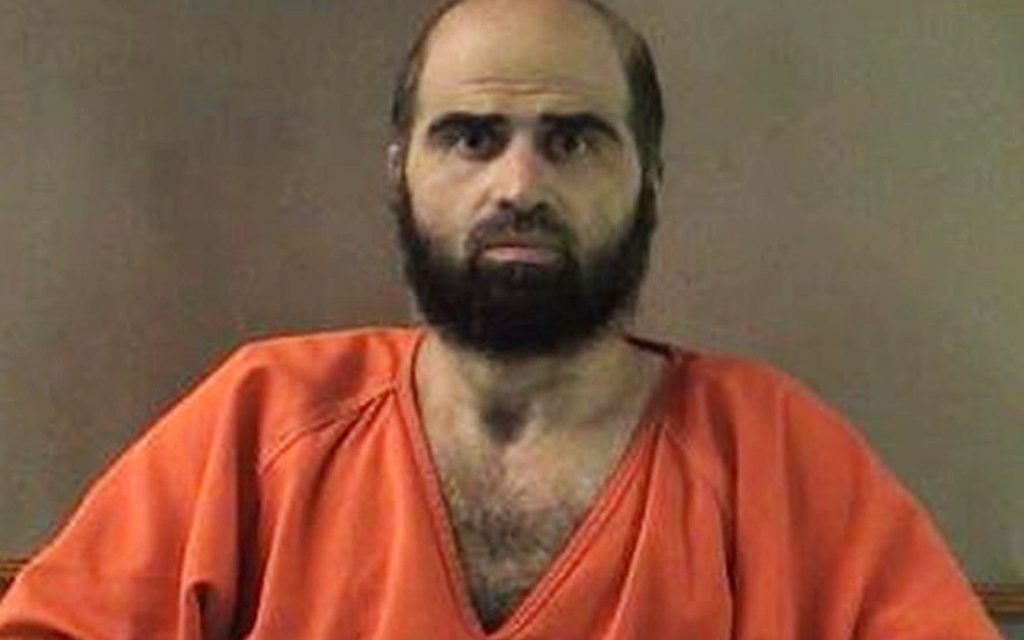
Fort Hood shooter Nidal Hasan, who killed 13 people at a Texas military base in 2009, has asked a federal court to postpone his execution by firing squad. He intends to prepare a petition challenging his sentence. Hasan claims the military court’s judgment violated his federal constitutional and statutory rights.
Hasan, an Army psychiatrist, was found guilty of murdering 13 individuals and attempting to murder over 30 others. The delay request could significantly impact the execution plans initially set for next week under the Trump administration. A hearing is scheduled for Wednesday.
In October, President Donald Trump ordered the execution, marking the first military execution since 1961 and the first by firing squad since World War II. Defense Secretary Pete Hegseth announced plans for a livestream, a decision that was later reversed by Trump.
Hasan’s Defense Argument
Hasan plans to challenge the ban on presenting an argument from his first trial. He claims his actions were legally justifiable, as he was defending the Afghan Taliban against what he called an unlawful attack by the U.S. Army. During his 2013 trial, without legal representation, Hasan remained mostly silent, leading his standby lawyers to believe his aim was to receive a death sentence. He intends to represent himself but has assistance from the ACLU Capital Punishment Project.
Judge Tony Mattivi, appointed by Trump and confirmed in June, will oversee the case. Hasan is held at Fort Leavenworth in Kansas.
Execution Witness Controversy
The court filing emerged amid confusion about the execution logistics, originally set for Dec. 3. Three survivors of the Fort Hood shooting were informed they could not attend. Military regulations only allow direct victims to witness executions. An email denied their request for reconsideration, citing security and space concerns.
The survivors argue for a broader interpretation of “victim” under the Uniform Code of Military Justice. They claim the military’s decision implies their lack of victim status since they weren’t physically struck by bullets. An official letter stated no further appeals could be made.
Retired Col. Kathy Platoni expressed disappointment over the denial. She remarked on reduced opportunities for closure by not witnessing Hasan’s execution.
Emotional and Physical Trauma
Platoni recalled the attack day, with crowded buildings of returning soldiers and those preparing for deployment. Although moved to a different building, she witnessed the aftermath. Her blood-stained uniform serves as a constant reminder.
Julia Wilson, nine months pregnant during the shooting, also had her witness request denied. She criticized the military’s handling of the situation, saying the inability to properly address the incident has left survivors feeling betrayed and unable to heal.
Striving for Recognition and Change
Retired Maj. C. Alan Hopewell, who identified Hasan at trial, expressed disappointment about not being recognized as a victim. He noted a bullet that missed him hit his car, suggesting that physical harm would garner different acknowledgment.
Hopewell, Platoni, and Wilson continue pushing for the Fort Hood shooting to be reclassified as domestic terrorism rather than workplace violence. Hopewell emphasized the importance of attending the execution as a duty to honor those threatened and harmed.
 Six Arrested in Florida Slaughterhouse Cruelty Case
 Texas Authorities Investigate Death of Cowboys Fan
 Tomasz Kosowski Sentenced to Death for Murder of Stephen Cozzi
 Murdaugh Defense Challenges Grand Jury Testimony
 Student Faces Charges After Alleged Assault
 Controversial Execution in Texas Raises Concerns