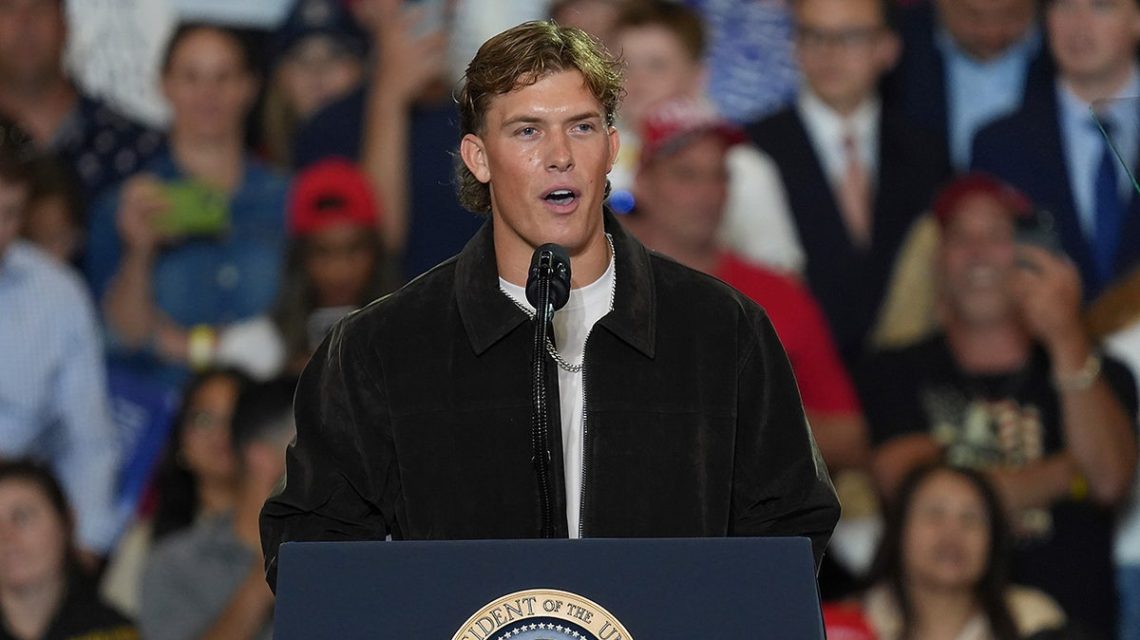
Jim Harbaugh is set to coach the New York Giants for the first time, yet the team has already become a focal point in the NFL. This stems from quarterback Jaxson Dart’s recent introduction of President Donald Trump at a speech, sparking significant discussion.
Dart’s public endorsement of Trump generated interest, but it was teammate Abdul Carter’s reaction that fueled the debate. Carter initially expressed disbelief online, suggesting Dart’s actions seemed unreal. Despite having resolved their disagreement, the conversation around Dart’s decision persists.
NFL quarterback Jaxson Dart introduced President Donald Trump during a Fighting For American Workers event in Suffern, N.Y., on May 22, 2026.
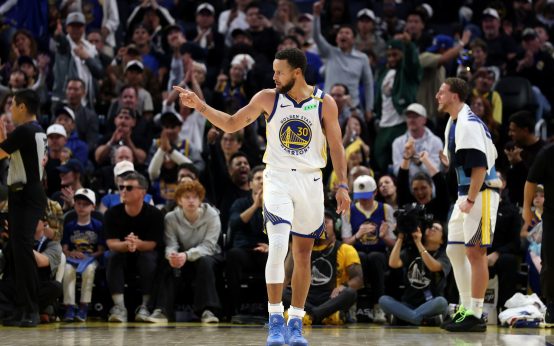
The attention given to Dart’s action contrasts with other instances where athletes or coaches express support for Democratic candidates or causes without backlash. Prominent figures like Steph Curry, LeBron James, and coaches such as Steve Kerr and Doc Rivers have supported democrats without facing similar criticism. Notably, Philadelphia Eagles’ Thomas Booker IV actively led an initiative supporting Kamala Harris, yet it attracted minimal attention.
Former NFL player Emmanuel Acho weighed in, calling for an “uncomfortable conversation” about Dart and Carter. In a video, Acho emphasized that Dart has the right to his political stance, just as Carter has the right to his grievances. Acho questioned the wisdom of Dart’s decision, given the potential impact on team dynamics.
“I don’t think there is a lot of wisdom or discernment in very publicly supporting an individual who many of your teammates felt offended by,” Acho remarked.
Acho also critiqued Carter’s public reaction, highlighting a perceived double standard. He noted that athletes supporting Democrats rarely face accusations of dividing teams. Meanwhile, Dart’s support for Trump prompted different reactions. This reflects a broader pattern where public figures on the right encounter scrutiny atypical for those on the left.
The unfolding situation with Dart highlights the contentious nature of political endorsements in professional sports. The differing reactions to athletes’ political expressions underscore the polarized climate, where support for certain figures invokes distinct responses.
 Rory McIlroy Speaks About Bryson DeChambeau’s Future in Golf
 Kirk Cousins Returns to Minnesota Vikings as Starting Quarterback
 Georgia Tech Apologizes After Fans Ejected for Standing
 Golden State Warriors’ Record-Breaking Victory Over Pelicans
 Postgame Brawl Between 49ers and Raiders Fans Under Investigation
 Braves and Red Sox Eye Star Free Agent Randy Arozarena