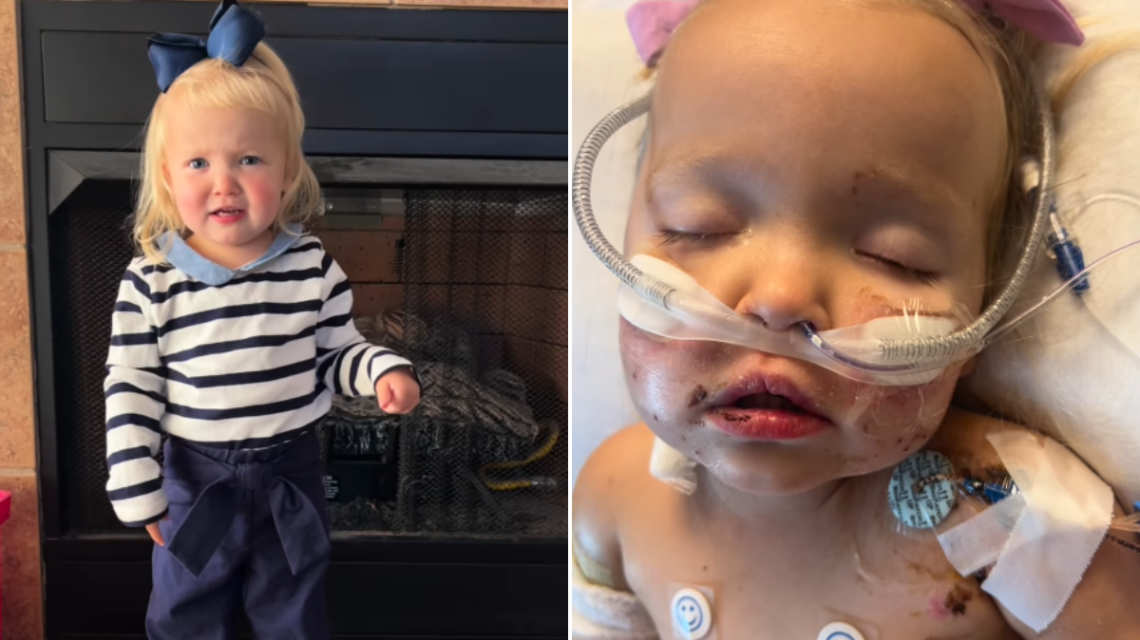
Kory Paige Loden, a mother from Tennessee, faced a harrowing experience two-and-a-half years ago when her daughter Mady fell ill. Initially seeming like a flu, Mady’s condition rapidly deteriorated, leading to a life-threatening situation.
Early Signs and Symptoms
Mady, then 18-months-old, went to bed healthy one October night in 2023. The next day, she showed signs of lethargy while still managing to eat and drink. Her brother had recently been diagnosed with Flu B, leading to an assumption that Mady had the same. As the day progressed, her symptoms worsened, and by evening, fever had set in, and signs like blue-tinted lips and feet indicated deeper issues.
Urgent Medical Attention
Seeking immediate medical help, Loden took Mady to an urgent care facility. The severity of her condition prompted a swift ambulance transfer to a local hospital. Despite efforts to stabilize her, medical personnel suspected a grave situation, indicated by Mady’s lack of response during IV administration.
Intensive Care and Diagnosis
Mady underwent a series of critical treatments, including being airlifted to a children’s hospital. The reality of her condition dawned on her parents when they were asked for permission to perform a “code” if her heart stopped. Mady was placed on life support, a necessary measure to attempt to save her life.
Doctors discovered that Mady had an interrupted inferior vena cava (IVC) and was born without a spleen, conditions that left her vulnerable to infections like sepsis, which she developed due to strep pneumonia. This discovery explained why her condition escalated so severely.
Sepsis Complications and Recovery
The sepsis triggered a critical condition known as disseminated intravascular coagulation, causing her blood to clot improperly. Despite these complications, Mady managed to survive the critical 48-hour period following her initial collapse.
Over the following weeks, efforts to restore blood flow to her limbs proved insufficient, leading to the amputation of one of her legs. Her treatment involved numerous surgeries and continued months after her discharge from the hospital. Ultimately, her remaining leg was also amputated due to complications.
Mady’s Resilience and Outlook
Today, Mady is a joyfully active child, adapting to life as a bilateral amputee. Due to her young age during the illness, she likely has little recollection of life before the event. Her adaptability with or without prosthetics exemplifies her resilience.
Loden shares Mady’s story to raise awareness about sepsis and its early detection. Through her experience, she aims to provide valuable insights to other parents, potentially helping them recognize signs of sepsis early on.
 Initiative for Safe Integration of Psychedelic Therapies
  California Residents Face Challenges from Wildfires and Rising Sea Levels
  Preservation Fight Looms Over Landmark Mel’s Drive-In Building
  Chicago Faces Border Crisis with Growing Migrant Arrivals
  Debate Over SNAP Restrictions for Soda Purchases
  U.S. Cancer Foundation Expands Effort in Bangladesh