
President Trump has hailed a recent agreement with Iran as significant, despite acknowledging that it is not yet fully negotiated. Crucial issues such as nuclear stockpiles, enrichment, and missile development have not been addressed.
The Strait of Hormuz, a critical passage for global oil transport, has been central to this ongoing conflict. Recently, a temporary agreement was reached between the Trump administration and Iran. This agreement aims to extend a cease-fire and potentially reopen the Strait, alleviating a major global energy disruption.
This development has been facilitated by a hard-line Pakistani general and represents a step back from the brink of further conflict between Washington and Tehran. The arrangement, assuming final approval from both President Trump and Iran’s supreme leader, could help stabilize the region’s energy supply by reopening the Strait of Hormuz, crucial for transporting a quarter of the world’s oil.
Republicans had worried about facing the upcoming November midterm elections with gasoline prices around $4.50 per gallon, a situation that most Americans oppose as they have expressed in polls. For Iran, this opening arrives as its economy, on the verge of collapse from the loss of oil revenue, desperately needs such a reprieve.
President Trump’s recent announcement stands in contrast with his earlier declaration that the only deal with Iran would be their unconditional surrender. Emphasizing a more measured approach, he stated that negotiations are moving in an orderly and constructive manner and advised his representatives not to rush, indicating that time appears to be an ally.
 Public Discontent with Trump’s Second Term
  The Ongoing Debate Over the Death Penalty: A Case in Tennessee
 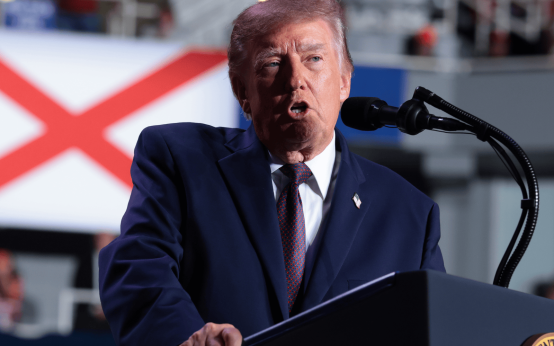 Trump Offers $5,000 Proposal to Boost Republican Election Prospects
  Partisan Tensions in Congressional Hearings
  U.S. Actions in the Strait of Hormuz Face Sustainability Challenges
  Trump Defends Daily Aspirin Use Amid Health Scrutiny