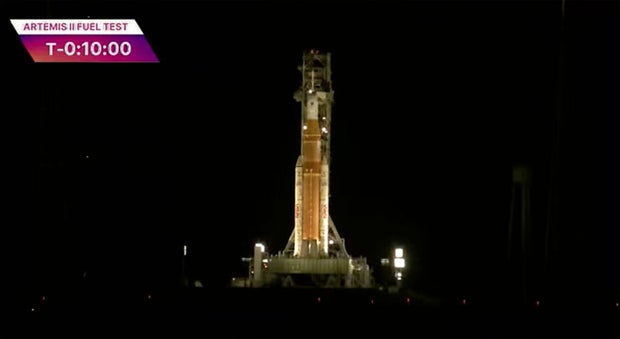
On February 3, 2026, NASA faced setbacks during a dress rehearsal countdown for the Artemis II moon rocket, leading to a delay in the planned February launch. Due to a significant hydrogen leak, the launch is now postponed to March at the earliest, according to NASA Administrator Jared Isaacman.
Isaacman emphasized the importance of dress rehearsals to uncover and address issues before the actual launch. He stated that these tests are critical for ensuring a successful mission.
“We fully anticipated encountering challenges,” he remarked. “This is why we conduct a wet dress rehearsal. These tests help us identify issues early and prepare for a successful launch day.”
The astronauts scheduled for the Artemis II mission — Commander Reid Wiseman, Victor Glover, Christina Koch, and Canadian astronaut Jeremy Hansen — had been in pre-flight quarantine at the Johnson Space Center in Houston, ready to move to Florida for final launch preparations. Due to the delay, they will stay in Houston for now.
The practice countdown experienced initial delays due to cold weather on Florida’s Space Coast. Launch Director Charlie Blackwell-Thompson approved the fueling process on Monday after confirming team readiness despite these weather complications.
The fueling operation, which began slightly late, saw supercold liquid oxygen and hydrogen being transferred into the Space Launch System’s (SLS) first stage. However, a hydrogen leak was detected when the first stage tank was just over half full. Although engineering teams attempted to resolve the problem by varying the fuel flow, the leak persisted, resulting in a halt at around 77% tank capacity.
Efforts to mitigate the leakage included warming the seals and adjusting propellant flow. Meanwhile, a closeout team prepared the Orion crew capsule for simulated crew arrival and initiated final checks. Unfortunately, the countdown, initially set for a 9 p.m. simulated launch, faced multiple hold-ups due to ongoing leak detection and communication issues.
Ultimately, operations ceased permanently five minutes before the simulated launch, due to increased leakage. Isaacman confirmed that a detailed review of the encountered issues is underway. He indicated that a subsequent wet dress rehearsal would be conducted, with March being the new target for launch.
With five potential launch opportunities available in March, starting from March 6 through March 11, NASA aims to rectify the issues before proceeding. The SLS rocket is designed for sending Artemis astronauts to the moon within Orion crew capsules. It stands as the world’s most potent operational launcher, towering 332 feet in height and generating 8.8 million pounds of thrust at liftoff.
The SLS’s debut mission in 2022 encountered similar technicalities, including fuel leaks and stunted propellant flow, necessitating prolonged delay. Extensive adjustments have since been incorporated to improve upon these problems. Blackwell-Thompson expressed optimism for the fueling test of Artemis II, crediting learned experiences from the previous Artemis I mission for improved procedure handling.
Despite implementing various solutions, leakage issues lingered at the tail service mast umbilical—an old problem from the first Artemis flight in 2022.
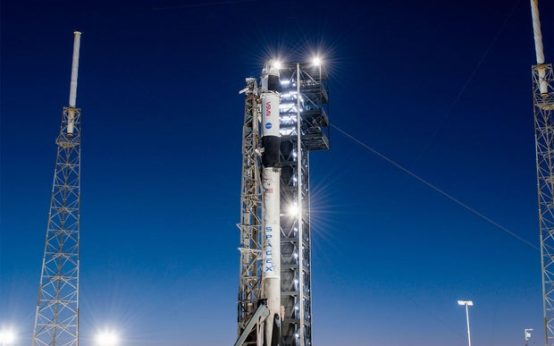 Crew Set for Space Station Mission After Medical Issue Ends Previous Expedition
 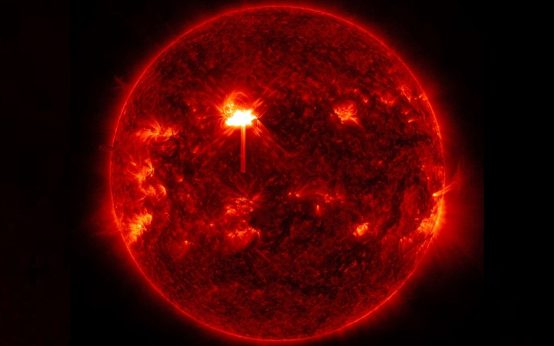 Solar Flares Spark Northern Lights and Satellite Concerns