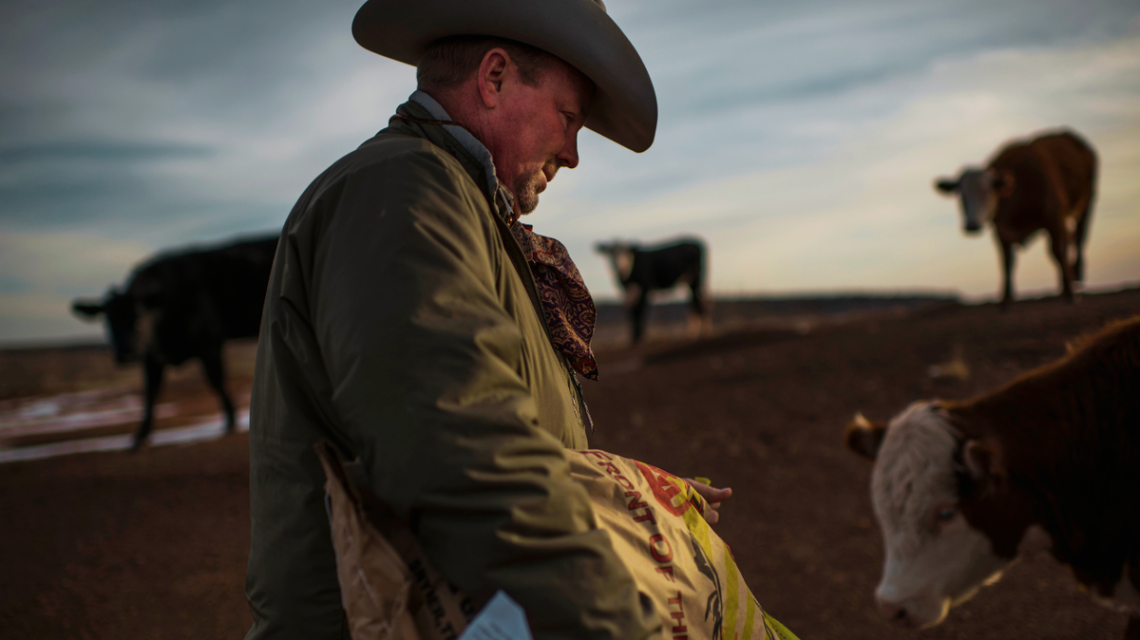
Recently, President Donald Trump unveiled a plan for beef imports aimed at reducing prices. However, many cattle ranchers are critical of this plan, arguing it overlooks a critical issue they face: the overwhelming influence of meat packers in the market.
Meat packers have created a system where they win no matter what — at the cost of everyone else,
declared Will Harris, a fourth-generation cattleman who runs White Oak Pastures in Bluffton, Georgia. Harris, who intends to pass on the family business to his children, is actively involved in all production stages, from raising cattle to processing and selling beef. This involvement offers him keen insights into how pricing mechanisms operate.
AMERICA’S SMALLEST CATTLE HERD IN 70 YEARS MEANS REBUILDING WILL TAKE YEARS AND BEEF PRICES COULD STAY HIGH
The core of the pricing power in the U.S. beef market is held by what is known as the “Big Four”: Tyson, JBS, Cargill, and National Beef. These companies dominate the beef supply chain, processing about 85% of grain-fattened cattle for supermarkets. According to Harris, this concentration means that a small group has control over processing, distribution, and pricing. Such dominance allows these packers to underpay ranchers for cattle, all the while charging higher prices to consumers. The addition of cheap imported beef further widens their profit margins.
This sentiment is resonant across cattle-producing regions, including Texas. Rancher Cole Bolton has noted similar patterns in his state. The real issue is the price differential between the big four packers and what they’re paying us for the product,
Bolton shared. As the owner of K&C Cattle Company, Bolton observes that ranchers have been grappling with very slim profit margins for decades.
While temporarily increasing U.S. beef imports from Argentina might lower prices in the short term, both Harris and Bolton caution that this strategy should not replace efforts to strengthen domestic production. They emphasize that imports are only a temporary fix and that rebuilding the American cattle herd is essential.
Imports should be a bridge, not a long-term replacement,
Harris expressed. We must rebuild the American cattle herd, protect American farmers, and ensure transparency so consumers understand where their beef comes from. Long-term affordability depends on a healthy, resilient domestic cattle industry — not permanent dependence on foreign beef.
IN TEXAS CATTLE COUNTRY, ONE RANCHER WELCOMES TRUMP’S FOCUS ON DECADES OF THIN MARGINS
The U.S. cattle supply is at its lowest point in over 70 years, exacerbated by drought, high feed costs, and an aging ranching demographic. Ranchers agree that rectifying the current crisis will take time. We’ve got to build back our herds,
Bolton urged, emphasizing the resilience the industry must muster in response to market disruptions and harsh environmental conditions.
Brad Randel, a Nebraska rancher, echoed similar sentiments as he recently conducted a cattle auction amid tough market conditions.
The intersection of business and politics remains a focus for Fox News Digital, as demonstrated by Amanda’s ongoing coverage of this critical issue.
 Investigators Intensify Search for Savannah Guthrie’s Missing Mother
  Ongoing Investigation into the Mysterious Disappearance of Nancy Guthrie
  British Police Examine Allegations Against Former Prince Andrew in Connection to Epstein
  Arizona Restaurant Owners Face Backlash for Supporting ICE Agents
  Flights Paused at El Paso Airport for Special Security Reasons: FAA Restricts Operations
  Tragic Drone Attack in Kharkiv Region Highlights Ongoing Conflict in Ukraine